

The most commonly used justification for capital punishment is not actually supported by evidence.
Articles on Criminal law
Displaying 61 - 80 of 136 articles

The death of Phillip Mbuji Johansen highlights how courts fail to consider entrenched racial biases when they assess what amounts to ‘intent’.

Evidence suggests that the defence of extreme intoxication isn’t rarely used, and is often successful in cases involving male violence against women.

The first of a series of fatal flaws in the idea is about where to draw the line.

The use of incitement around protests poses new and complex legal questions.

Given their ability to accept correction, children have a better claim to rehabilitation, reorientation and reintegration.

A significant proportion of teachers surveyed (36.8%) believed 16 was the minimum age of criminal responsibility.

Victoria and the ACT just joined other states in implementing judge-alone trials during the pandemic. Such a significant change deserves much more public scrutiny than it has received.

Health Minister Greg Hunt has issued a warning that the deliberate transmission of COVID-19 can be prosecuted. But the application of a law like this is unclear and could cause unnecessary worry.

NASA is reportedly investigating the first alleged crime in space. But criminal jurisdiction aboard the International Space Station is much more straightforward than it would be for space tourists.
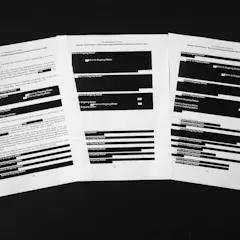
Mueller’s report describes more than a dozen times Trump may have broken the law. Here’s how Congress will decide whether the president obstructed justice during federal probes into his presidency.

As the special counsel’s investigation of Trump turns into a partisan battle in Congress, here are four key issues to follow.

Legally, a person can obstruct justice even if he committed no other crime – though it is harder to prove. It all depends on the intent behind pressuring investigators, say, or firing an FBI director.

Lawyers and jurors need to know what causes people to behave the way they do.

Advocates say the recent quashing of Sally Challen’s murder conviction brought attention to a hidden feature of domestic violence. But it may have also painted Challen as an unstable woman.

The government doesn’t need to extend jurisdictions, or boost enforcement powers to prosecute corporations that have behaved dishonestly. The law for prosecution is there already.

A barrister may report confidential client communications to police where their client has threatened the safety of another person, but going beyond such discrete instances is ethically fraught.
Unless Lawyer X had next to no role in the defence of her clients, all the results of any trial where she represented them could be overturned. And this could mean release from prison with no retrial.

It’s not so unusual that Democrats and Republicans converge on criminal justice, at least on the surface. Deep disagreements still remain.

Restorative justice allows us to uphold justice while respecting the human rights of offenders.
Top contributors
-

Emeritus Professor in Law and Criminal Justice, Adelaide University
-
Professor of Criminal Law, University of Sydney
-
Professor of law, Washington University in St. Louis
-
Professor of Law, Auckland University of Technology
-
Professor (Practice), Faculty of Business and Economics, Monash University
-
Associate Professor of Political Science, College of Charleston
-
Professor of Law and Director, Health Law Program, University of Nevada, Las Vegas
-
Professor of Law, University of Virginia
-
Foundation Professor of Law and Political Science, Arizona State University
-
Professor, School of Law and Department of Social and Behavioural Sciences, City University of Hong Kong
-
CEO, Sentencing Advisory Council
-
Professor of Criminology, Australian National University
-
King's Counsel, Deakin University
-
Professor of Evidence Law, University of Sydney
-
Professor of Criminology, Monash University