
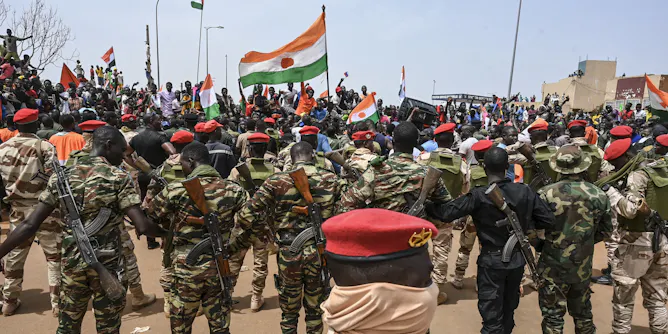
Military leaders in Mali, Burkina Faso and Niger came to power promising to defeat the insurgencies plaguing their countries. Instead, insecurity has worsened.
Articles on Coup d'etat
Displaying 1 - 20 of 53 articles
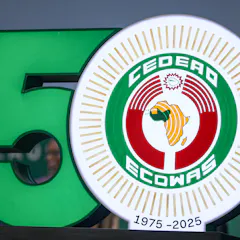
Beyond the rights to free movement, the AES withdrawal has real effects on Ecowas in terms of its legitimacy, strength and migrant rights.
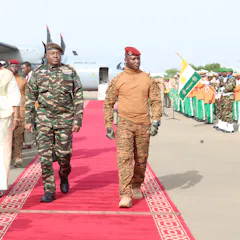
Once in power, military rulers have little incentive to share authority.
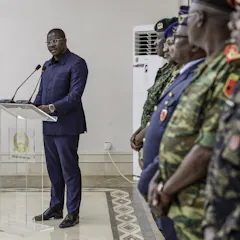
The coup sends a signal that electoral rules and constitutional procedures can be overridden by force.

Constitutional manipulations have been a major trigger for military interventions in sub-Saharan Africa.

The blockade of southern Mali is designed to weaken the military government, incite the public and possibly consolidate control.
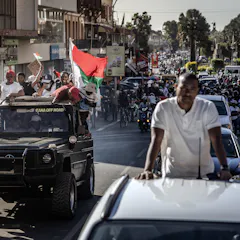
As Malagasy citizens demanded accountability, international institutions conferred legitimacy on a president with dubious democratic credentials.

The guilty verdict against the former president could prove a historic opportunity to consolidate democracy, or begin a new phase of democratic erosion.

Failed coup leaders don’t always face punishment – and some who do receive treatment outside of courts.

A general decline in trust in public institutions across Africa reflects the disconnect between state officials and the people.
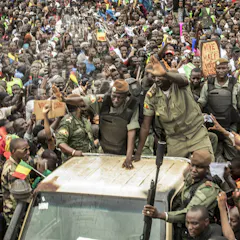
In the popular imagination, coups d'etat are strictly military-led, palace conspiracies. In reality, a majority of them have required civilian participation.
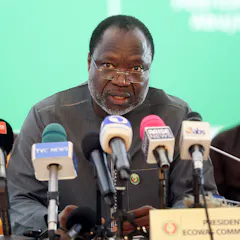
Scholars explain recent developments in Ecowas and the implications for the region.

Democratic backsliding in some member states, economic instability, insecurity and climate change threaten the stability of Ecowas. Regional leaders must tackle these challenges.
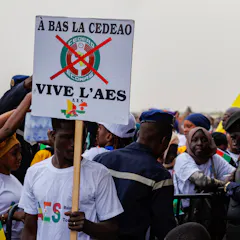
Niger, Mali and Burkina Faso have much to lose if they cannot migrate to and from neighbouring countries in Ecowas.

Mali, Burkina Faso and Niger announced their intention to leave Ecowas. This may be a pointer to a deeper crisis in the Sahel region.
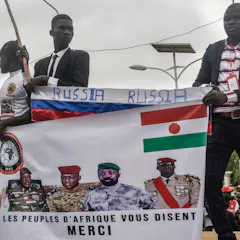
Niger’s recent military romance with Russia could escalate tensions with France, regional allies and the European Union.
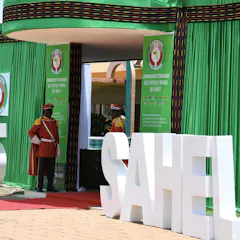
Foreign powers’ interest in the Sahel is driven by its natural resources and strategic location for security and illegal migration control.

It’s hard to overestimate the role Henry Kissinger played in Chile. A former Chilean diplomat describes the mark that the powerful statesman made in his country and elsewhere in the Global South.
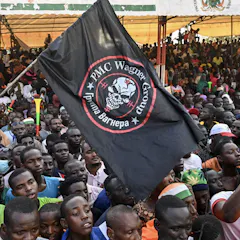
France’s withdrawal from Niger could hurt the regional fight against terrorism, create an opportunity for Wagner’s influence and increase Europe’s migrant crisis.

Ali Bongo’s illness, the contagion effect of other recent successful coups and palace power tussles are factors responsible for Gabon’s recent coup.
Top contributors
-

Associate professor in Politics and International Relations, Leeds Beckett University
-
Nonresident Research Fellow, Rice University
-
Visiting Assistant Professor of Political Science, University of Kentucky
-
Research Affiliate and Senior Analyst, University of Central Florida
-
PhD Candidate, University of Amsterdam
-
Senior researcher, Arnold Bergstraesser Institute
-
Policy Leader Fellow, School of Transnational Governance, European University Institute
-
Extraordinary Lecturer, University of Pretoria
-
Lecturer in Political Economy of Violence, Conflict and Development, SOAS, University of London
-
-
Professor of Modern Latin America History, University of Denver
-
Professor of Political Science , American Graduate School in Paris (AGS)
-
Lecturer in International Relations, Monash University
-
Reader in Law, SOAS, University of London
-
Professor of Management and Organization, University of Southern California