
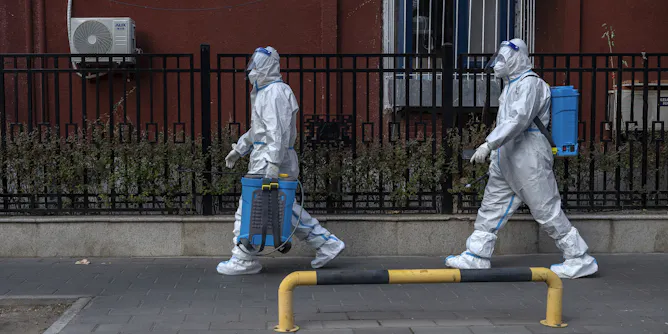
Strict lockdowns, quarantines and testing have prevented many people in China from catching COVID-19. With concerns over Chinese vaccine efficacy and uptake, China may be facing a looming COVID-19 surge.
Articles on coronavirus testing
Displaying 1 - 20 of 42 articles

Wax, vials, a coffee capsule and boiling water are the main components of a brand new COVID-19 test.
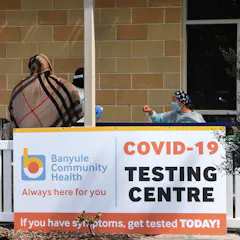
After more than a month of testing without a single positive case, the probability of coronavirus lurking in Victoria is vanishingly small.
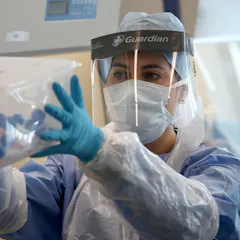
The prime minister big new plan is a flawed policy in search of the science to back it up.

The CDC has long been a trusted source of health information, keeping the public not only safe but calm in times of disease outbreaks. Public health officials fear now for its reputation.
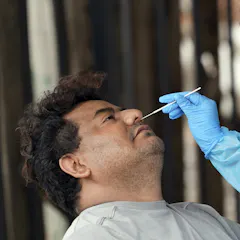
Test positivity rates measure the success of a testing program. Even though the US performs a huge number of tests, high test positivity rates across the country show that that it still isn’t enough.
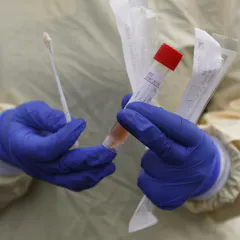
Ideally everyone could get tested frequently for the coronavirus. No state is close to achieving this, but some are doing better than others. What are the challenges in meeting demand for testing?
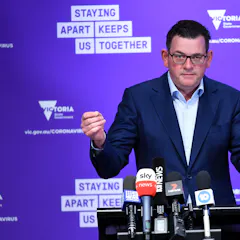
Too many people are going out with COVID-19 symptoms or while awaiting a test result, Victorian Premier Daniel Andrews has said, after the state hit a bleak new record of 484 new cases.
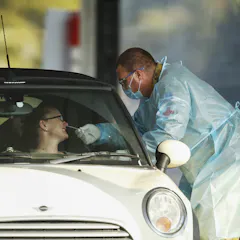
For the vast majority of people, no — you don’t need a referral to get tested at dedicated public COVID-19 testing clinic. It’s different if you plan to get tested at a private pathology clinic.
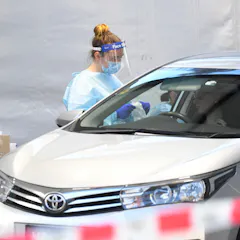
If you’ve got a test but haven’t heard back, it’s possible the delay is caused by test samples needing to be taken to interstate labs and the huge scale of testing underway.
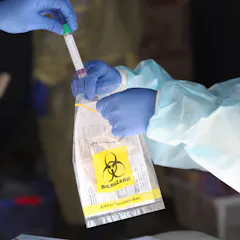
To control the COVID-19 pandemic through random testing would require about 6.5 million test a day. Using group testing and machine learning could get that number down to fewer than 40,000 day.
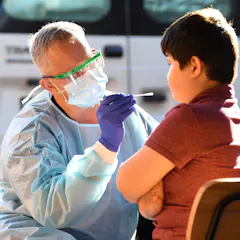
Recent cases remind us that although children and teens are considered less likely than adults to catch and spread COVID-19, everyone with symptoms should get a test — including children and teens.
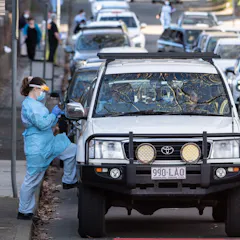
The prospects of elimination remain elusive but even with the current Victoria outbreak, Australia is maintaining a high number of tests per thousand people.
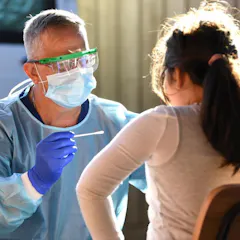
There are some very good reasons why some people decline coronavirus testing, which we need to address before jumping to conclusions.
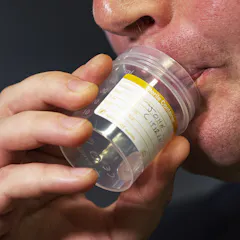
Saliva testing is less sensitive than a nasal swab. But in the midst of a public health crisis, in some cases a test with slightly reduced sensitivity may be better than no test at all.
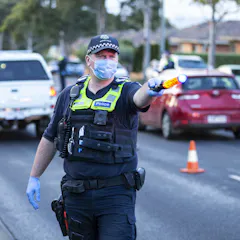
As compulsory testing and more restrictive quarantine rules are being considered, it is critical these measures are properly communicated and used with restraint.
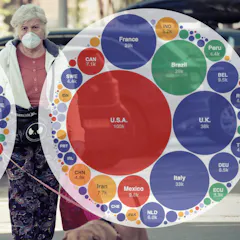
Australia is performing better than many other countries with comparable populations and geographies, a new COVID-19 data visualisation reveals.
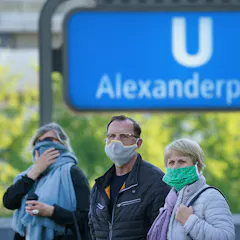
Countries across the globe responded differently to the pandemic, and results show a difference in effectiveness as well.
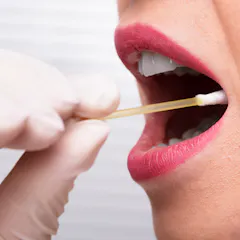
The SARS-CoV-2 coronavirus is currently detected using invasive nasal swabs. But the virus is also present in saliva, potentially paving the way for cheaper, safer tests that people could do at home.
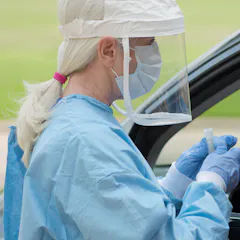
As we start to test people without symptoms for COVID-19, the likelihood of generating false positive tests goes up. Here’s why that’s a problem.
Top contributors
-

Associate Professor, Epidemiology, Deakin University
-
Professor of Global Biosecurity, NHMRC L3 Research Fellow, Head, Biosecurity Program, Kirby Institute, UNSW
-
Associate professor, University of Sydney
-
Director of Microbiology, University of California, San Diego
-
ARC Laurete Fellow and Professor for Theoretical Systems Biology, The University of Melbourne
-
Paediatrician, Infectious Diseases Physician and Clinical Microbiologist, The Kids Research Institute Australia, The University of Western Australia
-
Lecturer, The University of Melbourne
-
Professor of International Politics, Queen Mary University of London
-
Brass Blacker Associate Professor of Demography at LSHTM and Marie Sklodowska-Curie Fellow at Leverhulme Centre for Demographic Science, University of Oxford
-
Vanier Scholar and Ph.D. Candidate in Microbiology and Immunology, Dalhousie University
-
Senior Lecturer, Melbourne Law School, The University of Melbourne
-
Reader of Applied Mathematics, Cardiff University
-
Senior Lecturer in Analytics, RMIT University
-
Adjunct Associate Professor, Murdoch University
-
Associate Professor, Public Health Ethics, School of Population Health, UNSW