
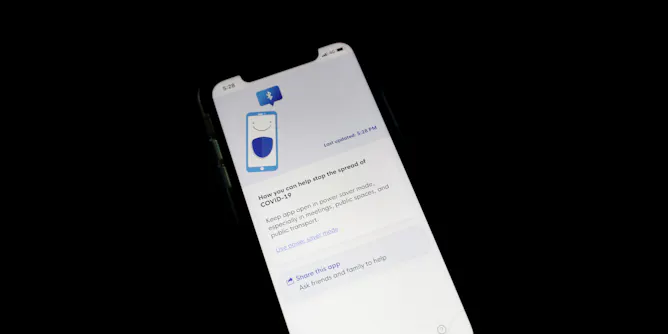
The federal government wants Australians to sign up to the TraceTogether app, which logs your social interactions via bluetooth. But how much privacy will we sacrifice to combat COVID-19?
Articles on Coronavirus response
Displaying 21 - 40 of 45 articles
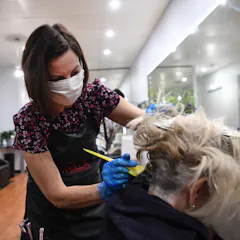
Nail salons, tanning, waxing and most beauty services have been forced to close – but hairdressers have been deemed ‘essential’ and are still operating.

Many want to do the right thing – tenants and landlords alike. But they lack guidance on how to go about it while still keeping their own heads above water.
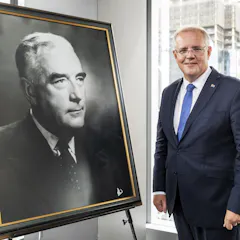
Government action to control rents isn’t unprecedented. Menzies did it in the second world and subsequent state measures kept rents in check for decades. Now extreme circumstances justify it again.
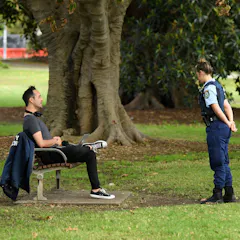
We need any new laws on what we can and can’t do to be clear to all, applied consistently and transparently, which is not the case at the moment.

Many governments and health organisations have been reviewing their advice on face masks – here’s why.
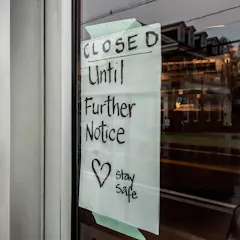
Many countries are spending record amounts to support people and businesses affected by COVID-19, but we need to scrutinise fiscal support because it’s money we’re borrowing from future generations.

The app is promising as a go-to resource for COVID-19 information. But as the crisis unfolds, these extra features could make it a more effective tool.
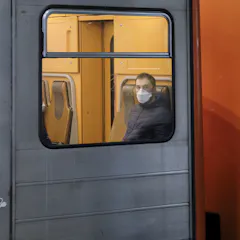
Many operators have lost almost all their fare revenue. Even those who operate on contract terms that reduce the impact of falling patronage must bear the costs of disinfection and other precautions.

As scientists frantically try to find drugs to slow COVID-19’s spread, citizen science offers an opportunity for all of us to get involved.

Housing is our first line of defence against coronavirus, so leaving someone homeless increases the risk for everyone. Australia should follow other countries in imposing a moratorium on evictions.

Many people don’t realise high-income earners are the biggest users of public transport in Australian cities, but it’s still low-income earners who are most vulnerable to service disruptions.

Government schools remain open but many parents are already voluntarily keeping their children home in an effort to ‘flatten the curve’.

The human spirit is tested during difficult times, but a scholar already has found examples of how people found ways to support one another in China. Other countries have shown similar resilience.

Telstra and Optus have already made arrangements to support customers with extra, free data during the COVID-19 pandemic. But what is the NBN doing?

Disasters and times of crisis bring out the best in most of us. Despite the media focus on initial panic at the COVID-19 pandemic, we are are starting to see a more heartening community response.

There are good reasons to call off a vote during a pandemic – but other good reasons to push ahead.

Australia can learn from what has been done overseas, especially in China, to keep public transport running while containing the spread of coronavirus.

Currently, the number of confirmed global COVID-19 cases is doubling about every six days. At this rate, Australia’s health sector will be unable to cope.

The COVID-19 pandemic may trigger large-scale disruptions such as school closures, event cancellations and movement restrictions.
Top contributors
-

Lecturer in Information and Communication Technologies, CQUniversity Australia
-
Senior Lecturer in human-centred computing & human-computer interaction, Western Sydney University
-
Honorary Associate, Institute of Transport and Logistics Studies, University of Sydney
-
PhD Candidate in Data Science and ICT Lecturer, Western Sydney University
-
Senior Research Fellow and Adjunct Lecturer, The University of Queensland
-
Associate professor, Deakin University
-
Associate Professor, Computing & Information Systems; Director, Melbourne Data Analytics Platform, The University of Melbourne
-
Research Fellow in Science Communication, UNSW
-
Professor of Urban and Regional Planning, University at Buffalo
-
Professor Of Public Affairs and Policy, University at Albany, State University of New York
-
Senior Research Associate, Norwich Medical School, University of East Anglia
-
Chair in the Economics of Disasters and Climate Change, Te Herenga Waka — Victoria University of Wellington
-
Professor of Epidemiology Healthcare Infection and Infectious Diseases Control, UNSW
-
Instructional Assistant Professor of Epidemiology and Biostatistics, Texas A&M University
-
Professor, Co-Lead of the Disrupting Violence Beacon and Chief Investigator ARC Centre of Excellence for the Elimination of Violence Against Women, Griffith University