

COVID-19 appears to spread in clusters, and that could keep it coming back even if case numbers are brought down.
Articles on Coronavirus clusters
Displaying all articles

While the focus has been on containing ‘hot spots’ of COVID-19 outbreaks, understanding why some areas have few or no cases could point the way to a staged reopening that starts with these areas.
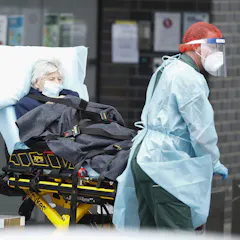
Most aged care homes are designed to be naturally ventilated. But when windows are closed to keep out the cold, poor ventilation appears to be common – and that’s a problem for infection control.

You’re right to be concerned but we can’t draw too many conclusions from just one or two data points. Instead, we need to look at averages over multiple days.

Not everyone has a job they can do from home. Mapping the patterns of occupations across Melbourne’s suburbs against COVID-19 cases strongly suggests why some parts of the city are more vulnerable.

If you’ve got a test but haven’t heard back, it’s possible the delay is caused by test samples needing to be taken to interstate labs and the huge scale of testing underway.
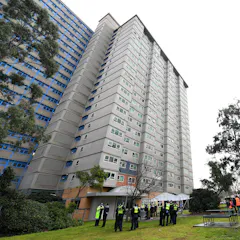
The spread of the virus through households creates costs higher than for isolation in hotels when families are large and living at close quarters as in Melbourne’s public housing towers.

As governments start to return to a new normal, people with disabilities in care facilities are still in serious danger of being left behind during the coronavirus pandemic.

The internal density and layout of buildings are key factors in COVID-19 transmission risk. This is not an argument against high-density cities, some of which have successfully contained the virus.
As New Zealand prepares to ease its lockdown from April 28, new COVID-19 clusters are likely to emerge – but a combination of testing and contact tracing should be able to stamp out major outbreaks.
Top contributors
-

Senior Lecturer in Accounting and Finance, University of Newcastle
-
Adjunct Senior Lecturer, School of Public Health and Community Medicine, UNSW
-
Adjunct Professor, Institute of Transport and Logistics Studies, University of Sydney Business School, University of Sydney
-
Professor of Global and Migrant Health, University of Southern Denmark
-
Professor, Early Childhood Studies, Toronto Metropolitan University
-
Adjunct Associate Professor, Faculty of Medicine
-
Associate Professor, Epidemiology and Environmental Health, University of Canterbury
-
Professor of Health Economics, University of Bologna, University of Newcastle
-
Adjunct Professor of Architecture, University of Technology Sydney
-
Professor of Epidemiology Healthcare Infection and Infectious Diseases Control, UNSW
-
Professor, Director Australian Urban Observatory, Centre for Urban Research, RMIT University
-
Associate Professor, Epidemiology, Deakin University
-
Associate professor, University of Sydney
-
Associate Professor and Principal Research Fellow, Melbourne Sustainable Society Institute, The University of Melbourne
-
Graduate Researcher, University of Newcastle