
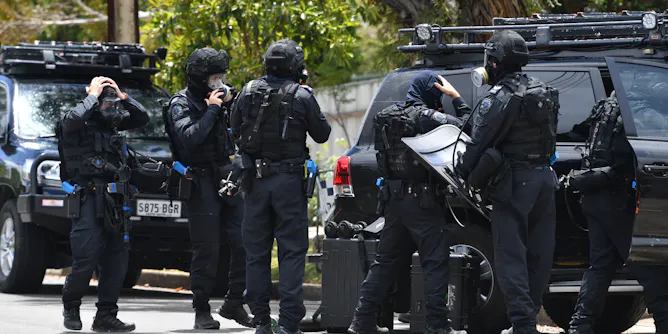
Australia is a long way from New York and Washington DC, but 9/11 was a seismic event for our country. For one thing, it has reshaped our ideas about criminal responsibility
Articles on Control orders
Displaying all articles
Proposed new laws will restrict parole and bail to those merely associated in some way with terrorism, even when they have not be arrested for – or convicted of – a specific terrorism offence.
An outline of the ways laws to restrict the activities of terrorist suspects have evolved.

The government is set to increase its use of punitive security measures against individuals it can’t bring to court.
Imposing significant restrictions on the liberty of a person found not guilty subverts the ordinary criminal justice process.
Detaining persons convicted of terrorist offences for lengthy periods after they have served their time could risk radicalising a section of the community who see the measure as unjust.

Preventive measures such as control orders should not be extended in the absence of evidence for their need or without safeguards.

The bill does not adequately balance the right of someone subjected to a control order to a fair trial and to know the case against them.

A control order is only useful where the police have sufficient intelligence about a person’s activity to apply for an order.

The Abbott government has today introduced the second tranche of its national security amendments – the Counter-Terrorism Legislation Amendment (Foreign Fighters) Bill 2014 – into the Senate. As its name…
Top contributors
-

Assistant Professor in Public Law and Human Rights, Durham University
-
Associate Professor, Law School, The University of Western Australia
-
Associate Professor, Griffith Criminology Institute, Griffith University
-
Professor of Law, Durham University
-
Senior Research Associate, Andrew & Renata Kaldor Centre for International Refugee Law, UNSW Law School, UNSW
-
Associate Professor, TC Beirne School of Law, The University of Queensland