
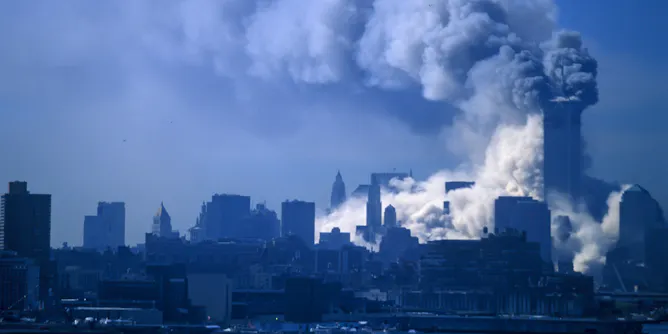
Are technological advances making us any safer? It appears not.
Articles on Anti-terrorism laws
Displaying 1 - 20 of 41 articles
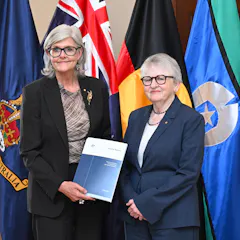
More akin to an intelligence review, the 14 recommendations in the interim report might help government agencies, but don’t yet reckon with the biggest questions.
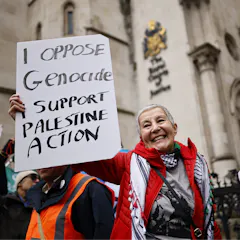
The court found Palestine Action’s activities had not yet reached the level, scale and persistence that would justify proscription.

The draft hate speech bill includes the biggest terrorism reforms in years, but it raises more questions than it answers.
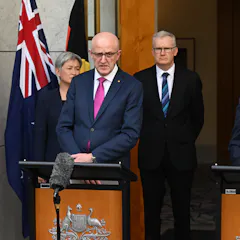
The listing triggers various offences, including for membership, support, or meeting with members of the organisation.

The caravan full of explosives terrified many Jewish people in January, so why is it not considered terrorism?
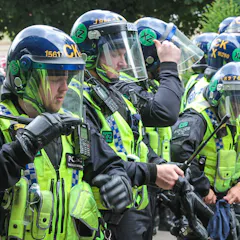
An expert on what terrorism law says, and why we don’t need a new one.
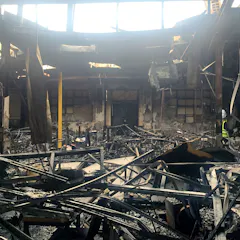
Police have upgraded the investigation of the firebombing of the Adass Israel Synagogue to a counterterrorism operation. Here’s how decisions like these are made and why they can take days.
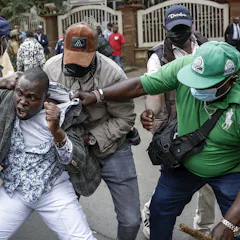
There are dangers to having government surveillance carried out without proper oversight and accountability.

Historically, Canadian police have disproportionately targeted Muslim communities in counter-terrorism efforts, while far-right extremists received comparatively scant scrutiny. Is that changing?

Cuban has yo-yoed on and off the US list of state sponsors of terrorism. Is the Biden administration changing that?

The billionaire owner of X (formerly Twitter) has taken aim at Australia’s eSafety Commissioner over being told to remove videos from his site. It’s just the tip of the legal iceberg.
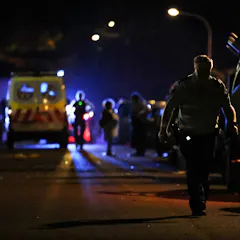
Sydney has seen two stabbing incidents within days of each other. Grim comparisons are inevitable, but what makes them different?

ASIO is effective in defeating threats and being transparent in reporting on them, but its latest annual threat assessment leaves room to question its strategic priorities.

Justices are weighing the arguments in two cases that have the potential of changing the way social media platforms operate.
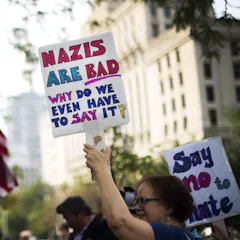
Critics of new terrorism laws argue they do not necessarily eradicate hate-fuelled violence — and they could make structural and institutional violence seem more palatable.
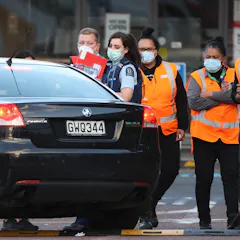
New Zealand’s second terrorist attack in two years highlights weaknesses in existing counter-terrorism laws. Beyond fast-tracking changes to those laws, two other legal areas need urgent review.

Addressing American domestic radicalism will require new ways of thinking about the nation’s problems, and new ways of solving them.

Legally designating domestic extremist groups as terrorist organizations – as some in the US advocate now – will have limited benefits, if any at all.

The decision to charge an incel youth with terrorism reinforces worrying trends in counterterrorism.
Top contributors
-

Associate Professor, Griffith Criminology Institute, Griffith University
-
Assistant Professor in Public Law and Human Rights, Durham University
-
Teaching Fellow, Te Kunenga ki Pūrehuroa – Massey University
-
Professor of Law, Durham University
-
Chair in Global Islamic Politics, Alfred Deakin Institute for Citizenship and Globalisation, Deakin University
-
Professor of Law, Auckland University of Technology
-
Adjunct Professor, Australia-China Relations Institute, University of Technology Sydney
-
Senior Research Associate in Media and Communications, University of Sydney
-
President and Vice-Chancellor, University of Surrey
-
Assistant Professor of Public Communication, American University School of Communication
-
Professor of Modern Middle Eastern History, University of California, Los Angeles
-
Professor of Law, American University
-
Senior Lecturer, Centre for Defence and Security Studies, Te Kunenga ki Pūrehuroa – Massey University
-
Associate Professor of Political Science, University of Chicago
-
Associate Professor, Faculty of Law, University of Windsor