
A trial would not be fair if a jury’s decision about a defendant’s guilt or innocence was influenced by material they saw online.
Articles on contempt of court
Displaying all articles
A federal court stopped contempt proceedings against Trump administration lawyers, but they may still have to respond to charges in states where they are licensed to practice law.

A recent House of Commons report suggested that the laws of contempt are not fit for the social media age.

‘It’s one big show of contempt for the court,’ says a former federal judge about the Trump administration’s handling of two cases related to its deportation of noncitizens to an El Salvador prison.
Judge James Boasberg’s order stops short of holding any government officials in contempt, but leaves open the possibility for these sanctions.
Given the forthcoming retrial, anyone reporting or publishing must take care not to breach the law on contempt of court.
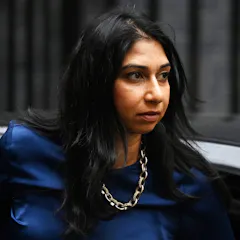
Contempt of court is a serious matter. It shouldn’t be a politicised issue.
Ignoring any order of the court undermines democracy and the rule of law. No one should be above the law.

Complicating things is the fact the prosecution plans to call Wilkinson as a witness in the trial.

The decision to broadcast an interview so far ahead of the final completion of the judicial process is a risky one. There was no pressing need to run this story now.
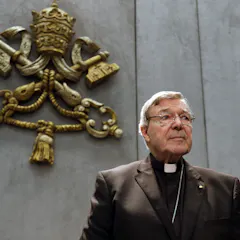
There is a clear legal reason why publications including The Age and news.com.au have copped hefty penalties.
Under an archaic law, people can still be punished for ‘scandalising the court’ or publicly criticising a judge’s ruling. It’s time for this law to be revisited.
Pell trial reporters, a judge and a media lawyer on why the suppression order debate is far from over
The Conversation, CC BY79.9 MB (download)
On the day George Pell was sentenced, several experts with wide-ranging experiences of suppression orders discussed how they affect the public’s right to know and whether the laws should be reformed.
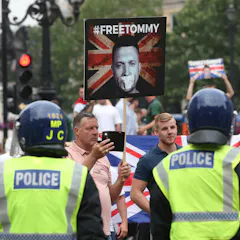
FreeTommy protests depict the founder of the English Defence League as a hero. But his sentencing had nothing to do with the right to protest.
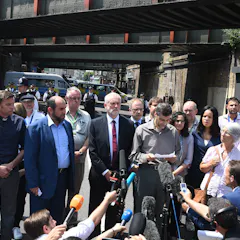
When an investigation is active, the press are subject to legal reporting restrictions.
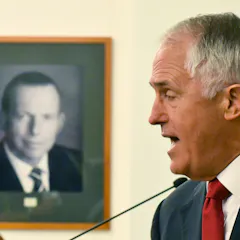
Coalition backbenchers have expressed several doubts over the Finkel scheme, most notably on affordability and whether it will include coal.
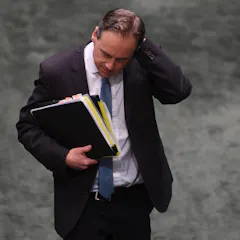
It is obviously important to protect the institutional integrity and independence of the judiciary – but the judiciary and judicial decisions should not be immune from criticism.
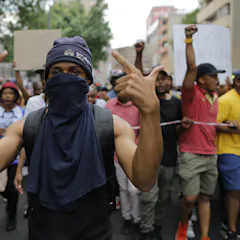
Universities were widely criticised for turning to the courts during a series of student protests in South Africa. So why did they do it, and did the interdict process work?
Top contributors
-

Senior Lecturer in Law, Leeds Beckett University
-
Emeritus Professor in Law and Criminal Justice, Adelaide University
-
Deputy Vice-Chancellor, Academic, University of Canberra
-
PhD Candidate in Law, Murdoch University
-
Professorial Fellow, University of Canberra
-
Teaching Fellow in Political Science, University of Birmingham
-
Senior Research Fellow, Centre for Advancing Journalism, The University of Melbourne
-
Professor of Journalism, The University of Melbourne
-
Senior Lecturer, Thomas More Law School, Australian Catholic University
-
Associate Professor, Melbourne Law School, The University of Melbourne
-
Associate professor, University of Lagos
-
University Teacher in Journalism, University of Sheffield
-
Professor of Law and Director of the Center for Professional Ethics, Case Western Reserve University
-
President, Dickinson College
-
Senior Lecturer in Law, Leeds Beckett University