

The gun rights decision from the conservative majority on the Supreme Court signals a fundamental change in how the court reads the Constitution.
Articles on Constitutional law
Displaying 61 - 80 of 183 articles
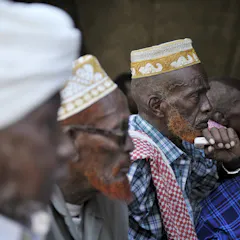
Somalia’s big test will be how to marry the social power of the clan system with a democratic future.

If the Supreme Court guts landmark rulings that established a constitutional right to abortion, the legal struggle will shift to statehouses and state courtrooms.
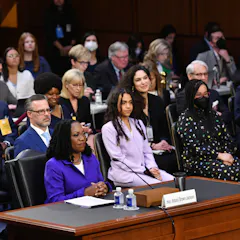
A constitutional law professor provides insight on what Judge Ketanji Brown Jackson, the first Black woman nominated to the Supreme Court, could mean for how that court works.
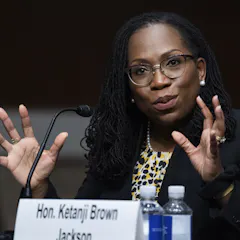
A constitutional law professor provides insight on what Judge Ketanji Brown Jackson, the first Black woman nominated to the Supreme Court, could mean for how that court works.
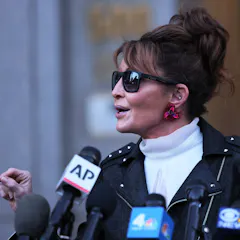
Under the Sullivan standard, a public official has to prove that there was ‘actual malice’ in defamation cases. That could be challenged in the Supreme Court.
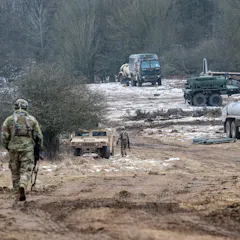
President Joe Biden is deploying 3,000 troops to support NATO in Eastern Europe. By doing so, Biden enters both a regional conflict and tangled legal territory.

Stewart Rhodes of the Oath Keepers, has been charged with seditious conspiracy over the attempted insurrection. A constitutional law scholar outlines why that may set a bad precedent.
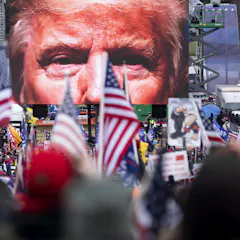
Diaries, visitor logs, handwritten notes and speech drafts are among the records Donald Trump has tried to keep from a Congressional committee investigating the Capitol riot of Jan. 6.
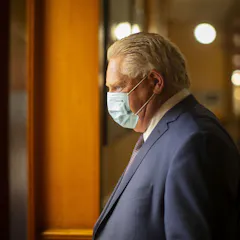
By paying greater attention to the originally intended application of the Canadian Constitution’s notwithstanding clause, along with the diversity of lawmakers in Canada, there’s a better path forward.
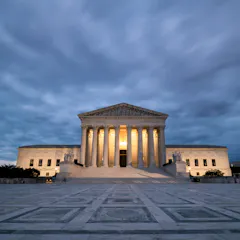
Religion was a common theme in some of the cases to come before the nine justices in the recently concluded Supreme Court term. Three experts help explain what is at stake.

Governed by a changeable body of ‘basic laws,’ Israel never settled basic questions like the rights of religious minorities. These destabilizing issues will continue to fester under a new government.
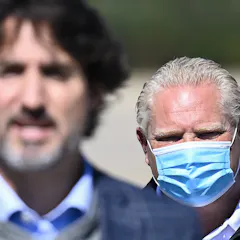
Ontario has historically been the province in Confederation most concerned about buoying Ottawa and limiting its own relative power for the sake of national unity. Doug Ford puts that legacy at risk.
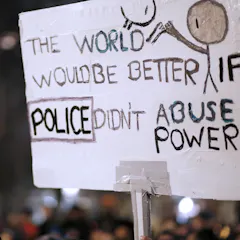
Since Tyre Nichols’ death there are renewed calls for Congress to pass police reform legislation. But the federal government has almost no control over state and local police departments.
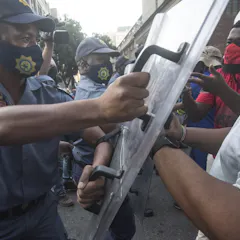
Instead of being a democratic right and legitimate form of expression, protests have increasingly been framed as threats to national security.

Can schools discipline students for remarks made online? The answer is not entirely clear.
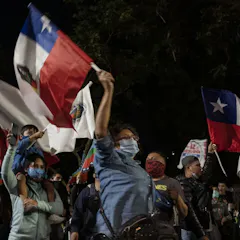
On October 25, Chilean citizens overwhelmingly voted to replace the country’s dictator-era constitution. This is an opportunity to look at the process of drafting basic laws around the world.
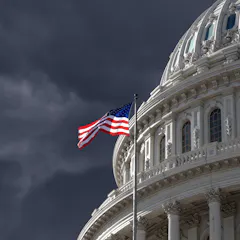
Judges are generally reluctant to decide elections, as the Supreme Court controversially did in 2000. As a result, Trump’s flurry of litigation could wind up throwing the election to the House.
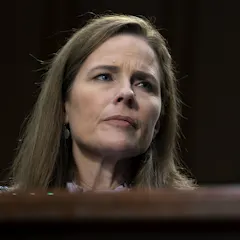
The judicial theory has been a major talking point during the past three Supreme Court nominations. But what does it actually mean?

Hotelier Julian Gerner’s challenge to the lockdown depends on whether ‘freedom of movement’ is an implied right in the Constitution. The High Court has never seen it that way.
Top contributors
-

Professor Emerita in Constitutional Law, University of Sydney
-
Professor of Law, UNSW Law School, UNSW
-
Professor of American Civics, University of Tennessee
-
ANU Law, Australian National University
-
Associate Professor in Law and Public Policy, University of Oxford
-
Senior Research Associate, Andrew & Renata Kaldor Centre for International Refugee Law, UNSW Law School, UNSW
-
Associate Professor of Law, Quinnipiac University
-
Associate Law Professor, University of New Brunswick
-
Associate Professor of Law, Rutgers University - Newark
-
Associate Professor of Political Science, College of Charleston
-
Foundation Professor of Law and Political Science, Arizona State University
-
Research Fellow, School of Law, The University of Queensland
-
Professor, Law Faculty, Monash University
-
Senior Lecturer in Law, Charles Sturt University
-
Lecturer in Constitutional and Administrative Law, and Public Procurement, Bangor University