
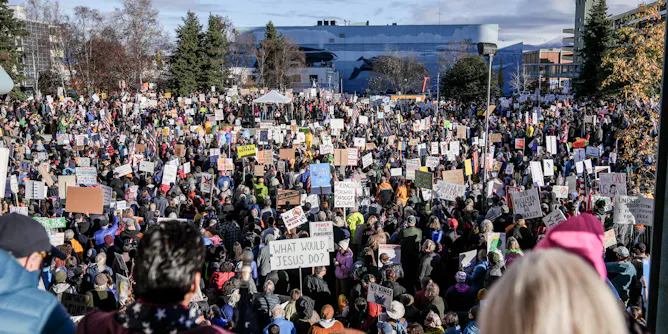
Once a democracy starts to erode, it can be difficult to reverse the trend. What does it take for democracies to bounce back from periods of autocratic rule?
Articles on Constitutional democracy
Displaying 1 - 20 of 25 articles

Political violence, made easier to carry out by the proliferation of guns, harms democracy by shifting the field of political disagreement from debate to aggression.
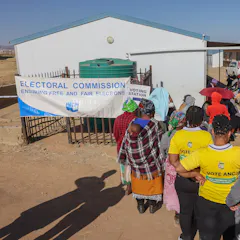
South Africa’s 2024 election was characterised by a shift in power and new threats to democracy – despite the majority still opting for the political centre.
A change in presidential leadership shows voters that stability and prosperity aren’t linked to a single leader.
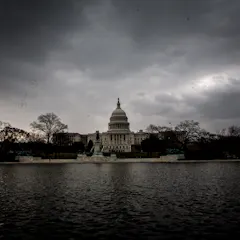
The absence of a speaker of the House − a single individual but the linchpin in Congress − could produce a dangerous crisis in America’s constitutional democracy.
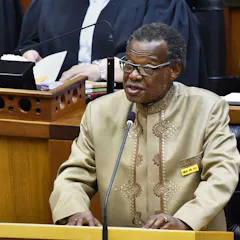
Buthelezi should not be dismissed as a mere stooge during apartheid. Yet, he deserves little praise as an advocate for human rights and civil liberties.
By declaring a ‘constitutional county,’ local leaders assert they are creating a refuge from anti- or unconstitutional actions undertaken by an overzealous state or federal authority.

Parliament’s failure to live up to its constitutional mandate was noted by the State Capture Commission as having enabled former president Zuma’s regime to corrupt state behaviour with ease.
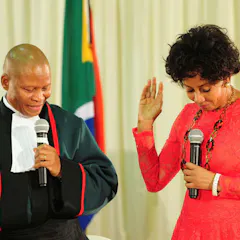
The rule of law embodies the rallying cry for the fair and democratic exercise of public power, buttressed by law and fundamental rights.

A monarch with absolute powers is just as dangerous as self-serving politicians in a democracy.
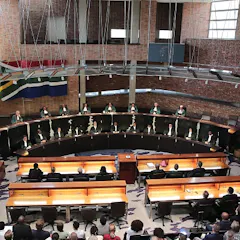
South Africa’s Constitutional Court should offer no apology for its split judgments.

After 1994 efforts were made to embed democracy. The focus was on policy and institution-building. What was missing was ensuring all South Africans were on board.
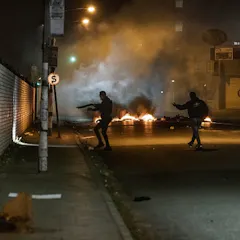
Corruption thrives in a destabilised state with weak institutions. South Africa cannot be allowed back to that space because there will be no turning back.
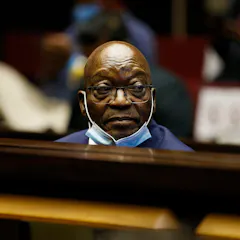
South Africa has many problems. But, as Jacob Zuma has found out, the strength of its rule of law and the independence of its judiciary should not be underestimated.

The judicial process in South Africa is hugely contested. This places an exaggerated burden on the courts to act with maximum independence and impartiality.
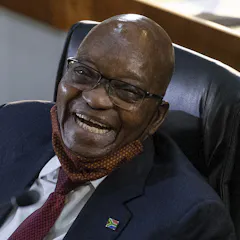
Zuma shares ignominy with former US president Donald Trump who, like him, subverted democracy while in office.
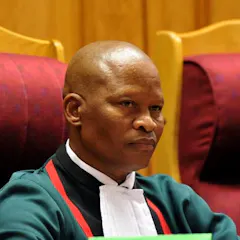
As a branch of government, the courts must naturally be accountable for the exercise of their power. The means of achieving their accountability must be balanced against their necessary independence.
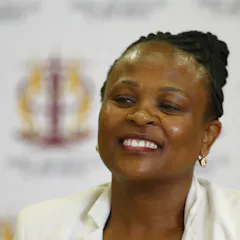
In this case, the appropriate conclusion about the Constitutional Court’s finding against the Public Protector is that there’s much to be comforted by.
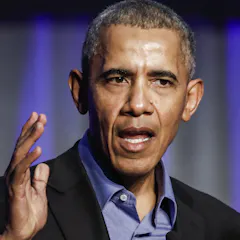
Drawing on Mandela’s legacy, Obama can help the world better understand the nature of threats to democracy.
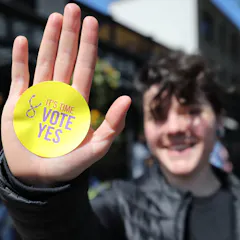
The almost total ban on abortion in Ireland does not work to protect women’s health.
Top contributors
-

Professor Emeritus of Public Law, University of Cape Town
-
Professor of Sociology, University of the Witwatersrand
-
Visiting Professor at the Business School, University of the Witwatersrand
-
Professor of Public Affairs, Tshwane University of Technology
-
Professor of Law, New York Law School
-
Distinguished Professor and Derek Schrier and Cecily Cameron Chair in Development Economics, School of Economics and Business Sciences, University of the Witwatersrand
-
Professor of Global Legal Studies, Birmingham Law School, University of Birmingham
-
Foundation Professor of Law and Political Science, Arizona State University
-
Professor of Urban Governance, University of the Witwatersrand
-
Emeritus Associate Professor in Public Law, UCT. Visiting Adjunct Professor, WITS School of Governance; Director, Africa Programme, University of Cambridge Institute for Sustainability Leadership, University of Cambridge
-
Extraordinary Professor, Department of Political Sciences, University of Pretoria
-
Post-Doctoral Researcher, South African Institute For Advanced Constitutional, Human Rights, Public and International Law (SAIFAC), University of Johannesburg
-
Head of Department, Public and Environmental Law Department, University of Limpopo
-
Professor Emeritus of Government, Wesleyan University
-
Director, Gilbert + Tobin Centre of Public Law, UNSW