
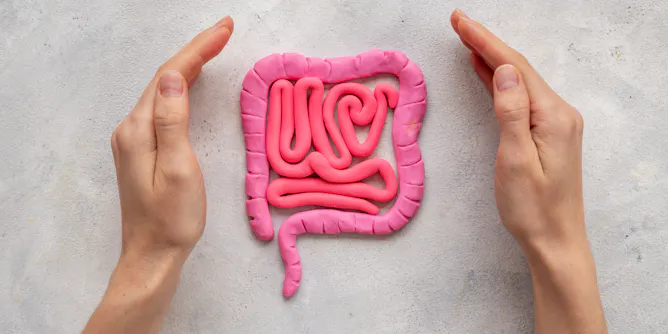
Most constipation is harmless. In rare cases, the colon can become dangerously enlarged. Here is what you need to know.
Articles on Constipation
Displaying all articles
Bloating, discomfort, constipation and diarrhoea can be common problems for travellers.

Laxatives are generally quite safe when taken at the recommended dosage. However, they can cause side effects and long-term use and overuse can lead to problems.

Kiwifruit, mineral water and rye bread are in. A high-fibre diet is out. Here’s what’s behind new advice to treat long-term constipation.

There’s no firm evidence eating eggs causes constipation. In fact, eggs may have the opposite effect. Here’s what’s really going on in your gut.

Elvis died on the toilet, possibly of a heart attack. A new Australian-led study involving thousands of people sheds new light on how constipation and heart attacks are linked.

Your biology really is telling you to poo in the morning. And yes, your coffee is partly to blame.

The ‘internal shower’ drink is being hailed as everything from a digestion booster, to a treatment for constipation and bloating, to a detox drink and hangover cure.

Our findings also have potential implications for the identification and treatment of irritable bowel syndrome.

If you believe the memes, men spend ages in the toilet. But they’re not always pooing. Here’s what they’re really doing.
One in seven Australians report symptoms of constipation, which might include hard stools, straining to poo, or having fewer than three bowel motions a week. These four things can help.

A step-by- step coordinated physiotherapy plan is key for patients with disorders related to the pelvic floor.
Constipation can occur when there’s a delay in digested food passing through your body and being expelled. It can also happen when your poo is too hard, often because it doesn’t contain enough water.

Around 75% of our faeces is made up of water. The other 25% is the good stuff, including bacteria, viruses and undigested food.
Haemorrhoids can be painful, and may sometimes require surgery. We don’t know exactly why they can become problematic but there are some things you can do to reduce the risk of getting them.

An expert explains how often you should poo and what it should look like.
Top contributors
-

Associate Professor and Clinical Academic Gastroenterologist, Western Sydney University
-
Laureate Professor in Nutrition and Dietetics, University of Newcastle
-
Assistant Professor, School of Physical and Occupational Therapy, McGill University
-
Visiting Professor, Unit of Clinical Epidemiology, Department of Medicine, Solna, Karolinska Institutet
-
Associate Clinical Fellow, Dietetics, Manchester Metropolitan University
-
Honorary Professor, University of Newcastle
-
Clinical Research Fellow in Neurogastroenterology, Queen Mary University of London
-
Research Associate, Unit of Clinical Epidemiology, Department of Medicine, Solna, Karolinska Institutet