

The Spanish city is remaking urban neighbourhoods by limiting through traffic in superblocks that give priority to pedestrians and street activities, not cars.
Articles on Congestion
Displaying 21 - 40 of 53 articles

The ‘superblocks’ are expected to have massive benefits for health and well-being – but it takes good governance.

E-changers are the latest group to move from the big cities to escape high living costs and congestion. But because they remain very productive remote workers some employers are embracing the trend.

Two-thirds of surveyed workers work from home one day a week on average, but could do at least half their work out of the workplace. If they commuted less often, congestion could be greatly reduced.
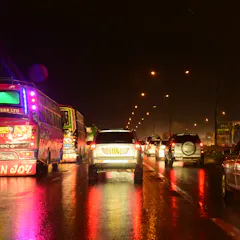
Sustainable and efficient transportation is essential for cities, communities and individuals to thrive.
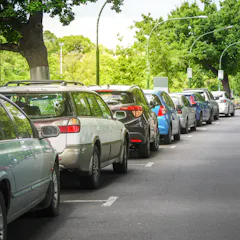
Australian cities have a glut of parking, even as politicians move to protect parking spaces or promise even more. There are better ways to keep congestion manageable and our cities liveable.
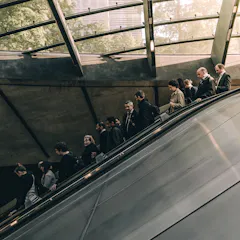
In many cities, convention holds that there’s a lane for walking and a lane for standing on the escalator. But human systems engineers suggest this isn’t the most efficient option for the system.

Operation Brock’s underwhelming test run goes to show how ill-prepared the UK is for a no-deal or hard Brexit scenario.
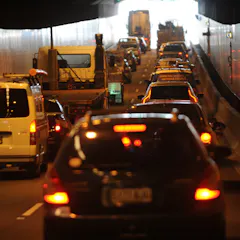
Cutting migration to Australia’s biggest cities would do nothing to ease congestion in those cities and could make it worse.
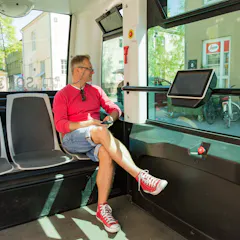
Apps that seamlessly combine all our travel options could be the most significant transport innovation since the automobile, but early trials show government policy support is vital to make MaaS work.
As traffic slows down, research is gathering momentum.

It can feel much faster to get the bus – but that could all be a matter of perspective.
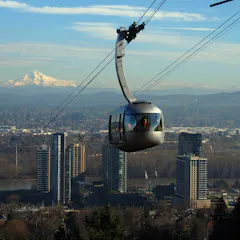
Popular as gondolas in ski-fields around the world, cable cars, aerial trams, wires or ropeways are increasingly used for mass transit in progressive cities. Is this the future for Australian cities?
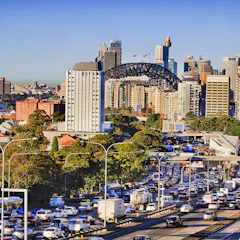
Busting congestion requires some creativity - and evidence-based methods. Here are four of these.
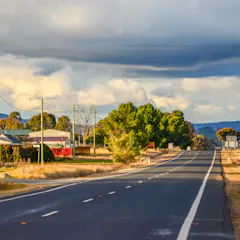
Turnbull put in place the City Deals program in 2015 - aiming to create better partnerships between all levels of government. Some projects are underway, but we need more than just partnerships.
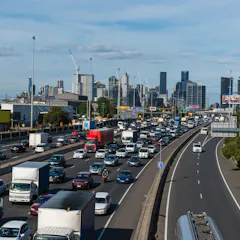
In the 70s, Whitlam tried to build new, big cities. But this was too costly. Now the most viable solution for Australia’s population woes is to make existing cities bigger.
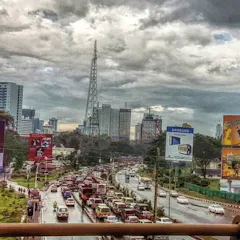
Research shows that cities benefit from car-free days in many ways.
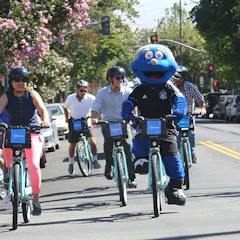
Urban planners often hope bike-share schemes might reduce reliance on cars and help with congestion. But very few of those who use share bikes have switched from driving.

Cities are expanding upwards and downwards, as well as outwards. With urban density also increasing, moving people efficiently around the city, often using ageing infrastructure, is quite a challenge.
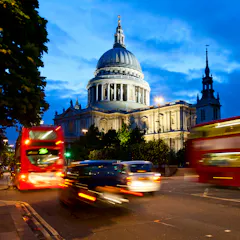
The congestion charge has helped to ease traffic and raise funds. But the rise of Uber and other private hire vehicles have raised unforeseen challenges.
Top contributors
-

Transport and Cities Program Director, Grattan Institute
-
Professor of Transport Technology and Sustainability, Swinburne University of Technology
-
Fellow, Grattan Institute
-
Associate Professor in Urban Planning, The University of Queensland
-
Program director, Cities, Grattan Institute
-
Honorary Professor of Transport Studies
-
Professor and Director, Institute of Transport and Logistics Studies, University of Sydney
-
Senior Lecturer in Psychology, Director of Undergraduate Studies in Psychology, Macquarie University
-
Adjunct Fellow in Psychological Sciences, Macquarie University, Macquarie University
-
Associate Research Scientist, Texas A&M University
-
Professor of Transport, University of Westminster
-
Director, Centre for Western Sydney, Western Sydney University
-
Associate Professor, Faculty of Medicine and Melbourne School of Design, The University of Melbourne
-
Professor of Human Geography, Macquarie University
-
E-Mobility Research Fellow, The University of Queensland