
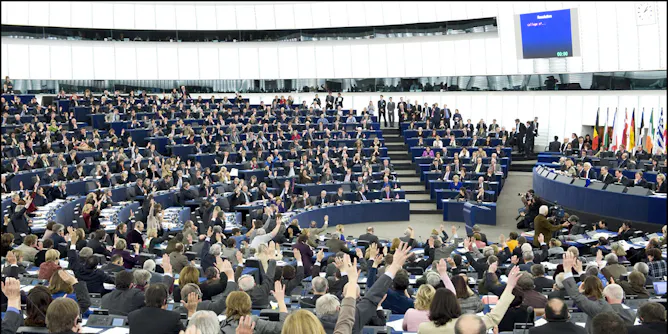
Policy frameworks shaping farming in the EU and beyond are suffering from funding misalignment and fragmented priorities, resulting in ineffective global climate efforts.
Articles on Common Agricultural Policy (CAP)
Displaying 1 - 20 of 44 articles

This may shift the EU’s climate debate.

The handing down of family farms is not only essential to ensure the long-term future of Europe’s agricultural sector, but also to steer it toward more sustainable practices.

Whether true or not, the UK’s political parties have failed to quash the perception that they prioritise cities.
Some people think the decision to impose higher tariffs is just an excuse used by the EU to keep protecting its own farmers.
Meat is cheaper than it should be – and alternatives are more expensive.
Green reforms are piling additional pressure on farmers struggling to make ends meet.

The end of CAP quotas has forced European farmers to compete with each other. The result: lower incomes, greater uncertainty and less bargaining power with distributors.
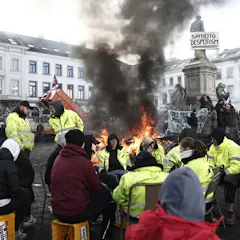
At the farmers’ protests in Brussels in February, there were some who demanded for authorities to cut back red tape, while others rallied against market concentration. But such a polarisation isn’t insurmountable.

Why are French farmers blocking the roads? An academic who has been studying discontent within the farming world since 2019 provides some clues.
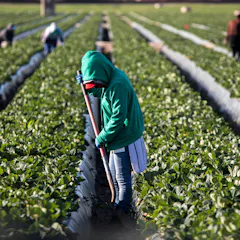
Migrant workers, despite being an essential part of the European agricultural workforce, are systematically exploited.
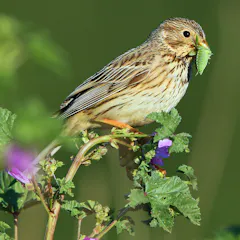
Insect-eating birds such as swifts and yellow wagtails are particularly vulnerable.
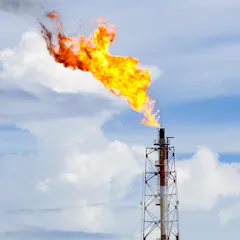
Major sources, like oil and gas ‘super-emitters’, are almost entirely neglected by regulations.

Environmental groups have criticised the government’s approach to nature – but what is this approach and why is it concerning?

Europe’s forests are growing, but tropical areas are losing tree cover at a massive scale due to EU demand for imported products. Here’s how to redress the imbalance.

The basic payments scheme that sustains 90% of farmers will be gone by 2028, but the reductions are biting already.
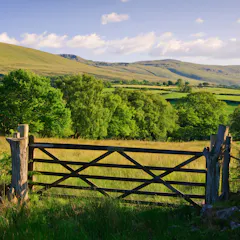
A new survey serves up a tall order for UK agricultural policy outside the EU.
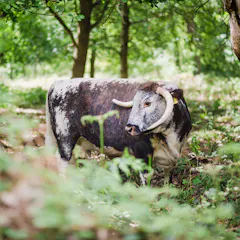
Alternative farming models, like wood pasture grazing, would allow the UK government to maintain food production while regenerating ecosystems.
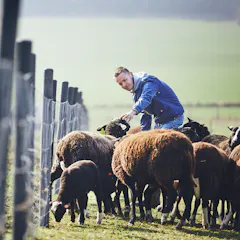
The €24 billion spent supporting farm incomes in richer regions could more than cover the EU’s Biodiversity Strategy.
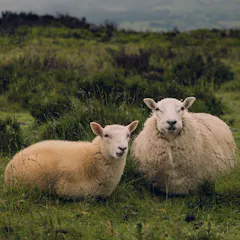
Public money for public goods sounds great, but the reality could look very different.
Top contributors
-

Professor of Politics, University of Warwick
-
Emeritus Professor in Economics and Policy, Nottingham Trent University
-
Lecturer in European Politics, Queen's University Belfast
-
Associate Senior Lecturer in Geography, Lund University
-
Part-time Professor, Florence School of Regulation, European University Institute
-
Research Fellow, Associate Tutor in Life Sciences, University of Sussex
-
PhD Candidate, School of Engineering and Materials Science, Queen Mary University of London
-
Research Fellow, Virginia Tech
-
Senior Lecturer in Economics, University of Sheffield
-
Assistant researcher, University of Sydney
-
Senior research associate, Lancaster University
-
Senior Lecturer in Chemical Engineering and Renewable Energy, Queen Mary University of London
-
Enseignante-chercheuse, Université d'Orléans, IAE Orléans
-
Honorary Professor of Genetics, Evolution & Environment, UCL
-
Senior Lecturer, Department of Media and Communications, Faculty of Arts and Social Sciences, University of Sydney