

The Kenyan state’s war against traditional brews is driven by a colonial mentality.
Articles on colonial era
Displaying all articles

A scholar who became a gun owner later in life found there is more to firearms than criminal violence, injury and death, and more to gun culture than democracy-destroying right-wing politics.
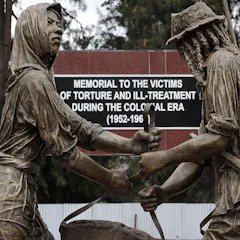
Oral histories serve as a challenge to the evidence in the colonial archive.
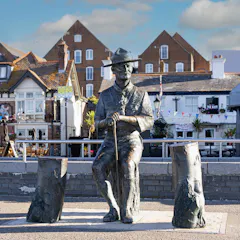
Like many other institutions, Scouts is caught in an awkward gap between tradition and modernity, as society grapples with colonial figures who were heroes to some, but not others.
The river wasn’t merely a physical entity – it was a symbol of spiritual and cultural significance, serving as the life force which flows through Country.

More efforts are needed to restore railways in Nigeria. It was a mainstay of the country’s economy in years gone by.
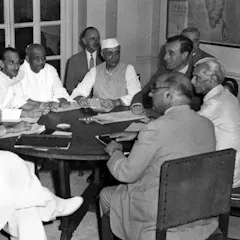
Economic growth picked up significantly for both India and Pakistan after independence, but they’ve chosen very different paths since.
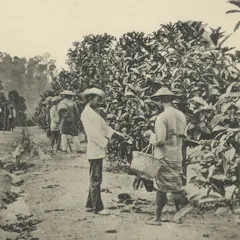
Economic inequality during the Dutch East Indies era varied radically, depending on where you look. What made the income distribution different from one region to another?
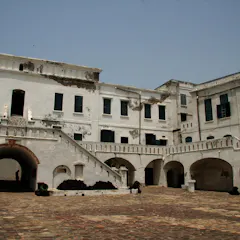
Studying local Africans’ contributions to the abolition of slavery provides a fuller understanding of its history.
This book is a history of individuals, ideas and institutions that were at the fulcrum of important scientific developments.
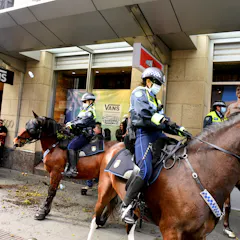
Along with firearms and disease, the horse was a key element in occupying Aboriginal land during the colonial period and controlling the largely convict workforce on the frontier.
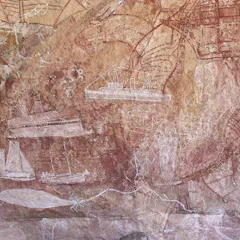
Pictures of boats and ships in rock art at the northwestern tip of Australia show the European incursions from the 1800s — but also the much earlier and lesser known sea trade with southeast Asia.

While history is often deployed as a weapon in eastern DRC, it also shows us stories of friendship and collaboration.
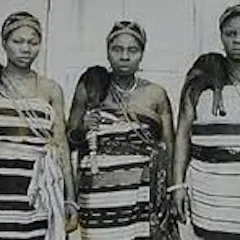
The petitions help us understand how Igbo women created spaces in a patriarchal society for active engagement with policies enforced by colonial rulers.
Top contributors
-

Sessional Academic, School of Humanities, University of Tasmania
-
Assistant professor, Utrecht University
-
Senior Lecturer in History, Federation University Australia
-
PhD Student, Australian National University
-
Post-doc, Department of History, Faculty of Arts and Philosophy, Ghent University
-
Senior research fellow, Flinders University
-
Project Officer Wadawurrung Traditional Owners Aboriginal Corporation, Indigenous Knowledge
-
Professorial Research Fellow, Adelaide University
-
Smuts Professor of Commonwealth History, University of Cambridge
-
Professor, College of Creative Arts, Design and Humanities, Adelaide University
-
Associate Professor, Oxford School of Global and Area Studies/ History, University of Oxford
-
Assistant Professor, Wageningen University
-
Stephen Gapps is a Friend of The Conversation.
Historian and Adjunct Lecturer, Charles Sturt University
-
Associate Professor, Portland State University
-
Gherrang/Biodiversity Project Officer, Wadawurrung Traditional Owners Aboriginal Corporation, Indigenous Knowledge