
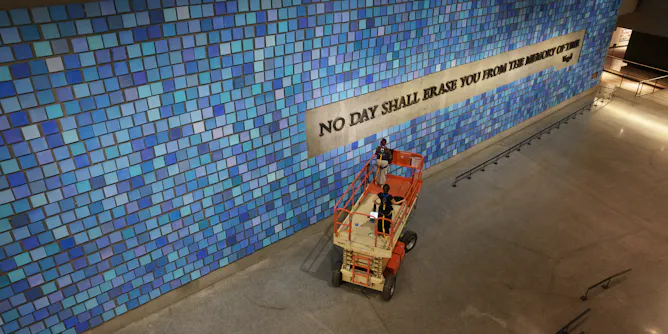
There is a strange nostalgia in realizing that something once so immediate now belongs increasingly to people who know it only as the past.
Articles on Collective memory
Displaying 1 - 20 of 26 articles

When times are tough, household brands and consumer rituals provide a source of comfort, reaffirming family identity and a sense of togetherness.

‘Ours is the only city in Brazil where the Confederate flag flies,’ said a city council member in Santa Bárbara d’Oeste. A new law there bans ‘symbols that promote racist and segregationist ideas.’

From armed conflict to the devastating 2004 tsunami, Aceh Chinese’s existence is almost forgotten despite having settled in the province for centuries.

Famous musicians and artists aren’t necessarily more likely to die at 27. But the story that they do shapes how we perceive history and reality.

Makeshift memorials are public expressions of private mourning in response to trauma and tragedy.

Societies celebrate heroes and commemorate tragedies. But why is there so little public acknowledgment of environmental disasters?
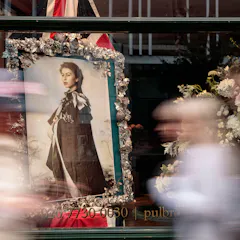
Many of those critical or skeptical of the monarchy have felt silenced.
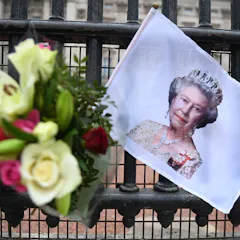
Grieving the queen’s passing can be different to grieving the loss of someone we were close to. It’s also complicated by politics, colonialism and the contest about who she really was.
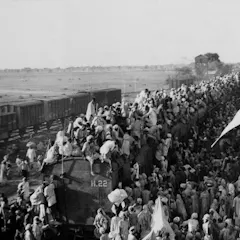
On the 75th anniversary of India’s partition, scholars from the US, Canada, France, UK and Australia write about their favorite book or film that best explains the trauma of a violent division.

Yom HaShoah is a day to commemorate the murder of 6 million Jews – but also their lives. Yizker bikher books lovingly document Jewish communities across Europe.

Ancient Athenians and Romans also let shared mass tragedies propel justifications for going to war – even when it wasn’t clear what that violence would solve.

Portions of the internet disappear every day. Preservation of this historical record requires a proactive approach by archivists and everyday citizens.

A survey of history teachers in Canada showed the prevalence of the myth of objectivity among history teachers.

What might the past offer us at this moment, and how will future generations reflect on this year? How will this present become the future’s past?
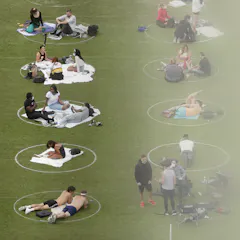
A global pandemic might be at the forefront of everyone’s minds. But we can’t assume that future threats will get the attention they deserve from people living in an information-saturated world.

Persecution is central to Jewish collective memory. So when armed police entered ultra-Orthodox areas of Jerusalem to close synagogues due to COVID-19, some residents reacted with fear and suspicion.
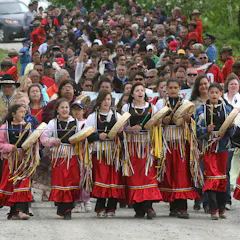
Memories can be powerful tools to address humanity’s most difficult political, sociological and environmental problems
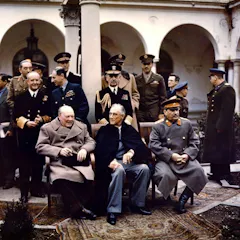
New research suggests people from Germany, Russia, the UK and US all think their own country was the most important in World War II.

Current events can boost our collective memory of past events in predictable ways, finds study.
Top contributors
-

Professor of Applied Mathematics, Uppsala University
-
Research Fellow, University of Liverpool
-
PhD candidate in Visual Studies, University of California, Irvine
-
Professor of Educational Psychology, University of Wollongong
-
Workday Professor of Technology and Society, Trinity College Dublin
-
Senior Lecturer in Urban and Environmental Planning, Griffith University
-
Professor of Management, University of the Sunshine Coast
-
Postdoctoral fellow, Australian National University
-
Professor, Department of Global Studies, University of North Carolina – Charlotte
-
Principal Lecturer, Centre for Memory, Narrative and Histories, University of Brighton
-
Professor and Head, Dept. of Earth, Ocean & Atmospheric Sciences, University of British Columbia
-
Professor of Classical Studies, Brandeis University
-
Professor of Law, University of British Columbia
-
Religious Collections Librarian/Archivist and Associate Professor, University Libraries, University of Dayton
-
Pro Vice-Chancellor (Research Performance and Development) and Professor of Cognitive Science, Macquarie University