

There are reasons to be skeptical, of both the quality of the evidence presented so far and the questionable assumptions that underlie claims of improved cognitive function after brain training.
Articles on Cognitive psychology
Displaying 21 - 33 of 33 articles
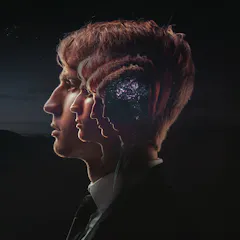
If consciousness is a by-product of our brains’ nonconscious processes, where does that leave us?

These psychological adaptations help us to sustain belief in religion.

It’s a psychological quirk that when something becomes rarer, people may spot it in more places than ever. What is the ‘concept creep’ that lets context change how we categorize the world around us?

To give the best chance for science to have an impact, we need to present our arguments to the public in the most convincing ways we have available. Applied psychology can help.

Research into cognitive processes found people who adapted their thinking to changing situations were more likely

Cognitive psychologists know the way our minds work means we not only don’t notice errors and misinformation we know are wrong, we also then remember them as true.

Arguments over religion miss the point that we have religious urges, whether or not we think they are justified.

Feel like something will be easy to remember? Your prediction may be influenced by how clearly the information was presented in the first place.

Quirks of human psychology can pose problems for science communicators trying to cover controversial topics. Recognizing what cognitive science knows about how we deal with new information could help.

Humans have limited ability to understand complexity, but there are serious dangers if we oversimplify things too much.

Subtle manipulation of virtual reality can radically change how we respond without us even realising it.

No longer dismissed as an undesirable negative trait to be avoided, humor is having a heyday among experimental psychologists.
Top contributors
-

Professor of Cognitive Psychology and Director of the Institute for Climate Risk and Response, UNSW
-
Research Fellow in the Psychology of Ideologies, University of Cambridge
-
Reader in Applied Cognitive Psychology, Cardiff Metropolitan University
-
Professor of Information Technology, Monash University
-
Assistant professor, Texas A&M University-Commerce
-
Postdoctoral Researcher in Psychology, Harvard University
-
Researcher in Virtual Reality, Auckland University of Technology
-
Ph.D. Candidate in Cognitive Science, University of California, San Diego
-
Professor of Cognitive Psychology, Grinnell College
-
Associate Professor in Values in Care, University of Staffordshire
-
Postdoctoral researcher of Computational and Cognitive Neuroscience, UCL
-
Professor of Human Development and Family Sciences, University of Connecticut
-
Reader in Applied Cognitive Psychology, Cardiff Metropolitan University
-
Postdoctoral Scholar, University of Washington
-
PhD Candidate, School of Psychology, UNSW