
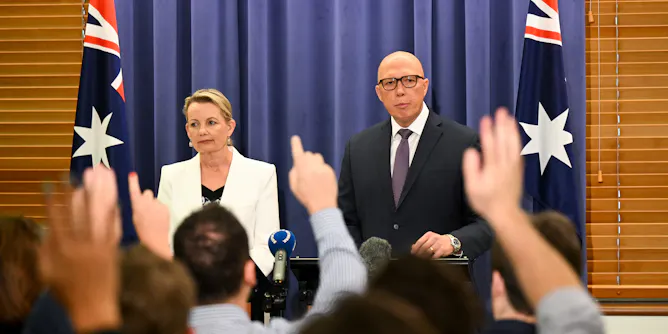
The Coalition’s position on the Voice is entirely consistent with their partisanship in this area of Aboriginal policy since the 1980s.
Articles on Coalition
Displaying 101 - 120 of 325 articles
In this podcast, Michelle Grattan and South Australian senator Simon Birmingham discuss the Voice, the Aston byelection defeat and "where to now?" for the Liberal Party

Voters will justifiably ask why they should vote for a form of recognition opposed by the people who are to be recognised.

The unexpected contest will be a major test for opposition leader Peter Dutton, who is particularly unpopular in Victoria.
Comparisons of national polls over an eight-month period show support falling only among Coalition voters. This may not be fatal to the referendum’s chances, but it is serious.

Politicisation of taxpayer-funded advertising is wasteful and creates an uneven playing field in elections.
Latest polling gives the Albanese government a strong lead over the opposition; Victorian election results are close to being finalised.
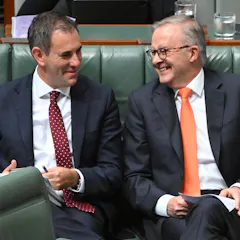
The Labor federal government continues to poll strongly, maintaining a big two-party preferred lead.
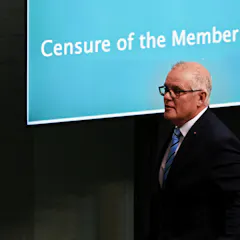
Archer was the only Liberal to vote for the motion. But Karen Andrews, who has previously said Morrison should quit parliament, abstained. Morrison was Andrews’ secret co-partner in home affairs.
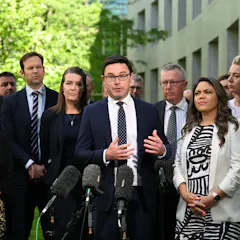
It is hard to say how big an influence the Nationals’ stance may have – but history shows us the Yes case in referendums is easily defeated.
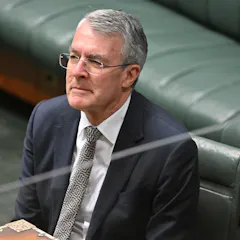
It’s the biggest reform to federal public accountability for over 40 years, though questions remain over whether it’s been designed sufficiently to weather future political storms.

Dealing with the crisis, driven by the Ukraine war, is now Labor’s problem, and that gave Dutton something substantial to latch onto.

His approval ratings are in the basement, but the opposition leader’s first priority must be holding the Coalition together.
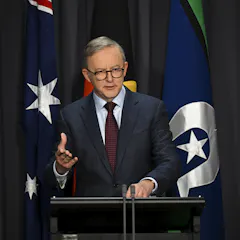
University of Canberra Professorial Fellow Michelle Grattan and Associate Professor of journalism Dr. Caroline Fisher talk about this week in politics.
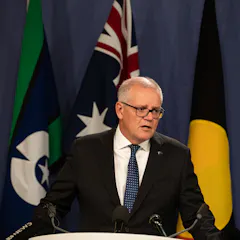
It’s not breaking news that Scott Morrison has trouble with women. His “woman problem” was one factor in his election defeat.
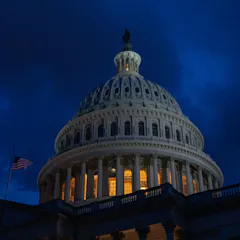
Almost 35 years after the US Senate was first warned about climate change, it has passed a bill. Here’s what it means for Australia.
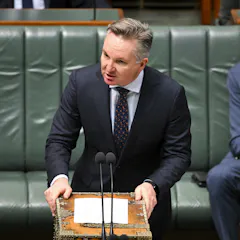
Labor won’t concede to the Greens’ core demands on the bill, but a climate “trigger” on new developments could ensure the bill has real force.

If the Liberals continue to struggle in cities, WA is likely to be more difficult than it may first appear for the Liberals to win back.

Renewed interest in nuclear energy will go nowhere unless we talk about carbon pricing. As energy minister Chris Bowen points out, nuclear is extremely expensive.

With just three more seats to be finalised in the House of Representatives, Labor will be hoping to pick up at least one of those to obtain a majority. Meanwhile, the Senate is looking promising too.
Top contributors
-

Professorial Fellow, University of Canberra
-
Election Analyst (Psephologist) at The Conversation; and Honorary Associate, School of Mathematics and Statistics, The University of Melbourne
-
Associate Professor, Politics and Public Policy, Flinders University
-
Professor, School of Economics, The University of Queensland
-
Professor, Australian Studies Institute, Australian National University
-
Democracy Deputy Program Director, Grattan Institute
-
Senior Fellow in Energy and Climate Change, Grattan Institute
-
Associate Lecturer in Public Policy, Flinders University
-
Professor of Public Policy & Law, Centre for Governance & Public Policy, Griffith University
-
Senior Lecturer, School of Political and Social Inquiry, Monash University
-
Professor, Journalism, RMIT University
-
Visiting Fellow, Crawford School of Public Policy, Australian National University
-
Professor of Law, Deakin University
-
Honorary lecturer, School of Social Sciences, UNSW
-
Senior Lecturer of Australian Politics, Murdoch University