
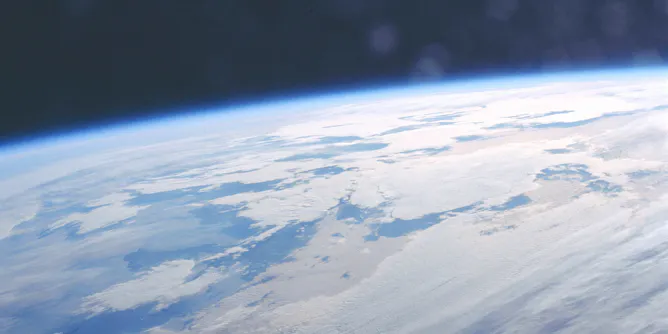
Something extraordinary is happening above Antarctica, and it might bring unusual weather to the southern hemisphere for months to come.
Articles on Climate chaos
Displaying all articles

Soil contains three times more carbon than the atmosphere. As climate change has become a global threat, agriculture’s ability to store more or less carbon is under close scrutiny.
Commonly used schemes such as the United Nations’ Sustainable Development Goals, B Corp certifications and the Global Reporting Initiative fail to hold businesses accountable on their green targets.

Humanity’s ecological footprint takes many different and interconnected forms that are all getting worse.
In a momentous case, young EU citizens will seek to draw among a range of principles from human rights, such as that of effectiveness, to arm-twist governments into impactful climate action.

Scientists need safe spaces to understand and process “climate emotions”. Group therapy helps people find the strength and resilience to continue their important work, without harming their health.

Only by understanding our past and current relationship with soil can we reflect and change our partnership with soil from extraction and exploitation to respect, relationality and reciprocity.

The challenge is not so much to integrate sustainable development into engineering or management education as to teach engineering and management for sustainable development.
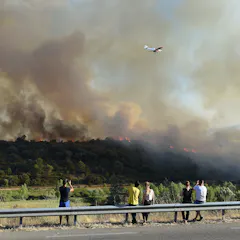
The forest fires that struck the Continent in the summer of 2022 were devastating, yet historical data shows that they were not ‘unprecedented’, contrary to media accounts.
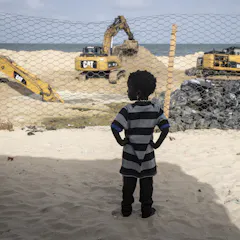
The promise of US$100 billion a year for North-South solidarity is now a source of frustration for developing countries.

Part of the 2021 Nobel Prize in Physics was awarded for work modeling Earth’s climate using its chaotic, complex weather. To scientists, chaos lies in the gray zone between randomness and predictability.
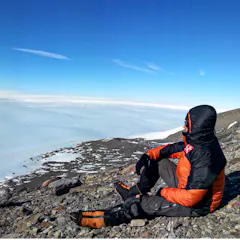
As the world warmed from the last ice age, a rise in carbon dioxide levels stalled for nearly 2,000 years. That’s always puzzled scientists, but now they think they know what happened.
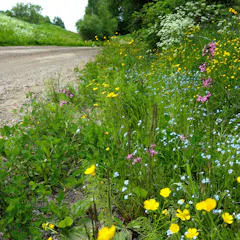
Temporary reductions in carbon dioxide during the pandemic won’t turn the tide on climate change or biodiversity loss, but summon the need for action.
Top contributors
-

Senior Research Fellow, Africa Centre for Evidence and Stockholm Environment Institute, University of Johannesburg
-
Doctoral student, Université de Montpellier
-
Directrice de recherche CNRS, juriste, spécialiste du changement climatique et du droit de l’environnement et la santé, Université Paris 1 Panthéon-Sorbonne
-
Manager, Indigenous Science Connections, TELUS Spark Science Centre
-
Directeur de recherche émérite au CNRS, Université Grenoble Alpes (UGA)
-
Professor of Biology, Fellow of the Royal Society of Biology, AAAS, and Sigma Xi., L’Université d’Ottawa/University of Ottawa
-
Professor of Sustainable Business Transformation, Munich Business School
-
Associate Professor, Department of Earth and Environmental Sciences, Mount Royal University
-
PhD Candidate, Fenner School of Environment and Society, Australian National University, Australian National University
-
PhD, Inrae
-
Docteure en économie, ancienne chargée de programme au Plan Bleu
-
Chercheur en Science du sol et Agronomie, Cirad
-
Chercheur en agronomie, University of Zimbabwe
-
Professeur en management, SKEMA Business School
-
Ingénieur de recherche, spécialiste des incendies de forêts, Inrae