
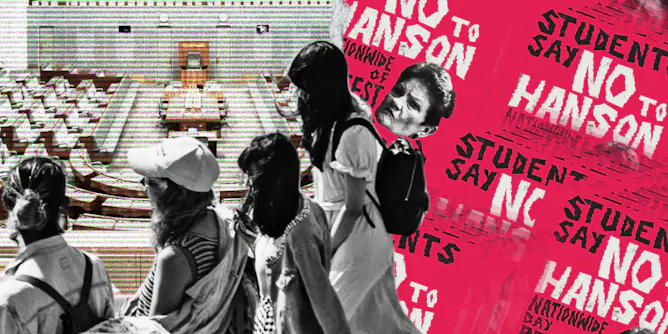
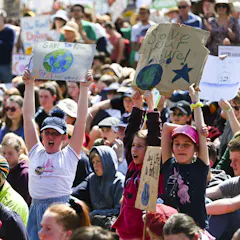
The argument that young people belong in school misses an important point: children and teenagers have political and civic rights.
Articles on Civics education
Displaying 1 - 20 of 23 articles

With most teens unlikely to tune into nightly TV news or to read newspapers, a new study shows the social media ban is all but cutting them off from the news.
We know that Australian children’s civics education is at an all-time low. The government’s social media ban may make this worse.
Young people will play a key role in the outcome of the next federal election. Research shows justice and environment are among their top priorities.

Diverse curricula are needed to acknowledge hidden histories, foster a shared humanity and a vision for a shared, socially just, future.
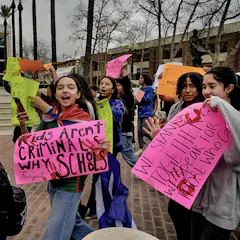
We can model hope by exemplifying how engaging in the work of justice means participating in a legacy that stretches across generations.
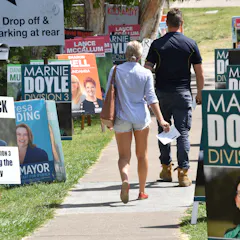
Australians’ civic engagement is spiralling, and has the potential to undermine democracy. New research from the UK may point the way forward.
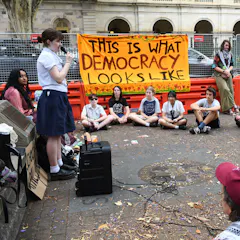
In a new civics report, only 28% of Australian Year 10 students met the ‘proficient standard’ in 2024 compared to 38% in 2019.
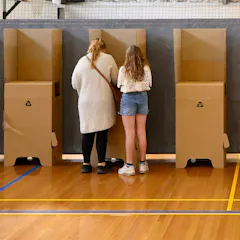
The most recent study showed more than 60% of Year 10 students don’t make the national standard for knowledge of democracy and law-making.

Participating in the Australian democratic system is not straightforward for newcomers. New research finds Australia should invest more effort into ensuring new migrants understand the voting system.
A new government report is a thoughtful and considered contribution to a debate on our democracy. Now it needs to spend money on debate and education.

The late Justice Sandra Day O'Connor’s iCivics curriculum has been shown to boost knowledge of the political process.
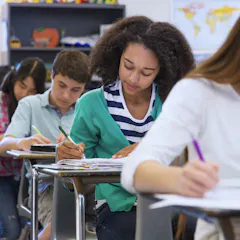
A historian of education policy says the dramatic drop in history test scores among the nation’s eighth graders was a predictable result.
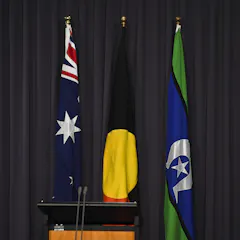
Australia has a great story to tell about its democracy – recent events have shown the importance of understanding and celebrating that.
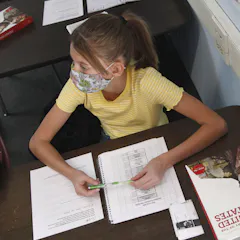
From the founding of the U.S., public schools were seen as a key way to develop an informed, active citizenry. Social studies educators struggle to achieve that goal today.

The benefits of sport for young people include not only health and enjoyment, but also an appreciation of many of the civic values and ethics that make our democracy work.

If federal and provincial governments don’t step up their commitments to teaching citizens how our governments work, social media will continue to fill in the void with misinformation.
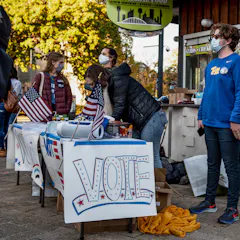
Civics education is not boosting youth voting, volunteering or even scores on academic tests about government – and may be related to QAnon support.
Only 38% of year 10 students reached the benchmark of knowledge on civics and citizenship required for their year level in 2019.
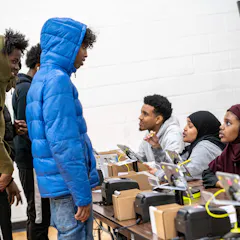
Young voters are important to the continuity of democracy because voting at a young age leads to continued voting throughout life. This year more than most, they’ll have a hard time getting started.
Top contributors
-

Professor of Political Sociology, Institute for Culture and Society, Western Sydney University
-
Associate Professor in Politics and International Relations, School of Social Sciences, Monash University
-
Associate Professor in History, Deakin University
-
Vice-Chancellor and President, Australian Catholic University
-
Senior Advisor ( Research and Communications), Australian Catholic University
-
Professor of Elementary Education, Mississippi State University
-
Deputy Director at CIRCLE, Tufts University
-
Director, Center for Information and Research on Civic Learning and Engagement in the Jonathan M. Tisch College of Civic Life, Tufts University
-
Senior Lecturer in Health and Physical Education, University of Tasmania
-
Associate Professor of Political Science, Oklahoma State University
-
Senior Lecturer in Personal Devlopment, Health and Physical Education, University of New England
-
Associate Professor of Public Policy, Politics, and Education, University of Virginia
-
Associate Professor of Political Science, Oklahoma State University
-
Associate Professor, Faculty of Arts, Design and Architecture, UNSW
-
Professor of Political Science, LaGrange College