
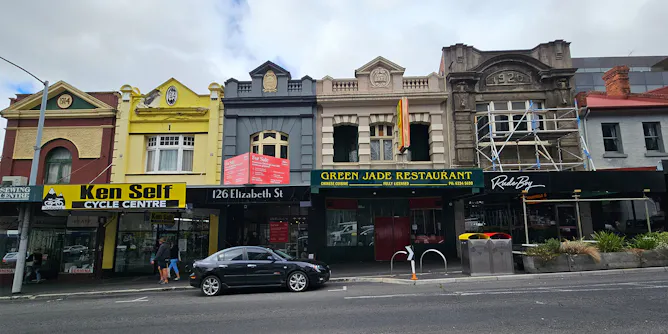
Early Chinese communities might seem to have left little tangible trace. But such an absence does not necessarily mean the absence of a Chinese history.
Articles on Chinatown
Displaying all articles
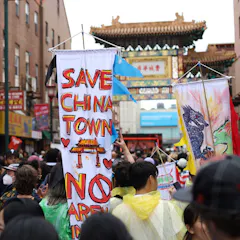
The ‘Save Chinatown’ movement began 50 years ago with the fight over the expansion of the Vine Street Expressway.
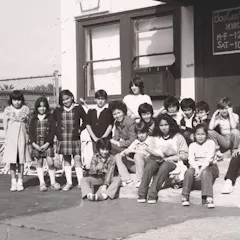
Ethnoburbs — ethnic suburban enclaves — challenge assimilation and represent a form of resistance against the homogenizing pressures of American suburbia.

Chinatowns once served as gateways for early Chinese immigrants. But the suburbs are the center of cultural and commercial life for new immigrants and later generations.
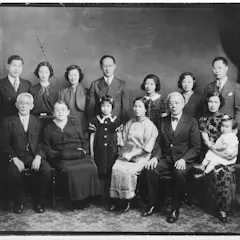
Author Ava Chin, a 5th generation New Yorker, traces the roots of today’s high rates of anti-Asian violence back to 19th century U.S. labour and immigration laws.
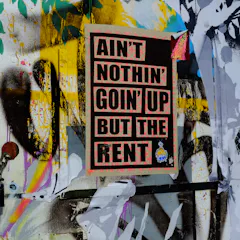
Gentrification is often used to describe the economic impacts of urban development. However, racialized communities in particular disproportionately feel its detrimental impacts.
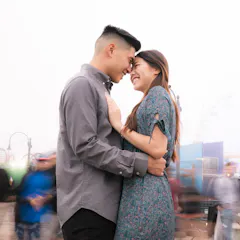
Chinese-oriented online dating platforms create “Chinatowns” in cyberspace, where Chinese daters gather in hopes of finding true love.
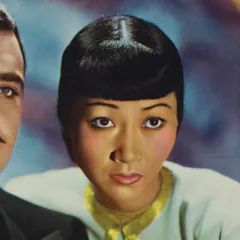
The Asian American actress rose to fame in an era when white actors in yellowface were more likely to play Asian characters than Asian ones.

From Cantonese sausage on the goldfields, to mid-century sweet and sour pork, to today’s delicate xiao long bao, Chinese food in Australia has come a long way.

Stating that COVID-19 is a “Chinese” disease, dehumanizes and reinforces well-worn stereotypes of Chinese people as the “yellow peril.”
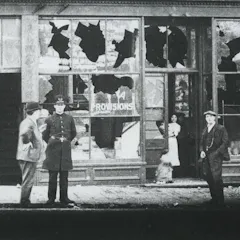
Fear of COVID-19 has sparked some to react with violent racism towards Asian Americans and Canadians. This is not the first time fear of disease has led to outbreaks of violent anti-Asian racism.
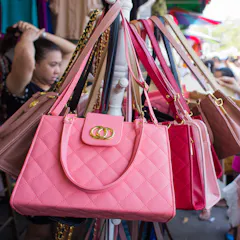
The Trump administration recently announced a plan to curb counterfeiting on websites and at ports of entry. But what’s missing is the role consumers play in supporting this criminal activity.
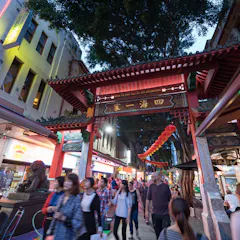
Chinatown Haymarket has emerged as an evolving site where Asian urban modernity is introduced into Sydney.
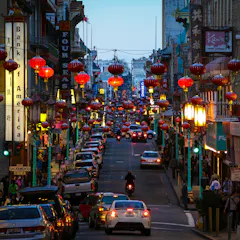
This highly-stylised slice of the Orient was originally a defence against racism.

The influence of London’s Chinatown is declining, but Chinese wealth is bringing far greater change to the city’s modern skyline.
Top contributors
-

Distinguished Professor of Cultural Studies, Institute for Culture and Society, Western Sydney University
-
Doctoral Researcher in Chinese American Literature, University of Sussex
-
Doctor of Philosophy in Culture and Society, Western Sydney University
-
Professor of Sociology, Goldsmiths, University of London
-
Associate Professor, Creative Non-Fiction Writing and Journalism, City University of New York
-
Professor of Asian Pacific American Studies, Geographical Sciences and Urban Planning, Arizona State University
-
Honorary Research Fellow, The University of Western Australia
-
Assistant Professor of Practice, University of Arizona
-
PhD student, Department of Sociology, University of British Columbia
-
Ph.D. Candidate in Geography and Urban Studies, Concordia University
-
Doctoral Student, Centre for the History of Science, Medicine, and Technology, University of Oxford
-
Management Consultant: Culture & Operations, NYC, Queen's University, Ontario
-
Assistant Professor of Criminal Justice, Center for Anti-Counterfeiting and Product Protection, Michigan State University
-
Associate Professor of Sociology, University of British Columbia
-
Professor of History, Stony Brook University (The State University of New York)