

Economist Jiao Wang talks to The Conversation Weekly podcast about the way China has diversified its export markets away from the west.
Articles on China tariffs
Displaying 1 - 20 of 31 articles

Chinese consumer habits are changing, but heritage and soft power mean there’s still a huge opportunity for Scotch.
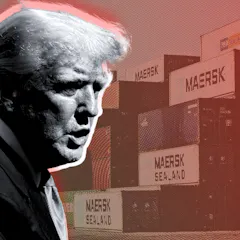
As the US winds back some of its highest tariff threats, Australia should see a small benefit.
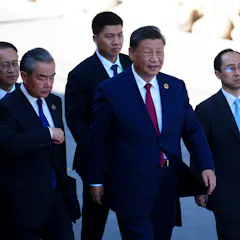
Fallout from the wars in the MIddle East are one area of concern for China.
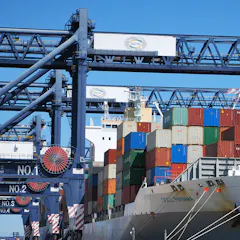
Last week’s lifting of tariffs on lobster brought a particularly nasty chapter in Australia-China trade relations to a close. But zooming out paints a more sobering picture of global trade.
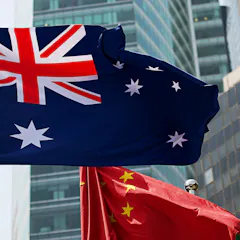
Both countries are committed to what will be the first dialogue since 2021 when China suspended talks over the “belt and road initiative”.
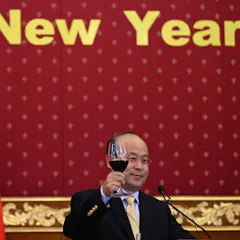
Now that diplomatic relations are out of the deep freeze, business and cultural ties between China and Australia are set for a major rebound.

The tariffs targeting cheap Chinese imports mean prices in the US are higher than average, at the same time Biden is pushing for more renewable energy. But their effect might surprise you.
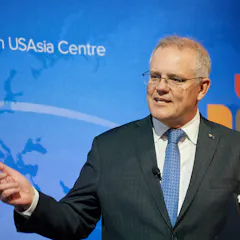
Australia’s Prime Minister wants reform of the World Trade Organization to rein in China’s ‘economic coercion’. But it also needs to constructively engage with China on that reform.
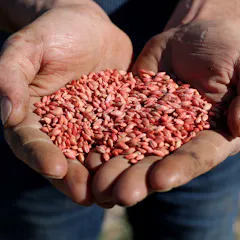
A formal resolution off Australia’s complaint about Chinese barley tariffs will likely take years. But at least it starts a structured process for dialogue.
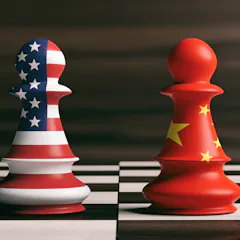
The US and China have reportedly agreed on a partial deal to ease tensions in the two-year old trade war. Does that mean it’s almost over? Fat chance, an economist says.

New tariffs on $160 billion of Chinese goods including smartphones and sneakers are set to take effect on Dec. 15.
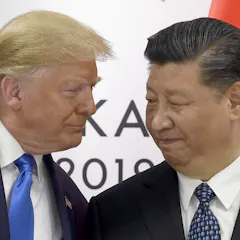
Trump’s endgame for the US-China trade war still seems elusive as the conflict continues to escalate.
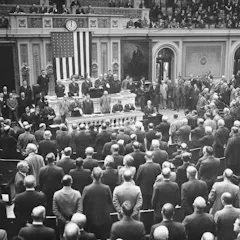
President Trump has unilaterally raised tariffs and sparked trade wars, all without consulting Congress. A century ago, the roles were reversed.
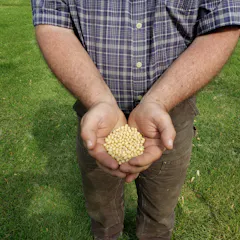
China has reportedly halted all purchases of US soybeans. Here’s why that’s going to be very painful for American farmers.
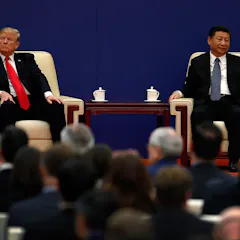
The US and China once again exchanged fire in their escalating trade war. Tariffs have been the main source of ammunition thus far, but China has other weapons it could begin to deploy.

Trump’s plan to slap $200 billion more in tariffs on Chinese goods is premised on yesterday’s waste-fueled economy. Tomorrow’s economy is ‘circular.’
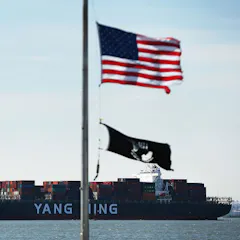
The economic theory of comparative cost advantage is more akin to natural law – it can’t be wished away. And during the ongoing trade war ignited by Donald Trump, it has never been more relevant.

The Trump administration’s promise of $12 billion in aid to offset losses from retaliatory tariffs will not make up for the long-term consequences of a prolonged trade war.
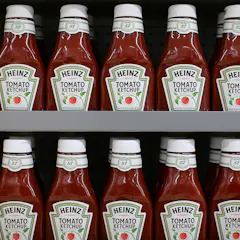
Canada recently slapped a tariff on US exports of the tomato-based condiment, and the EU plans to do the same, perhaps on the notion that it’s distinctly American. In fact, ketchup’s origins are global, as are its fans.
Top contributors
-

Associate Professor of Political Science, Georgia State University
-
Distinguished Professor, Arthur J. Gosnell Professor of Economics, & Head, Department of Sustainability, Rochester Institute of Technology
-
Associate Professor of Economics, University of South Carolina
-
Director and Professor, Australia-China Relations Institute (UTS:ACRI), University of Technology Sydney
-
Associate Professor, Co-Director of China International Business and Economic Law (CIBEL) Centre, Faculty of Law and Justice, UNSW Sydney, UNSW
-
Chair in Agricultural Marketing, Trade and Policy, The Ohio State University
-
Professor of History, University of the Pacific
-
Assistant Professor of Economics, University of California, Merced
-
Research Professor of Business, University of California, Irvine
-
Professor of Management, Rochester Institute of Technology
-
Senior Professor, People, Organizations and Society, GEM
-
Lecturer, University of Washington
-
Professor of Law, UNSW
-
Director of the Robert Mondavi Institute Center for Wine Economics, University of California, Davis
-
Associate Professor of Agricultural Economics, Colorado State University