
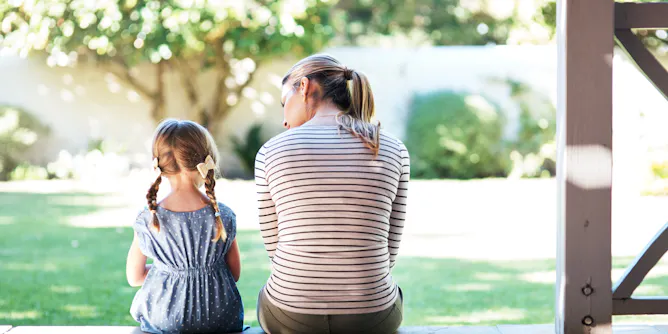
It’s rarely the creep at the playground. About 90% of child sexual abusers know the family.
Articles on Child sexual abuse prevention
Displaying all articles

Sexual predators have found a new way to exploit children: taking control of their webcams to record them without their consent. Here’s how the attack works and how you can protect your kids.

Adults don’t always listen to or understand children when they are abused.

The EU’s proposed regulations don’t align with existing technology. They’re likely to fail – or to break the internet as we know it.

Recent technological advancements mean fictitious children can now be almost indistinguishable from real children in child sexual abuse material.
Studies about warning labels aimed at protecting privacy raise red flags about Apple’s efforts to keep kids from sharing sexually explicit material.

The AFP warns child exploitation in Australia is becoming more prolific and brazen. But there are practical things parents can do to help keep their kids safe online.

In-person child sexual abuse is disturbingly common. But parents do not have to bury their heads in the sand: there are simple ways they can reduce the risk.
What research shows does and doesn’t work to prevent people convicted of sexual offences from reoffending.

New laws are needed to keep up with the growing problem of imported child sex dolls and robots.
It’s time to stop blaming the system and focus on why and how children are sexually abused.
New research offers valuable insights into the linguistic strategies used to groom child victims.
The sexual abuse of children is, understandably, a key concern for the public. But misperceptions about those who perpetrate it abound in public debate.

Ever since the Jimmy Savile affair, the police have been investigating historical child abuse on an unprecedented scale.
A Cochrane review found school-based child sexual abuse prevention programs were moderately effective in arming children with knowledge and skills that may decrease the likelihood that they will be harmed.
Top contributors
-

Professor, Queensland University of Technology
-
Distinguished Professor, School of Law, Queensland University of Technology
-
Visiting Research Fellow, School of Law, University of Leeds
-
Assoc Professor & Clinical Psychologist, The University of Queensland
-
Senior Lecturer in Law, Lancaster University
-
Associate Professor of Psychology, Swansea University
-
Professor, Social Work, Monash University
-
Lecturer in Law, University of the Sunshine Coast
-
Assistant Professor in Cybercrime, University of South Florida
-
Professor of Forensic Psychology & Director of the Centre of Crime, Offending, Prevention and Engagement (COPE), Nottingham Trent University
-
Senior Lecturer, University of Uyo
-
Professor of English Language & Applied Linguistics, Swansea University
-
Research Fellow, University of Nottingham
-
Co-leader, Sexual Violence Research and Prevention Unit (SVRPU), Senior Lecturer in Criminology & Justice, University of the Sunshine Coast
-
Senior Project Director at the Tech, Law & Security Program, American University