
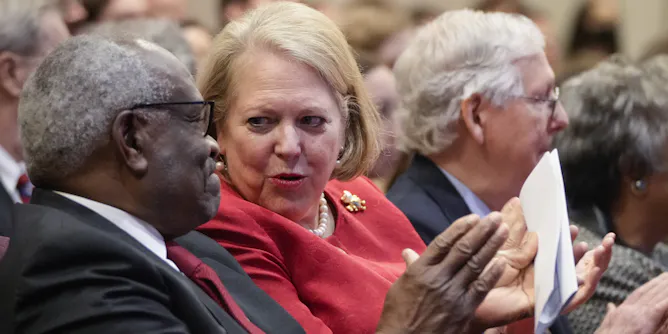
Conflicts of interest at the Supreme Court are nothing new. But no one has found a way to fix them.
Articles on Chief Justice John Roberts
Displaying 21 - 40 of 41 articles
Justices declined GOP requests to block court-approved congressional maps in North Carolina and Pennsylvania. But justices punted a bigger question over the role of courts until after the midterm elections.

There is value in observing legal precedent, but sometimes circumstances, logic or judges’ views determine it’s time to overturn it.

A review of some cases offers a window into why very few civil sexual harassment claims make it to trial.

The US Supreme Court is often less insulated from partisan politics than many Americans assume.
President Trump’s populist control of his party didn’t extend to control in courtrooms where he challenged election results. That’s where the rules of politics met the rules of law, and politics lost.
A quantitative analysis of potential nominees to the Supreme Court reveals that conservatives could get a real lock on the nation’s highest court.
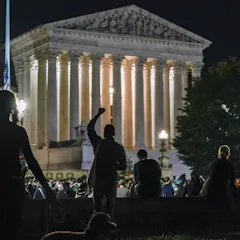
A 6-3 conservative court will hear a broader range of controversial cases, shift interpretations of individual rights and put more pressure on local democracy to make policy decisions.
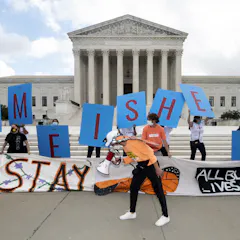
Those who say the Supreme Court’s last term was a liberal success fail to understand that the types of decisions they see as victories are fleeting triumphs that will not endure.

Justice Neil Gorsuch joined the Supreme Court as a conservative. But his ruling in a major civil rights case is part of a pattern of justices setting aside ideology to address historic injustices.

In a 5-to-4 decision, SCOTUS delivered a major blow to Trump and opened the doors to the court being an arbiter of public honesty
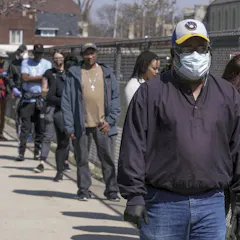
The Supreme Court under Chief Justice John Roberts has reversed its decadeslong practice of protecting voters’ rights and removing barriers to casting ballots.

In 1868, during the impeachment trial of President Andrew Johnson, the Senate tied on two votes. Chief Justice Salmon P. Chase broke both ties.
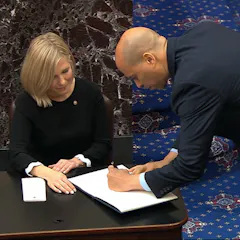
As the Trump impeachment trial plays out in the Senate, the 100 lawmakers there are required by law to abide by a special oath.

Both political parties are trying to draw analogies between the impeachment process and a criminal trial – for political reasons, not legal ones.
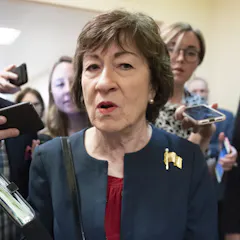
No written law or rule requires the senators to remain silent on the issues. But it’s probably a good idea, and a promising sign of fairness.
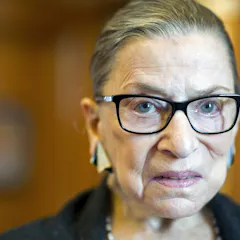
Does a foundation’s award of a US$1 million prize to Supreme Court Justice Ruth Bader Ginsburg raise ethical questions? It’s hard to tell, because the court has no published ethics guidelines.
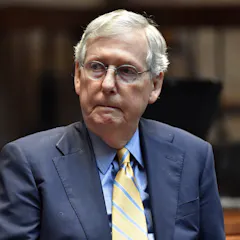
Senate Majority Leader Mitch McConnell is known as a master of Senate rules. If the House impeaches President Trump, what could he do to influence the process – and outcome – of a trial?

Conflict made its way to the Supreme Court this past session with two cases – one about the census, the other about gerrymandering. A court scholar says the two cases are intimately connected.
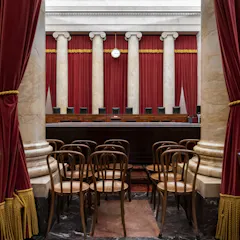
The Supreme Court has issued what’s likely to be its final word on partisan gerrymandering, saying it’s a political issue, not a legal one. That means reform lies in the hands of voters.
Top contributors
-

Professor of American Civics, University of Tennessee
-
Professor of Law, University of Richmond
-
William Nelson Cromwell Professor of Jurisprudence and Political Science, Amherst College
-
Professor of Law Emeritus, Vermont Law & Graduate School
-
Distinguished Professor and John F. Kimberling Professor of Law, Maurer School of Law, Indiana University
-
Professor of Political Science, Hamline University
-
Director of the Brechner Freedom of Information Project, College of Journalism and Communications, University of Florida
-
Regents and Distinguished Professor of Environmental and Occupational Health, Texas A&M University
-
Williams Memorial Professor of Law, Northwestern University
-
Professor of Political Science, LaGrange College
-
Professor of Political Science, Anthropology, Public Policy and Law, USC Dornsife College of Letters, Arts and Sciences
-
Professor of Law, University of Dayton
-
John Rennie Short is a Friend of The Conversation.
Professor Emeritus of Public Policy, University of Maryland, Baltimore County
-
Associate Professor of Law, Quinnipiac University
-
Associate Professor of Political Science, Rochester Institute of Technology; Institute for Humane Studies