
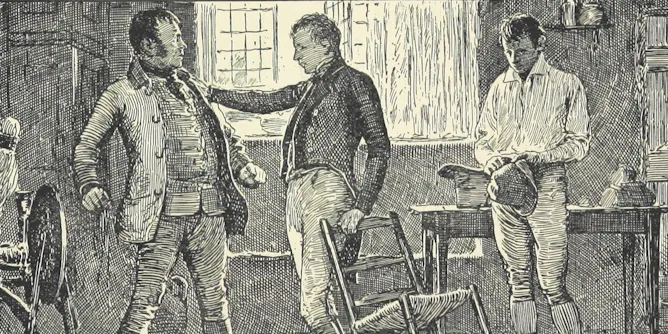
In the age of AI we are once again hearing about Luddites, the 19th-century textile workers who sought to protect their livelihoods in early industrial England.
Articles on Charlotte Bronte
Displaying all articles
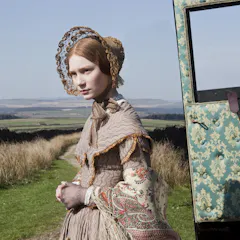
Re-reading Jane Eyre after my diagnoses of autism and ADHD, her journey resembles the struggles of autistic women who learn to mask. I’m not the first one to see it.
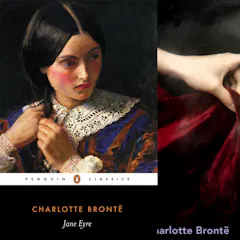
Charlotte Brontë’s first-person masterpiece is a landmark in the novel of interiority, the history of feminism, and the representation of religion and race.
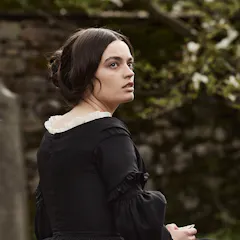
An expert in the lives and works Brontës argues that it’s time for a radical change in the way we think about Emily Brontë’s death.
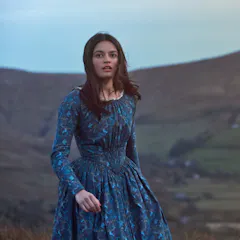
A new film about the author mixes biography with mythology and some dramatic reinvention.

Books that will bring the beauty of Derbyshire’s rolling hills alive.
And every one of them has a happy ending.

Stories like ‘Romeo and Juliet,’ ‘Alice’s Adventures in Wonderland’ and ‘Jane Eyre’ are still relevant today.
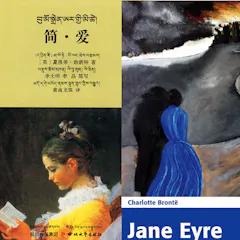
What was a thoroughly English book has become a multilingual, ever-changing global text continually putting down roots in different cultures.
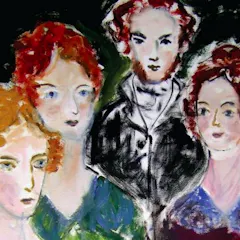
Despite the myth of consumption as an ethereal, wasting disease, the more prosaic truth is that the Brontës likely infected one another with tuberculosis.
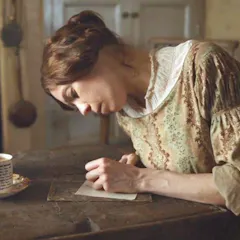
Cast as some unworldly young woman who wrote a 19th-century romance, Emily Brontë is more powerful and relevant than she is given credit for.
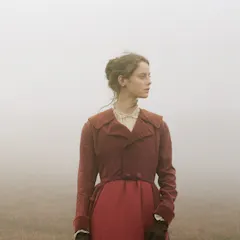
This week is the 200th anniversary of Emily Bronte’s birth. If reading Wuthering Heights - her only published novel - feels like a suspension in a state of waking nightmare, what a richly-hued vision of the fantastical it is.
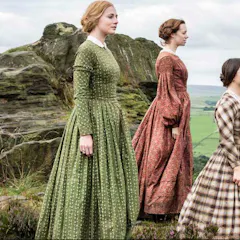
By refusing to idealise or victimise the women in Wuthering Heights, Brontë reveals herself as an early feminist.
Brontëk is a rare work that encourages Brontë fans not to take the sisters too seriously.
The unmasking of Charlotte Brontë changed the way that her books were read.
Charlotte Brontë’s heroines - most famously Jane Eyre - struggle with psychologically complex questions. And unlike Jane Austen’s female protagonists, they prize self knowledge and self expression over conventional moralism.
Top contributors
-

Senior Lecturer in English, Loughborough University
-
Professor of 19th Century Literature and Culture, King's College London
-
Researcher and Tutor, University of Oxford
-
Senior Lecturer in English Literature, York St John University
-
Lecturer, the School of Liberal Arts, The University of Wollongong, University of Wollongong
-
Associate Professor of Theatre and Media Drama, University of South Wales
-
Professor of English, University of Sydney
-
Professor of English and Comparative Criticism; Tutorial Fellow, St Anne's College, University of Oxford
-
Doctoral Candidate, Creative Writing, Australian National University
-
Lecturer, English Literature (Specialist in Victorian Literature and Alcohol), University of Bristol
-
Professor of English, University of Richmond
-
PhD Candidate, Literary Heritage, Nottingham Trent University
-
Senior Lecturer in English, University of Sydney
-
Senior Lecturer in English Literature, De Montfort University
-
Professor of History, McGill University