
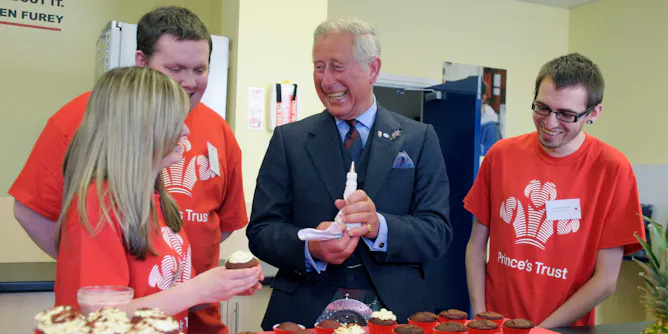
While ‘patron’ is a position with no formal power, it’s an important role for members of the royal family.
Articles on Charity
Displaying 41 - 60 of 211 articles

Virtue signaling is designed to communicate specifically to one partisan tribe and to affirm its moral superiority. A scholar of ethics and politics explains why that is unwelcome in a divided US.

Competition is hurting charities and the causes for which they raise funds. There must be a better way.

The 2022 federal budget implements long needed regulations to support the charitable sector.

Far more people are dying of hunger around the world than in Europe’s new war.

To date, the program has provided nearly $10 million to roughly 137,000 of the country’s poorest citizens.

Give with your head, not just your heart, advises a scholar who has studied donations made after disasters and other crises.

Three scholars weigh in regarding the priorities of these wealthy American donors, who gave less to social service and racial justice groups than in the first year of the COVID-19 pandemic.

Muslims also gave more to causes tied to relief from economic and health problems that arose during the COVID-19 pandemic.

Australians love mass sporting events and raising money for charity. Under COVID, these activities have taken a major blow.

The investor has already given much of his fortune to charity and has pledged to donate nearly all of the rest.

Canadians should consider place-based giving, or donating ‘at home,’ through local community foundations that are well-positioned to navigate and bolster the post-pandemic recovery.

Behavioral economics, long employed in grocery stores to guide customers to certain products, could be employed by food banks and pantries to encourage healthier choices.

Our preoccupation with the personal relationships of big donors is overshadowing charitable efforts.

The first survey of its kind in 15 years also indicated that the number of couples in which one partner makes decisions about giving for the whole household is rising.

Despite evidence that cash payments can help improve well-being, they have limitations as well, according to a development economist.

The line between supporting welfare on one hand, and paying for core services on the other has become more blurry since the pandemic

In the 19th century, Purim became an occasion to hold fancy dress parties, the proceeds from which were given to charities. These parties helped American Jews gain a standing among the elite.

While support for social services and historically black colleges and universities rose sharply, these donors spent a tiny fraction of what the government distributed to people who needed help.

A food policy researcher helps make sense of the lexicon of US food policy terms, and explains how they relate to racial justice.
Top contributors
-

Professor of Accounting, The Ohio State University
-
Director, Centre for Philanthropy, University of Kent
-
Glenn Family Chair Emeritus of Economics and Philanthropic Studies, Indiana University
-
Assistant Professor of Philanthropic Studies, Indiana University
-
Professor of Public Administration, Binghamton University, State University of New York
-
Adjunct Industry Fellow, Centre for Social Impact, Swinburne University of Technology
-
Interim Director of Data & Research Partnerships at the Lilly Family School of Philanthropy, Indiana University
-
Assistant Professor of Law, University of Chicago
-
Professor of Law, University of Pittsburgh
-
UNESCO Chair in AI Ethics & Governance, IE University
-
Senior Lecturer in Law, University of Liverpool
-
Lecturer in Social Inquiry, La Trobe University
-
Furman Public Policy Scholar, New York University
-
Professor of Law, Texas A&M University
-
Senior Lecturer, International Development and NGO Management, University of East London