
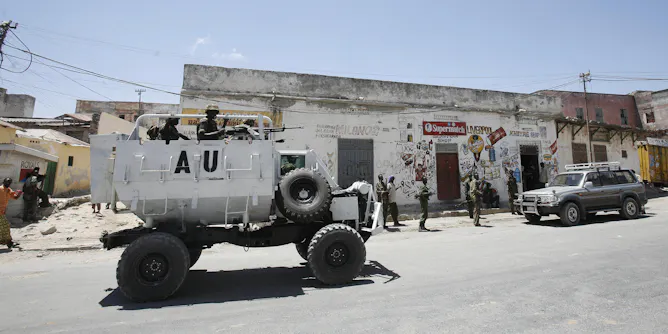
At a time when UN peace operations are declining, African organisations are often the first responders to emerging crises.
Articles on Central African Republic (CAR)
Displaying 1 - 20 of 76 articles
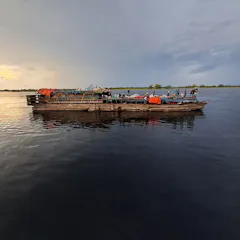
Baleinières, handmade wooden cargo ships, are floating microcosms of life in the DR Congo.

A secret HIV research project carried out in the Central African Republic in the 1990s sheds light on how biomedical extractivism operates.

Over 100,000 water handpumps in rural sub-Saharan Africa are broken, leaving millions without safe water. Regular maintenance is cheaper than repairs.
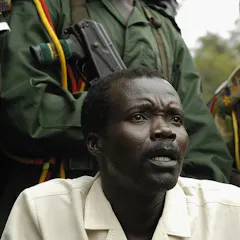
Joseph Kony and his Lord’s Resistance Army have relied on borderlands and declining political will to avoid detection.

In the Central African Republic, voting has become a tool of exclusion.
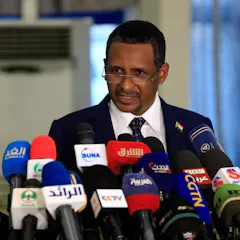
The creation of a parallel government risks cementing a permanent division of Sudan.

Pope Francis transformed the church from an institution in which a few called the shots to a church of the people of God.

In the Central African Republic, peacekeeping missions are losing popular support by failing to meet people’s expectations, leaving room for more ruthless actors.

Countries that retain the death penalty often argue that the public supports it. In Zimbabwe, research helped challenge this narrative.
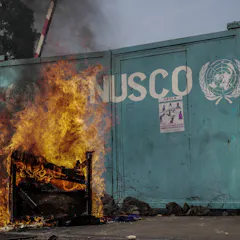
UN peacekeeping missions will be revamped to better respond to the realities on the ground where they are deployed.
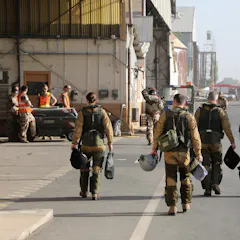
The dissolution of the Chad-France defence pact raises questions about Chad’s next potential partners. It could also reshape power dynamics in the Sahel.

A change in presidential leadership shows voters that stability and prosperity aren’t linked to a single leader.
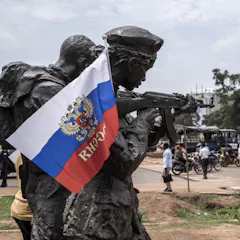
While Wagner may offer short-term stability for some African governments, its long-term impact undermines sustainable development and security.

Kigali wants to be seen as a reliable security provider at home and abroad.
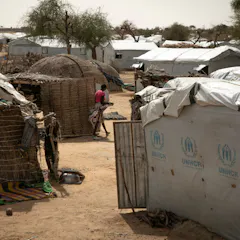
Burkina Faso tops the list of the world’s most neglected crises in the world for the second time in a row.

Children benefit enormously from regular, cognitively stimulating interactions with their caregivers.
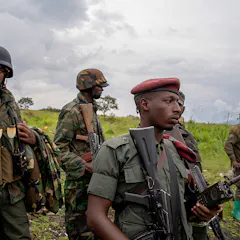
The new intervention force must be sizeable, and have proper air cover as well as transport and air elements. None are guaranteed.
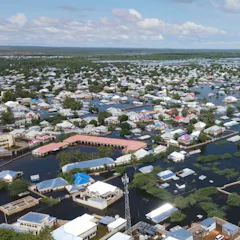
Funding climate adaptation in conflict areas may require engaging local communities and armed groups where national governments are absent.
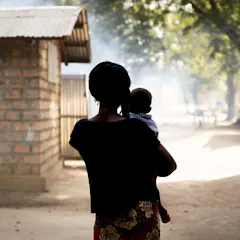
The birth rate was lower and the death rate markedly higher in areas outside government control in the Central African Republic.
Top contributors
-

Professor of Politics, University of Birmingham
-
Senior research fellow, Arnold Bergstraesser Institute
-
Lecturer in Law, University of East London
-
Lecturer and Senior Research Fellow at the South African Research Chair in International Law (SARCIL), University of Johannesburg
-
Director of Research, Africa Center for Strategic Studies, University of Maryland
-
Co-Founder and Co-Executive Director, Death Penalty Project and Visiting Professor of Practice, University of Oxford
-
Associate Professor of International Relations of the Middle East, University of Birmingham
-
Head of Research Programme, Council for the Development of Social Science Research in Africa
-
Professor of International Security, University of Birmingham
-
Professor of International Law, University of Portsmouth
-
Extraordinary Professor, Global Health, Stellenbosch University; South African Medical Research Council
-
Lecturer in Human Rights Law, Queen's University Belfast
-
Leverhulme Early Career Research Fellow, Aston University
-
Director of the University of Oxford Death Penalty Research Unit, Centre for Criminology, Faculty of Law, University of Oxford
-
Lecturer in Intelligence and Security Studies, Brunel University of London