
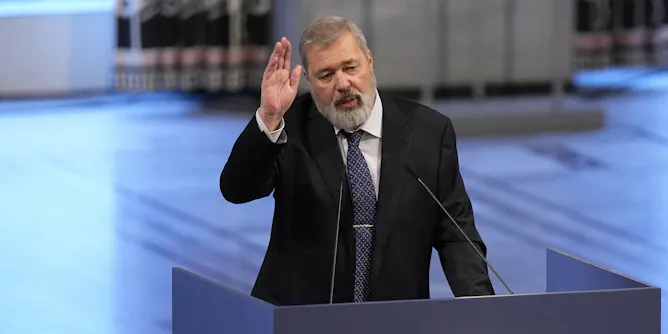
In Russia, a draconian censorship regime makes open dissent impossible. But people are finding ingenious ways to express their opposition to the war in Ukraine.
Articles on Censorship
Displaying 101 - 120 of 262 articles
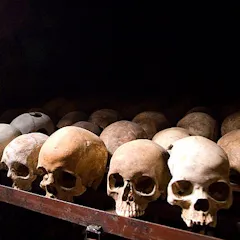
What happens when a writer asks us to consider the perspective of the perpetrator rather than the victim?
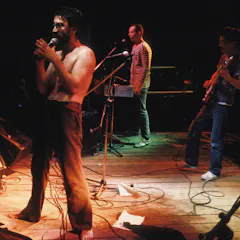
Can social media posts sustain Russia’s endangered dissident cultures?
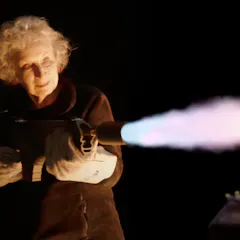
Margaret Atwood’s new fireproof copy of The Handmaid’s Tale protests book banning – and burning. The Venn diagram of those who burn books and those who read them is typically two separate circles.
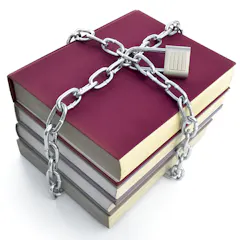
A free speech expert defines censorship and applies that lesson to current political struggles in the US to ban books from public schools and libraries.
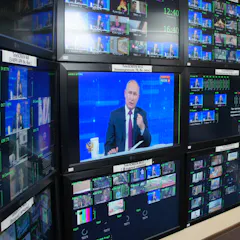
The west underestimates the power of Russian-state television, says an expert.

A scholar compares the debates over banning books in school today to a similar clash of ideas that took place during the Reagan era.
Criminal libel and seditious libel laws have existed under both military and constitutional rule in Ghana.
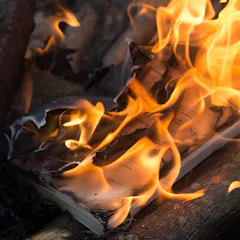
Struggles to uphold free speech throughout the centuries teach us that we should never take it for granted.
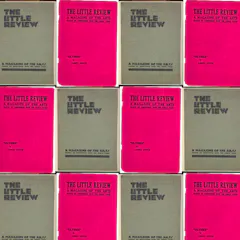
By the standards of the day, Ulysses was extremely sexually explicit.

By shutting off internet access completely, the government of Kazakhstan was able to silence dissent, hinder protesters’ coordination and keep the populace in the dark.

It took nearly two years for the Royal Navy to tell the story of the heroic voyage of the crippled submarine HMS Triumph.
Pronouncements made by the Chinese government often cloak a hidden agenda.
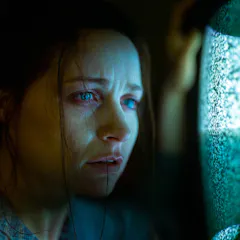
A moral panic fanned by the tabloid press led to crusaders seeking legislation to regulate the home video industry and a slew of low-budget horror films.
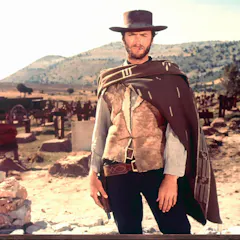
Governments could use dubbing to censor ideas they didn’t like or insert messages in line with their propaganda.
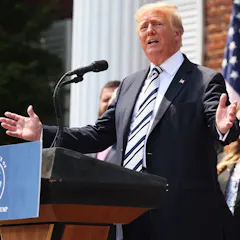
Former President Trump is asking the courts to do what tycoon Trump once would have denounced: tell some of America’s most powerful corporations that they have no choice who they do business with.
Rumble is a Canadian video-streaming platform that presents itself as an alternative to YouTube. Because Rumble does not censor content, right wing conspiracy theories have proliferated on the site.
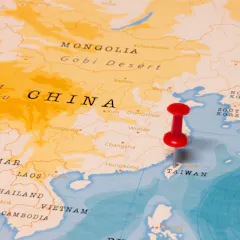
With ideological issues such as Hong Kong and Taiwan, lecturers told of how a vocal minority of international Chinese students are attempting to police teaching materials and class discussions.

The majority of those punished under the laws to combat false information are opposition politicians or journalists.
Can post-secondary students be punished for social media posts, even those made off-campus?
Top contributors
-

Brechner Eminent Scholar in Mass Communication, University of Florida
-
Sessional Academic, Children's Literature and Creative Writing, Victoria University
-
Principal of South College, Durham University
-
Research Professor of Political Science and Executive Director of The Future of Free Speech, Vanderbilt University
-
Full Professor in Journalism, Dublin City University
-
Associate Professor, Publishing, University of Pretoria
-
Lecturer + Researcher, RMIT University
-
PhD student in Media Studies, University of the Witwatersrand
-
Assistant professor, University of Zurich
-
Researcher, The University of Queensland
-
Adjunct Senior Industry Fellow, School of Global, Urban and Social Studies, RMIT University
-
Professor of Information Sciences & Director, Social Change Enabling Impact Platform, RMIT University
-
Associate Professor in Literary Studies, Monash University
-
Senior Lecturer, Stellenbosch University
-
Baker Endowed Chair and Professor of Library and Information Science, University of South Carolina