
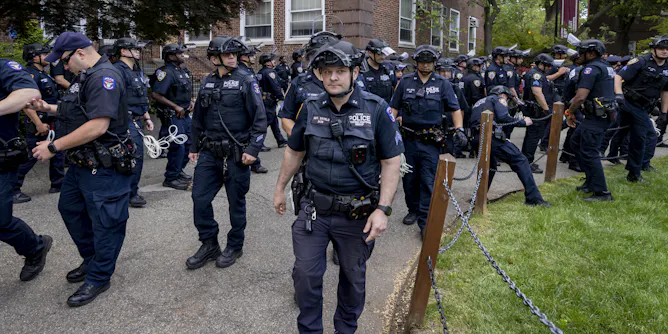
A persistent government strategy to sow fear through punitive measures has corroded freedom and democracy.
Articles on Campus protest
Displaying 1 - 20 of 23 articles

Student activists described feeling significant pressure to conform to dominant narratives.
As President Trump sends National Guard troops to Los Angeles, a military historian explains why crowd control is one of the Guard’s most challenging and dangerous missions.
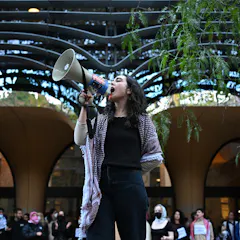
In reporting on racism but neglecting to look at it’s structural roots, research does more harm than good.

As colleges and universities grapple with antisemitism on campus, research reveals that views on Jews and Israel are more complex than current debates would make them seem.
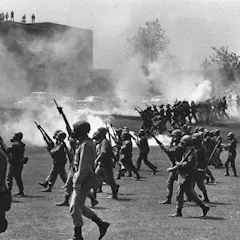
The author of a new book about the 1970 shootings at Kent State University explains why using armed troops to respond to protests is a risky strategy.

Communication about conflict is the fundamental starting point for future action. In modeling non-violent communication, university leaders can proactively counter potential extremism.
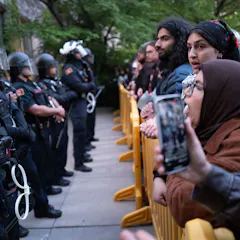
These books shine light on a rich history of campus protests in the US that goes back to the 1960s.
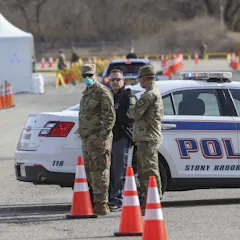
As college students seek reform of campus police, a scholar outlines five issues that warrant the most attention.
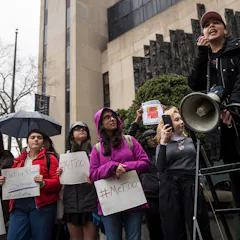
As a student protest continues at Syracuse University, a scholar argues that student activism is a valuable part of the college experience.
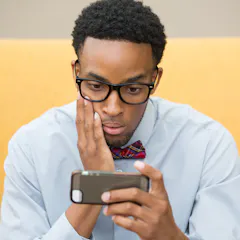
New research by sociologist Ted Thornhill shows that black students who indicate they plan to fight for racial justice are more likely to be ignored by white admissions counselors.
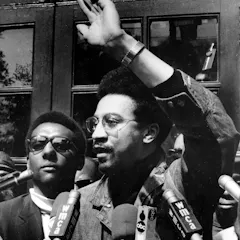
The 1968 protests at Columbia University led the institution to abandon a gym project that residents considered racist and cut off its defense work – and generated worldwide attention in the process.
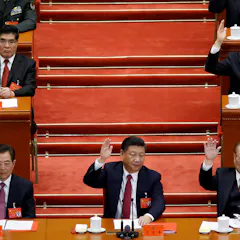
Australian universities shouldn’t silence or be silenced by Chinese students who hold nationalistic views, they should encourage a healthy debate.
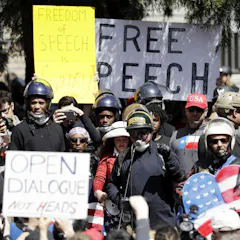
New laws pending in Wisconsin and North Carolina would require public universities to punish students who disrupt campus speakers. But these laws would do more to hinder free speech than protect it.
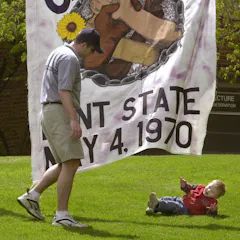
The May 4, 1970 shootings at Kent State still loom large in our national conscience. What do these events tell us about the role of the university in today’s climate of student protest?
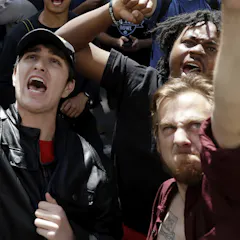
What legal rules must colleges and universities follow when it comes to speech on campus? And, beyond legal requirements, what is a school’s obligation to protect – or limit – free speech?
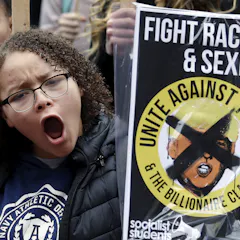
When it comes to politics these days, it feels like everything is ‘my way or the highway.’ What can colleges do to end this moral fundamentalism and get students listening to each other?
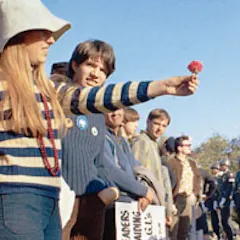
Student protest has been in the political spotlight since Trump’s election. Todd Gitlin, former president of Students for a Democratic Society, shares his perspective on protest in the 60s and now.
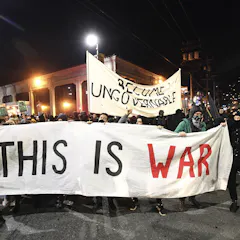
Student protesters thought they were silencing someone they despise. But they actually gave their opponent a far louder voice.
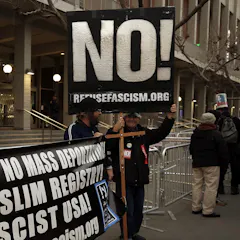
UC Berkeley had a duty to protect the free speech of right-wing provocateur Milo Yiannopoulos and those protesting his appearance. But what are the limits of free speech when it comes to campus safety?
Top contributors
-

University Research Professor of Education, University of Kentucky
-
Professor of History, United States Naval Academy
-
Senior Lecturer in Public Policy, Harvard Kennedy School
-
Associate Professor of German and European Studies and Director of Graduate Studies, Department of Germanic and Slavic Languages, Vanderbilt University
-
Professor of Philosophy, Radford University
-
Professor of Journalism and Sociology, Columbia University
-
Professor of Law and Humanities, Queen Mary University of London
-
Krieger-Mueller Joint Professor in History, Case Western Reserve University
-
Dean of the School of Law, University of California, Irvine
-
Associate Professor in Intercultural and International Education, Durham University
-
Vice Chancellor for Student Affairs, University of Mississippi
-
Professor of Black Studies and History, Amherst College
-
Professor of Higher Education and Student Affairs, The Ohio State University
-
Lecturer in Chinese Studies, Monash University
-
Independent writer and editor, University of Michigan