

Millions of households are expected to gain access to upgraded internet connections, with speeds of up to one gigabit per second (if you’re willing to pay for the plan).
Articles on Broadband
Displaying 21 - 40 of 107 articles

Americans depend more than ever on high-speed internet to connect to jobs, get health care and socialize. What policies really work to close the rural-urban digital divide?
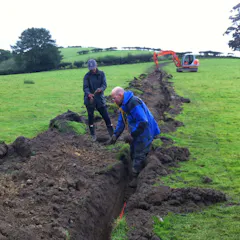
Frustrated by the inability to get good internet, a rural village decided to dig a superfast connection in themselves.

After the ‘world’s biggest work-from-home experiment’, many people (and their employers) might decide they needn’t commute every day. If even a fraction do that, infrastructure needs will change.

The COVID-19 pandemic is forcing people to study and work online. It’s also sparked a need for news and information. That’s a challenge for the 24 million Americans who lack broadband internet access.

Only 3 million UK homes have fibre broadband which will aid their working from home to counter coronavirus spread. But those with copper ADSL or bad connections on mobile 4G may struggle.
Connecting every house to a fibre network is expensive and time-consuming.

A breakdown of the infrastructure and operating costs, as well as the market impact of giving free full-fibre broadband to the whole country.

A recent federal court ruling lets big telecom companies censor the internet in ways that boost their own profits – but also allows local and state governments to outlaw censorship if they wish.

Around half of homes in three major Australian cities only have access to very old technology: hybrid fibre-coaxial (HFC). For them, access to the NBN fibre network remains only a fairy tale.
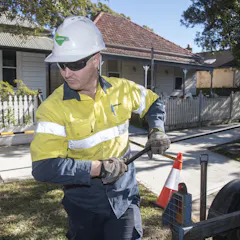
The NBN is on track to be privatised after the infrastructure is completed, but there are a number of other options that would retain the benefits of its disruption of the telecommunications market.
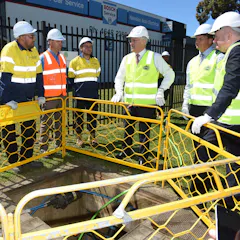
Malcolm Turnbull may be happy with his NBN connection, but many Australians aren’t. And with an increasing number of alternatives on offer, the NBN could become a white elephant in Australian cities.
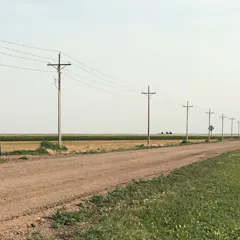
Many people in rural America don’t have access to fast, affordable internet access. How might those communities connect to the global exchange of goods, services and ideas?

Australia’s problems with the national broadband network run deeper than what can be solved through an investigation or more monitoring. Maybe we were just too optimistic.
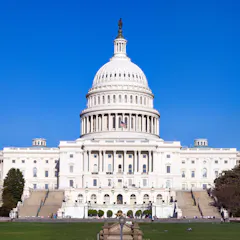
As the issue of an open and free internet again comes up for public debate, Congress could participate – and help regulators devise a workable set of policies.

A multibillion-dollar effort is just beginning to build an all-new nationwide wireless broadband network for emergency responders. How will it work, why do we need it and how will it last 25 years?

The digital economy in the US is already on the verge of stalling; failing to protect an open internet would further erode the United States’ digital competitiveness.

The Trump administration’s proposed budget suggests it will continue to spend federal dollars on expanding broadband internet access. But the rules governing internet traffic matter too.
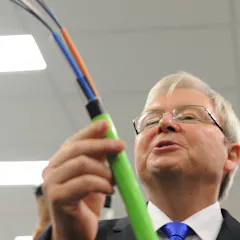
The highly politicised nature of the NBN has led to a lack of transparency that makes it even harder to fix the mess that has been made of this vital national infrastructure.

When planning major infrastructure investments, it’s important to know which road, freight and information networks are most important – and which proposals might make things worse, not better.
Top contributors
-

Laureate Emeritus Professor, The University of Melbourne
-
Professor of Electrical and Electronic Engineering and Deputy Dean Research at Faculty of Engineering and Information Technology, The University of Melbourne
-
Professor and Neustadt Chair, Department of Agricultural Economics, Oklahoma State University
-
Associate Professor of Public Affairs and Administration, Rutgers University - Newark
-
Honorary Consul; Adjunct Professor; Digital Investigations Consultant and Senior Lecturer., Adelaide University
-
Associate Professor, School of Engineering, RMIT University
-
Adjunct Associate Professor, University of Canberra
-
Industry Professor, University of Technology Sydney
-
Professor of Media Studies, Queensland University of Technology
-
Eugene M. Isenberg Chair in Integrative Studies, UMass Amherst
-
Pioneers Chair in Telecommunications & Professor of Telecommunications, Penn State
-
Visitor, Regulatory Institutions Network (RegNet) & Chair of Foundation for Effective Markets and Governance, Australian National University
-
Professor of Sociology, University of Aberdeen
-
Dean of Global Business, The Fletcher School, Tufts University
-
Professor, Computer Networking and Telecommunications, University of Salford