
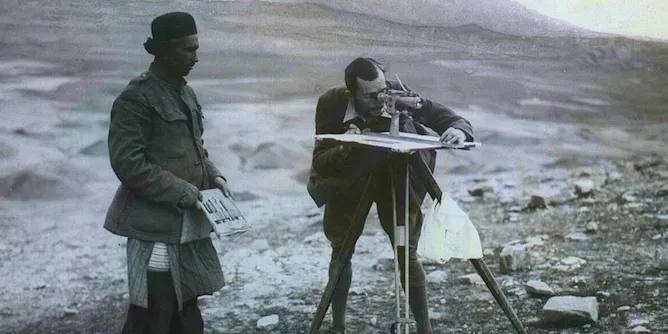
For more than a century, Iran has occupied a powerful place in the western imagination, characterized as a volatile region that sits atop vast oil reserves.
Articles on British imperialism
Displaying all articles

H.B. Tristram was a Victorian clergyman and ornithologist who categorised a list of birds he’d found in Palestine.

The rarely explained term is nebulous at best, and can mean many things – negative and positive – to different groups of people.
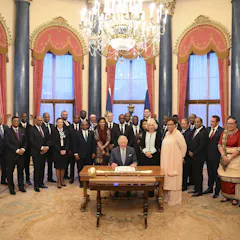
The coronation is a critical moment for King Charles to show that the monarchy can be more efficient and more sensitive to the legacy of British imperialism.

Tan France, of Queer Eye fame, delves into the skin-shade prejudice he experienced as a child in England and the colonial history at its roots.
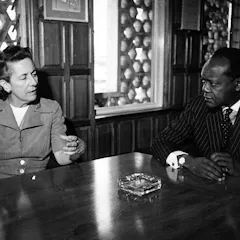
The Kenya that Njonjo sought to create was the ‘greatest living example of democracy, justice and peace’ – but there was no space for the poor.
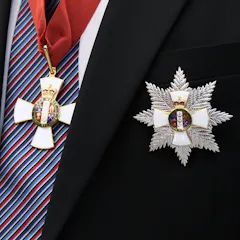
New Zealand’s honours system has come a long way since colonial times. But a glaring gender imbalance reminds us of its historical origins.
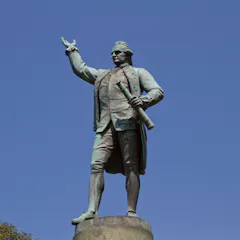
La Nouvelle-Zélande aussi s'interroge sur le sort à réserver aux monuments et aux noms de lieux rendant hommage au passé colonial.
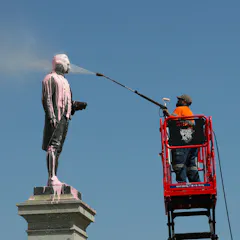
250 years since Captain Cook landed in Australia, it’s time to acknowledge the violence of first encounters
The Conversation, CC BY63 MB (download)
The way Australia has commemorated Cook's arrival has changed over time – from military displays in 1870 to waning interest in Cook in the 1950s, followed by the fever pitch celebrations of 1970.

Many teachers want to teach Indigenous perspectives but often lack confidence or know-how. Teachers must be willing to confront the ongoing effects of colonialism in and outside the classroom.

An honest reckoning with Captain Cook’s legacy won’t heal things overnight. But it’s a start
The Conversation41.4 MB (download)
The impact of 1770 has never eased for Aboriginal people. It was a collision of catastrophic proportions.
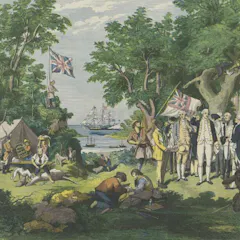
To find out how the teaching of Captain Cook in Australian schools has changed, I examined textbooks used in the 1950s until today.
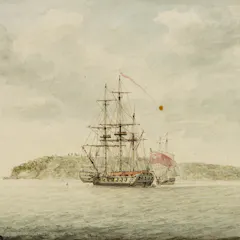
Botany was an integral feature of Britain’s colonial and imperial ambitions.

Every European ship that voyaged the Pacific was, in the first instance, a floating fortress, an independent command that could send out small shore parties or to concentrate firepower as needed.
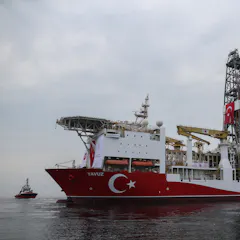
Turkey and the EU are trading insults over the rights to exploit the huge gas reserves over the eastern Mediterranean island.
The notion of ‘Empire 2.0’ embraced by Brexiteers is backward-facing nonsense.
Top contributors
-

Professor of History, University of Canterbury
-
Stephen Gapps is a Friend of The Conversation.
Historian and Adjunct Lecturer, Charles Sturt University
-
Professor in English Literature and Creative Writing, Swansea University
-
Senior lecturer, Macquarie University
-
Ali Mazrui Professor of History & African Studies, University of Michigan
-
Postdoctoral Research Fellow, Trinity College Dublin
-
Lecturer in Politics and International Relations, University of Aberdeen
-
Visiting Lecturer in Sociology, Edinburgh Napier University
-
Senior Lecturer in Humanities and Social Sciences Education, Faculty of Education, University of Tasmania
-
Director/Chair of Aboriginal History - The Wollotuka Institute, University of Newcastle
-
Professor, University of Glasgow
-
Professor of History, School of Humanities, Languages and Social Science, Griffith University
-
Professorial Fellow in History, School of Historical and Philosophical Studies, The University of Melbourne
-
Adjunct Professor. History of the Royal Family, Redeemer University
-
Adjunct Research Professor, Department of History, Carleton University