

Shah Rukh Khan’s new film sheds light on the history of UK migration policy.
Articles on British Empire
Displaying 21 - 40 of 143 articles
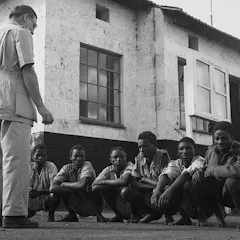
Colonialists daily reinforced a hierarchy that allowed white people to abuse Africans.
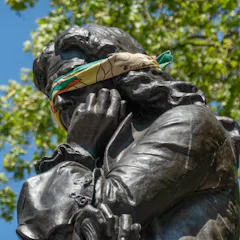
Retaining a statue or monument takes very little work – explaining it is a mammoth and contested task.
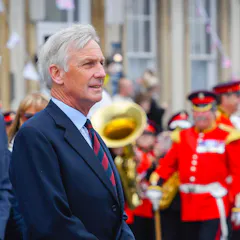
Some UK families whose wealth largely derives from the transatlantic slave trade have agreed to pay reparations.
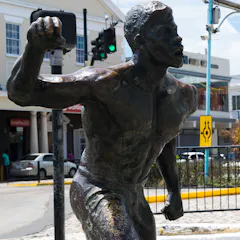
Britain’s industrial revolution was built on slavery: both black labour and intellectual property.

The naming of streets, places and landmarks in colonial Nairobi was used to show the political, ideological and ethnic dominance of the British.

Philip Miller and Amit Chaudhuri have reworked national anthems to reflect the impact of history on official music.

Singing at the reopening of the Notre Dame cathedral and at King Charles III’s coronation tells a story of global histories coming full circle.
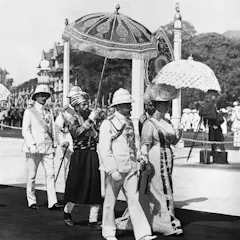
The coronation will have echoes of empire, but represents an important stage in the modern monarchy’s move away from its shadow.
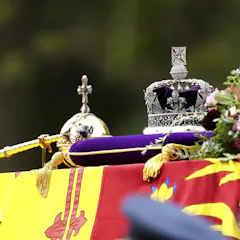
Gems do not a monarch make, and repatriating the Crown Jewels would strengthen the contemporary British monarchy at a time when it most urgently needs to modernize.
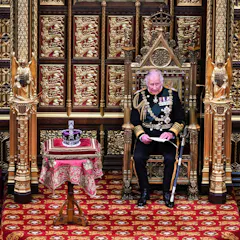
Although King Charles will have a low-key ceremony this coronation, the Crown Jewels will still figure prominently. An exploration of the jewels tells a tale of exploitation, rape and pillage.

Charles’s culinary choices might be intended to recognise the multiculturalism of Britain today. But they are also a reminder of the difficult legacy of empire.
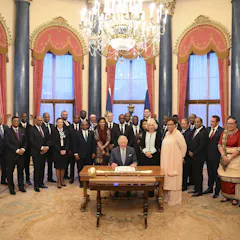
The coronation is a critical moment for King Charles to show that the monarchy can be more efficient and more sensitive to the legacy of British imperialism.

March 2 marks the 65th anniversary of the completion of the Trans-Antarctic Expedition. Intended to demonstrate Commonwealth unity, it became a symbol of Britain’s imperial decline.
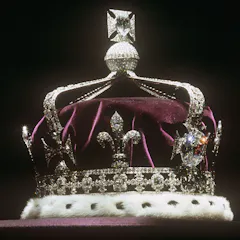
Throughout its known history, Koh-i-Noor has been a symbol of imperial conquest and glory.
Americans are not the first to fret over the potential harm that parties can inflict. But parties can also promote the common interest.

In 1776, with a population of 2.5 million, few imagined that within two centuries, the U.S. would become the dominant superpower. It’s not inconceivable that Canada could do the same by 2223.
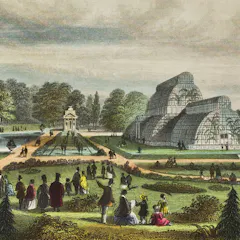
Scientists have found more ‘alien species’ today in regions that were once key parts of European empires.
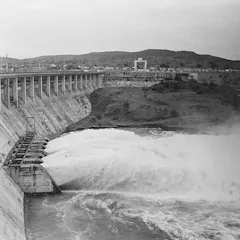
The mega dam in Jinja was meant to give Uganda energy independence, but this was constrained by Britain’s agricultural interests in Egypt.
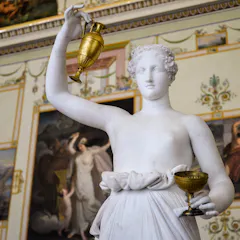
Western fashion, laundering and style reflected the racialized politics dramatically shaped by profound global transformations bound up with slavery, colonialism and modernization.
Top contributors
-

Professor of Indian and Colonial History, University of Liverpool; Independent Social Research Foundation
-
Visiting Fellow in History, Anglia Ruskin University
-
Professor, School of Public Policy and Administration, York University, Canada
-
Doctoral Researcher, Faculty of Social Sciences, University of Nottingham
-
Professor of Historical Geography, University of Sussex
-
Assistant Professor of History, Thompson Rivers University
-
Senior Lecturer (Associate Professor) in Political Communication, University of Liverpool
-
Postdoctoral Fellow in International Law, Lund University
-
Senior Lecturer, History, University of Aberdeen
-
Senior Lecturer, Literary and Cultural Studies, Monash University
-
Lecturer in Politics and International Relations, University of Aberdeen
-
Professor of History, Royal Holloway, University of London
-
Lecturer in Media, Lancaster University
-
SSHRC Postdoctoral Fellow, Centre for South Asian Studies, Munk School of Global Affairs, University of Toronto
-
Senior Lecturer in Employment Studies, University of Manchester