

A researcher answers the question many asked when they heard charges of abuse and rape against civil rights icon Cesar Chavez: Why didn’t the women speak earlier about the events from decades ago?
Articles on Blame
Displaying all articles

The US president blamed his defense secretary for pausing weapons to Ukraine – but why did he not take responsibility?

For a long time, political scientists have assumed politicians will do anything to avoid blame. But that’s no longer how they operate.

Examining how and why we cast blame on others can help us understand the convoy protests and the different ways people reacted to pandemic restrictions.
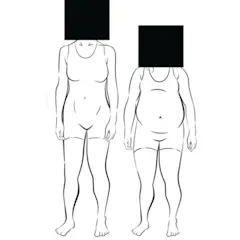
While excess weight arises from a complex interplay of genes, environment, diet and activity, new research finds Americans hold parents responsible for excess weight in their kids.
Understanding how we blame can help us work together.
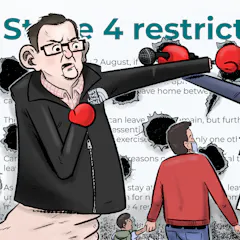
The government has become an easy scapegoat as the pandemic has worsened. While blame can alleviate stress, grief and guilt, it can also be counterproductive if people trust less in their leaders.
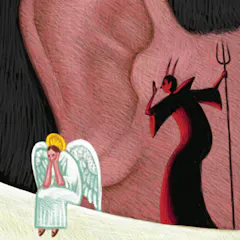
Your partner might think they’re providing valuable encouragement, but a new study shows how it can backfire.
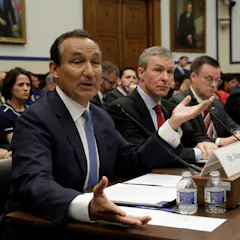
United Airlines faced a public relations nightmare when they dragged a man off a flight in 2017 – until the blame shifted back to the victim.

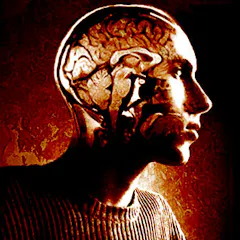
How do jurors use different kinds of information about mental illness when making sentencing decisions? An experiment finds that neurobiological evidence could harm or help defendants.
Pyt doesn’t have an exact English translation, but there’s a rich strain of psychological research devoted to its benefits in everyday life.

A new psychological intervention can help any parents - even those crippled by fear and self-blame - to become powerful recovery coaches to children with eating disorders.

Bombarded with unhealthy offerings by the food industry, we blame and shame ourselves for gaining weight. But is it really our fault, or are we being “entrapped?”

Psychological defence mechanisms such as blaming parents can be more dangerous for mental health than a traumatic past experience itself.

A new way of looking at what’s behind chronic disease takes into account social, environmental and other factors, rather than blaming individuals.
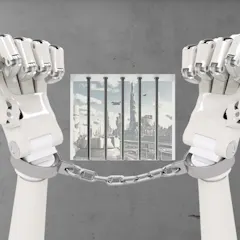
There is much debate on the ethics of artificial intelligence machines that are designed to kill. But who’s responsible when a non-lethal AI system causes damage, harm or even death?
Imagine that Brian promises to drive you to the airport but never shows up, and you miss your flight. When you confront Brian, he tells you that he remembered his promise but decided to watch a movie instead…

As with most tragic events today, Formula One driver Jules Bianchi’s recent crash in the Japanese Grand Prix has raised the usual frenzy of questions surrounding who is to blame when things go wrong and…
Those who place responsibility for road accidents on others have worse mental and physical health outcomes than those who…
Top contributors
-

Professor of Health and Human Sciences, Southern Cross University
-
Distinguished University Professor, Department of Psychology, University of Maryland
-
Senior Lecturer in Psychology, University of Sussex
-
PhD Candidate, University of the Sunshine Coast
-
Professor of Human Factors, University of the Sunshine Coast
-
Associate Professor, Canada Research Chair in Early Childhood: Diversity and Transitions, Mount Saint Vincent University
-
Adjunct Professor, Iverson Health Innovation Research Institute, Swinburne University of Technology
-
Professor of Health Promotion, Dalhousie University
-
Researcher in Artificial Intelligence Regulation, Australian National University
-
Psychology PhD Student, University of Sussex
-
Lecturer in Social Psychology, University of Birmingham
-
Senior Lecturer in Economics, Tasmanian Behavioural Lab, University of Tasmania
-
Professor of Sociology, University of Alberta
-
Assistant Professor of Marketing, Portland State University
-
Associate Professor of Psychology, University of Maryland