
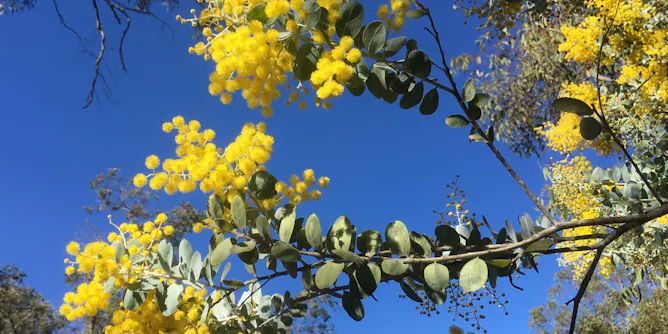
With their vibrant blooms and a lineage tracing back to the ancient supercontinent of Gondwana, wattles have a lot going for them.
Articles on Beating around the bush
Displaying 1 - 20 of 52 articles
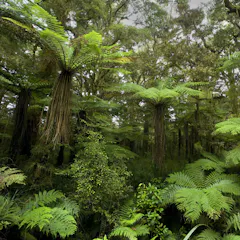
They’re a familiar sight on forest walks and long drives, but tree ferns are more fascinating than you may have realised.
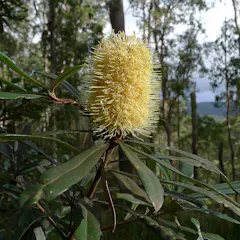
The plant takes its name from the colonial botanist Joseph Banks, but the coastal banksia’s history goes way back to ancient times.
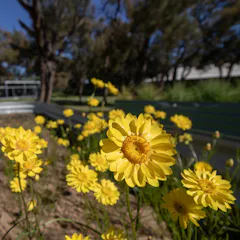
Despite the optimistic name, the showy everlasting only has three wild populations in Australia. But a West Australian public school has stepped up to help grow vital new seeds.
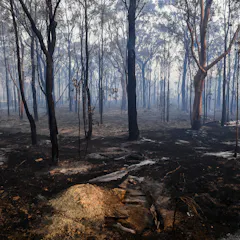
A startling phenomenon occurs after a fire tears through a landscape. So what is it in bushfires that gives plants this kiss of life?
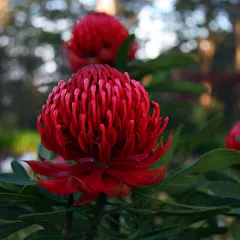
In an often-muted bush landscape, the deep crimson of the waratah stands out like a shout.

The blotched butterfly orchid (Sarcochilus weinthalii) looks fairly unremarkable when it’s not flowering, generally resembling the far more common orange blossom orchid. But when it flowers, it is exquisite…
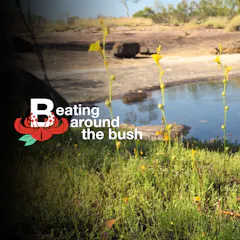
On the outskirts of Darwin, small insects are gobbled up by strange plants. Enter the world of the bladderwort.
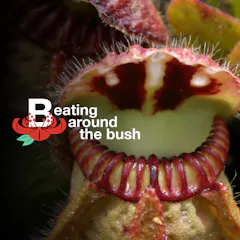
Albany pitcher plants are more closely related to cabbages and roses than any other carnivorous plant.
Waterwheel plants use snap up mosquito larvae, tiny fish and even tadpoles in freshwater wetlands around the world – including remote parts of north Australia.
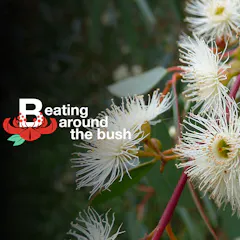
Red gums connect the continental fringes of Australia with its arid heart, marching along waterways.
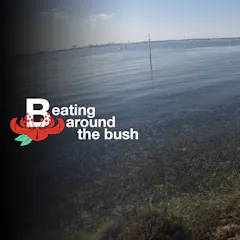
Seagrass may look unassuming, but healthy oceans depend on the huge meadows that grow in temperate and tropical waters.
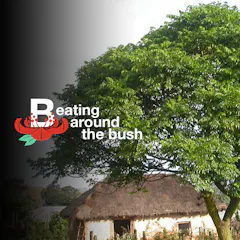
White cedar grows across Asia and Australia, as a hardy and resilient deciduous.
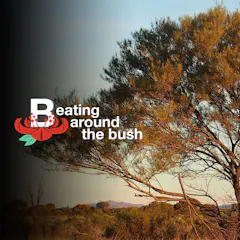
Mulga is an Aussie icon: hardy, adaptable, and absolutely everywhere.
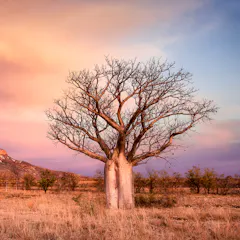
The leaves, when boiled, can be eaten like spinach. The seeds can be roasted for a coffee substitute, and the pulp can be fermented to make beer.
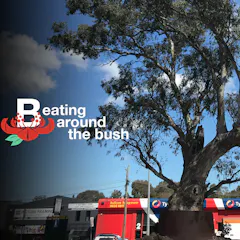
This massive red gum has stood for 300 years, as if in defiance of the modern world and the development that has encircled it.
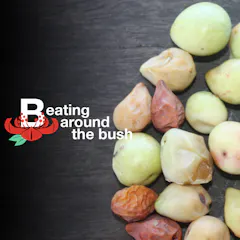
The Kakadu plum is one of the richest sources of vitamin C of any fruit, and the increasing demand has started creating supply problems.
There are more than 850 different species of eucalypts in Australia, and possibly many more we don’t know about.
Stockwellia has links back to the epoch before Australia separated into its own continent and was mostly covered in rainforest.
This small herb hadn’t been seen on Macquarie Island since it was first recorded in 1983, despite several searches over the next 30 years.
Top contributors
-

Senior Research Associate, School of Agriculture, Food and Ecosystem Sciences, The University of Melbourne
-
Honorary Fellow at Menzies School of Health Research, Charles Darwin University
-
Research Fellow, Curtin University
-
Laboratory and Technical Support Officer, Australian Tropical Herbarium, James Cook University
-
PhD candidate, James Cook University
-
PhD Researcher, Te Herenga Waka — Victoria University of Wellington
-
Associate Professor in Environmental Science, Western Sydney University
-
PhD Candidate, Australian National University
-
Honorary Associate Professor, Forest Measurement and Management, Fenner School of Environment and Society, Australian National University
-
Adjunct Assoc. Professor, The University of Western Australia
-
Professor and Head of School, School of Environmental & Rural Science, University of New England
-
Visiting Fellow, Lecturer & Consultant (Writing Clear Science), The University of Melbourne
-
Adjunct Associate Professor, Murdoch University
-
Senior Lecturer in Ecology, Environment & Evolution, La Trobe University
-
Research Scientist in Biodiversity and Human Health, Edith Cowan University