

Working-class residents of Waterloo have a history of resisting threats to their community. Many tenants see the redevelopment of public housing as state-led gentrification to squeeze them out.
Articles on Battle of Waterloo
Displaying all articles

The BBC’s chief contribution to the bicentenary has been to rename itself the Bonapartist Broadcasting Corporation.
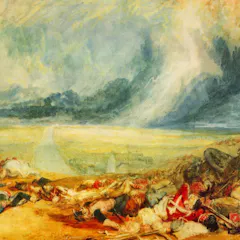
When word reached the Scottish writer of Napoleon’s famous defeat, he promptly travelled to the continent to bear witness to the carnage first-hand

Almost immediately after the battle, Waterloo became a tourist destination for contemplative souls.
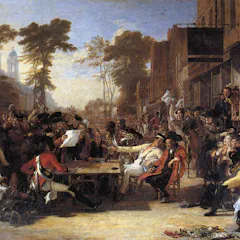
How did the bulk of those at home in Britain find out the news of Waterloo?
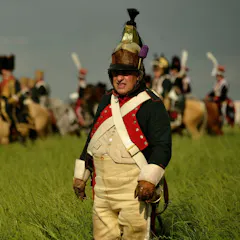
The most spectacular of the Waterloo celebrations will be a massive re-enactment on the actual battle site, involving more than 5,000 re-enactors, including 300 horses and 100 canon. What’s that all about?
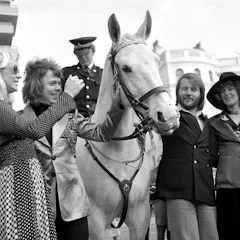
The word Waterloo only entered the public consciousness 200 years ago after a battle. Now, it means many more things.
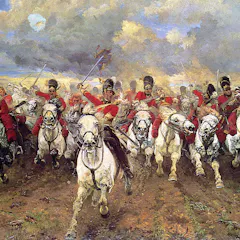
From Belgium to Moscow to Helmland: how one battle helped shape how we think of war.
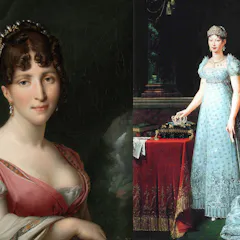
Two centuries on, the history of the battle and our understanding of it should by no means be a predominantly male affair.
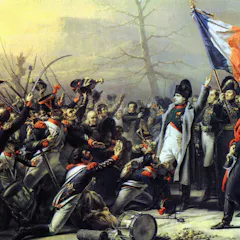
If you’d taken a trip to the theatre in 1815 Paris, chances are that the stage would be political.
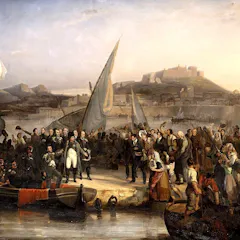
On February 26, 200 years ago, Napoleon escaped from exile on the island of Elba. In some ways, this moment was more important than his eventual fall.
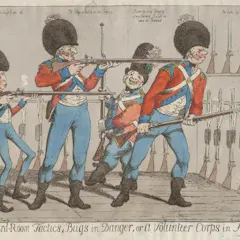
In 1810, after seven years of the Napoleonic Wars, the prime minister, Lord Liverpool, penned a memorandum stating that Britain’s military was: “as large a force … as the Population and Finances of the…
Top contributors
-

Professor of French Studies, University of Warwick
-
Professor of Romantic Studies, University of Leicester
-
Professor, Director of the Centre for the Study of Violence, School of Humanities and Social Science, University of Newcastle
-
Reader in International Journalism, City St George's, University of London
-
Professor of History and Politics, University of Warwick
-
Professor in History, University of Liverpool
-
Associate Professor of Modern History, University of Leeds
-
Associate Professor of History, University of Nottingham
-
Professor in English, Lancaster University
-
Professor of English and Scottish Literature, University of Aberdeen
-
Postdoctoral Researcher, School of Architecture, Design and Planning, University of Sydney
-
Research Fellow, School of Communication, Society & Culture, Macquarie University
-
PhD Candidate, School of Social Sciences, University of Tasmania, and Senior Research Consultant, Institute for Sustainable Futures, University of Technology Sydney
-
Senior Lecturer in Digital Society, Western Sydney University