

Studies link public broadcasting to higher voter turnout, better factual knowledge and lower susceptibility to extremist rhetoric. Those contributions to democracy may be diminished by Congress’ cuts.
Articles on Barry Goldwater
Displaying all articles
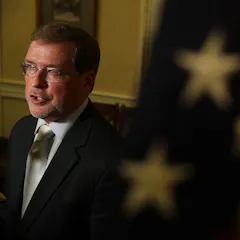
The founder of Americans for Tax Reform emerged in the 1980s as the fiscal conscience of American conservatism and continues to wield influence.
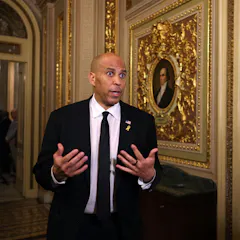
The length of Booker’s speech grabbed headlines, but the senator’s media strategy helped sustain attention afterward while disrupting Trump’s public spotlight.
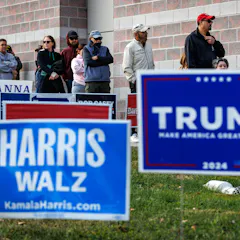
In US history, there have been many memorable elections – including those involving quick, decisive wins and others subjected to drawn-out legal battles.
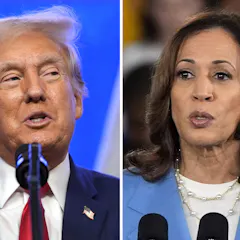
Debates are moments in time, but even years later, key items can evoke their history and reinforce their importance in American democracy.
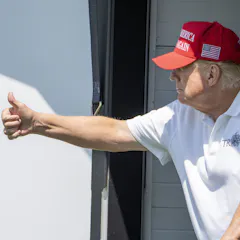
It will take a lot of strategic ingenuity to fight the rise of populism. And it will get harder to do so as politicians rig the game with rules designed to reduce voting.
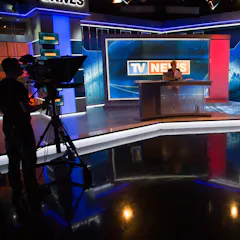
Journalism has been fodder for politicians’ contempt for generations. A huge percentage of the public doesn’t trust the news media either. That mistrust isn’t a bad thing in a democracy.
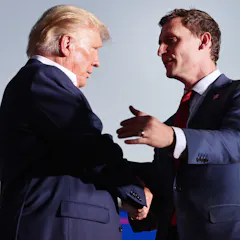
Voters trust their gut when they decide who an electable candidate is or isn’t. That may be a bad idea.
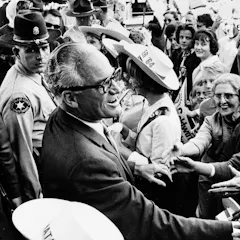
For much of the country’s history, the Republican Party was the party of Lincoln and racial equality, and the Democratic Party backed Jim Crow laws and white supremacy. The two parties switched.
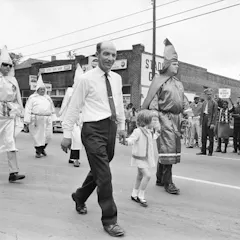
If history is a guide, expanding police powers to address current white nationalist threats could result in future repression of activists of color.
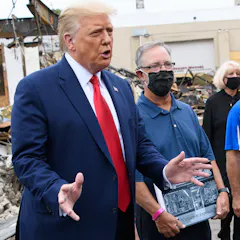
President Trump’s law-and-order campaign rhetoric has been compared to Richard Nixon’s and George Wallace’s similar themes in 1968. But such appeals go much further back, to the US in the early 1800s.

Why do some people think that Bernie Sanders isn’t electable and Joe Biden is? Does anyone really know what makes one candidate seem electable while another doesn’t?
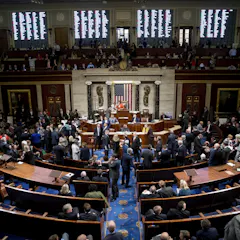
Democrats and Republicans are speaking about impeachment with dramatically different language. The winner of this frame war will succeed in shaping how Americans understand the impeachment inquiry.
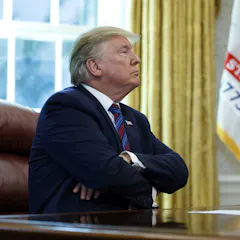
Difficult to pronounce, synecdoche is the form of rhetoric used by President Trump when he told four Democratic congresswomen of color to “go back” to the “corrupt” countries they came from.
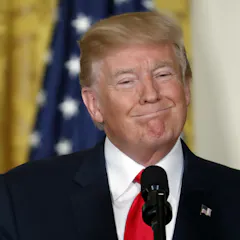
Many people have criticized Donald Trump’s mental health. More than two dozen psychiatrists weighed in from afar, and another has briefed members of Congress. Here’s why that might not be good.
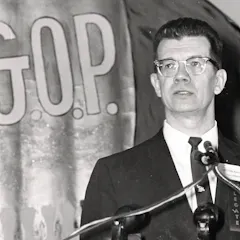
In the 1960s, white newspaper journalists exploited racial divisions to help build the GOP’s southern firewall.
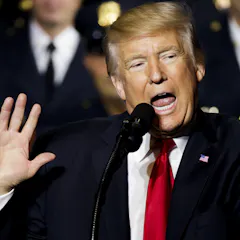
There’s a fierce debate about whether it’s ethical for mental health professionals to diagnose politicians they haven’t personally examined.
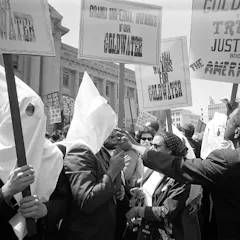
The Republicans’ hardline 1964 candidate famously said that ‘extremism in the defence of liberty is no vice’. Sound familiar?
The leading conservative magazine National Review has played a critical role in creating modern GOP. Their repudiation of Trump signals crisis for Republicans.
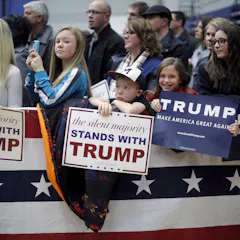
In 1964, the John Birch Society pushed Barry Goldwater to victory in the Republican primary. The same could happen with the Tea Party and Trump this election cycle.
Top contributors
-

Professor Emeritus of Political Science, Indiana University
-
Lecturer in Law, Sydney Law School, University of Sydney
-
Professor of Political Science, University of Washington
-
Associate Dean (Research) and Professor of History, Edge Hill University
-
Associate professor, University of Minnesota
-
Professor of Psychiatry, Wayne State University
-
Professor Emeritus, Department of Politics, York University, Canada
-
William Nelson Cromwell Professor of Jurisprudence and Political Science, Amherst College
-
Professor of Journalism, Indiana University
-
Professor of Communication and Journalism, University of Maine
-
Professor of Political Science and Founding Director, International Studies Program, Burman University
-
Professor of Communication, University of Illinois Urbana-Champaign
-
Professor of Communication and Journalism, Texas A&M University
-
Professor of Sociology, Washington University in St. Louis
-
Political History Curator, Smithsonian Institution