

If ASIC succeeds in its action against two subsidiaries of the National Australia Bank, the rest of the industry will be put on notice.
Articles on Banking royal commission
Displaying 81 - 100 of 120 articles

Dud insurance is the tip of the iceberg.

Parallels in the historical trajectory of AMP and IOOF are striking. Both were founded in the 1840s. Both demutualised, and now both find themselves centre stage at the banking royal commission.

The financial services industry is in need of a new paradigm to rediscover what finance is for – to improve the financial and economic well-being of society.
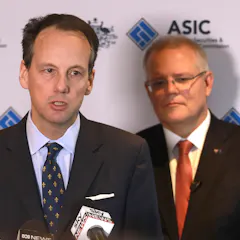
Putting regulators inside corporations isn’t new, and the US experience highlights risks of regulatory capture, but the move could make a difference if ASIC is shifting to more robust enforcement.

Evidence to the Banking Royal Commission points to the systemic failings of corporate governance built on the idea of shareholder primacy. It’s time to rethink the unitary board system for a start.

Pressure to meet ever-higher performance targets can lead to misconduct of the sort exposed by the royal commission. Targets need to operate within a framework of ethical governance to avoid this.

Restructuring might help manage conflicts of interest between offering advice and selling products, but it doesn’t fix the culture that sacrifices customers’ interests to the pursuit of profits.

Under the right circumstances, most people will act in ways that are opposed to their own morals.

With enough will and resourcing, many of the structural issues that make financial services a trial for many Indigenous consumers can be overcome. But we need more regulation to deter sharp practice.

“You can’t just come in like a fly and take-off” - patience and time on community is key to improving financial well-being in remote communities.
Splitting company boards and allowing employees to elect board members are just the start of the reforms needed to fix corporate governance.

We are seeing widespread financial exploitation because of cultural, economic and political factors that haven’t been addressed. Regulators should do more.

A number of factors have contributed to the horrible stories coming out of the Royal Commission, including market instability and the financialisation of farming.

The financial institutions fronting the Financial Services Royal Commission are also the ones controlling mortgages, so will an expose of their dealings push property prices down?
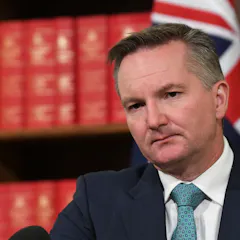
Chris Bowen on the budget and Labor’s policies
Shadow treasurer Chris Bowen tells The Conversation he accepts that big business will "lobby on their own path".

Westacott is on the frontline in what has become the toughest of gigs, given the shocking disclosures, and subsequent fallout, in the financial sector.
Michelle Grattan speaks with Nicholas Klomp about the week in Australian politics.

As the banking royal commission continues to expose wrongdoings, the pressure is intensifying on the corporate regulator.
This bald-faced refusal to acknowledge their own inconvenient history in part comes from the politicians’ belief that if you just burnish the “spin”, you can get away with saying anything.
Top contributors
-

Professorial Fellow, University of Canberra
-
Sessional Lecturer, PhD (Management) Candidate, School of Management, RMIT University
-
Lecturer in Social Procurement, The University of Melbourne
-
Professor of Law, The University of Western Australia
-
Emeritus Professor of Finance, The University of Melbourne
-
Senior Lecturer, Faculty of Law, University of Wollongong
-
Professor of Law (consumer protections and credit law), The University of Melbourne
-
Scientia Professor of Economics, UNSW
-
Associate Professor of Finance, UNSW
-
Lecturer in Politics, The University of Melbourne
-
Lecturer in Corporations Law and Regulation of Corporate Misconduct, The University of Queensland
-
Honorary Associate, Faculty of Business, School of Management, University of Technology Sydney
-
Vice-Chancellor and President, University of Canberra
-
Industry Adjunct, Adelaide University
-
Executive Director @ Australian Institute of Performance Sciences, Strategic Partner @ Swinburne University MedTechVic, and Visiting Fellow at the Institute of Public Policy and Governance at, University of Technology Sydney