

Can AI-human connections ever meet the psychological criteria of attachment – the relationships that hold people’s lives together?
Articles on Attachment theory
Displaying 1 - 20 of 27 articles

Punch’s attachment to his plushie isn’t just the subject of a heart-wrenching video. It harks back to the story of a very famous set of 1950s psychology experiments.

A bit of understanding – plus effort to regulate yourself and give compassionate feedback – can shift a stuck relationship into something more bearable, perhaps even meaningful.

New analysis finds vulnerable narcissism is consistently linked to insecure attachment styles.

Do you have a secure or anxious attachment with your pet?

A 2015 book by a psychologist who works with adult children of emotionally immature parents has taken off on social media, ‘validating’ its readers. But is it any good?

If you feel like family dynamics overwhelm you, remember there are few things you can do to take a breath and reset.
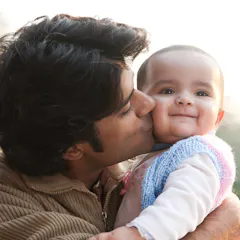
Being able to recognize and respond to a child’s needs is about being attentive and caring for the child, and this can be achieved by any caregiver.

Secure, anxious, avoidant, fearful: research shows people’s feelings about being single may depend on their attachment style

Attachment theory is the notion that in the first year of life, the ways in which a parent and caregiver respond to a child’s needs shape a child’s expectation of relationships across their lifespan.

Psychologists have long focused on the importance of a secure attachment with a mother for healthy child development. A new look supports the value of attachment – but it doesn’t have to be with mom.

Parents or caregivers who a child can return to in times of distress to receive comfort or protection provide a secure base for the child from which they feel safe to explore the world.

Attachment theory is often invoked in child protection investigations – in a simplified and overconfident manner.

What you actually need to know about attachment styles.

Jessie Cole’s memoir traces a love affair: a long-distance relationship with an unnamed, older lover. It’s set against layers of thinking about love, desire, bodies and ecological disaster.
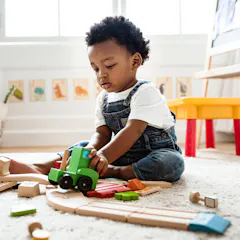
All is not lost if your child has missed out on some of their usual social interaction during COVID-19. They might have actually gained something in spending more time with family.

Parenting: attachment is not, and has never been, the only way.

The education system is failing some of the country’s most vulnerable children.

According to a new study, those who have a tendency to sabotage their relationships may find solace in the fictional worlds of TV and movies.

A doctor reviews the medical evidence on the controversial practise of sleep training infants.
Top contributors
-

Professor, Canada Research Chair in Determinants of Child Development, Owerko Centre at the Alberta Children’s Hospital Research Institute, University of Calgary
-
Assistant Professor, Department of Psychology, Université de Montréal
-
Professor in Social Psychology / Relationship Science, Deakin University
-
Postdoctoral Research Fellow, Department of Psychology, University of Calgary
-
Associate Professor, Department of Psychology, University of Essex
-
Emeritus Professor of Clinical and Forensic Psychology, University of Staffordshire
-
Assistant Clinical Professor of Psychiatry, Columbia University
-
Senior Lecturer in Psychology of Appetite and Obesity, University of Liverpool
-
Director, School of Communication, The Ohio State University
-
University of Bath
-
Associate Professor, Department of Psychology, Simon Fraser University
-
Professor of Psychology, Stockholm University
-
Associate Professor in Psychology, Swansea University
-
Academic, Australian Catholic University
-
Associate Professor in Clinical Psychology, Griffith University