

For many Americans, stricter immigration policy is not enough. Many would justify civilian and government violence against immigrants to seal the southern US border.
Articles on Anti-immigrant
Displaying all articles
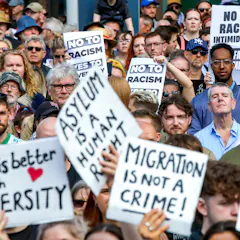
It is important for intending migrants to be aware of the realities in the destination countries to avoid post-migration disappointments.
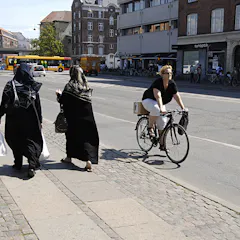
The Danish government wants to end so-called parallel societies. But residents of immigrant-majority areas say they’re subject to a racial double standard.

Our new analysis shows that studies consistently find no causal link between immigration and increased crime across a variety of countries.
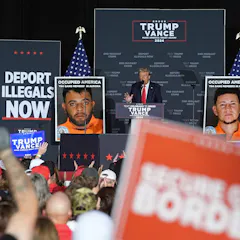
A scholar of emerging immigrant destinations says that when anti-immigrant politicians bring their hateful rhetoric to those towns, locals tend to come down on the side of peace and inclusion.

Pandemic fears could permanently harden Canadian attitudes toward immigration, and generate pressure to reduce the number of yearly arrivals.

Beliefs about the role played by foreign nationals in South Africa clearly influence how people think about anti-immigrant hate crime.

Two social scientists investigate why working-class white men are particularly receptive to President Trump’s racist and anti-immigrant messages.

Fort Sill, a military base in Oklahoma, will soon house 1,400 Central American children, the Trump administration says. It’s not the first time the US has used army bases to house refugees.

How do we reconcile the daily racism that Black people face in our country with our public expressions of multicultural pride?

After the killing of 11 people at a synagogue in Pittsburgh, a scholar explains why this hate crime reminds her of the political climate between the two world wars in the US.

Why right-wing populism gets the tradition of legality and justice exactly the wrong way round.

Despite hard work by both governments to overcome mistrust, more is needed to build mutual understanding between Americans and Mexicans. Educational partnerships may hold the answer.
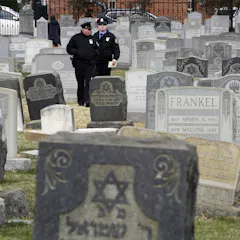
The U.S. saw an increase in anti-Semitic and anti-immigrant sentiments in the period between World War I and World War II. Here’s why it matters to know that history today.
Top contributors
-

Associate Director of Jewish Studies, Lecturer, Arts & Sciences Writing Program, Boston University
-
Professor of Sociology and Director of the Center for Employment Equity, UMass Amherst
-
Research Professor, Institute of Engineering, Universidad Nacional Autónoma de México (UNAM)
-
Research Director of the Center for Employment Equity, UMass Amherst
-
University of Reading
-
Professor of History, Tulane University
-
Professor of Geography, McMaster University
-
Professeur Agrégé, Institut d'études féministes et de genre, L’Université d’Ottawa/University of Ottawa
-
Chief Research Specialist., Human Sciences Research Council
-
Associate Professor of Anthropology and Human Rights Center Research Fellow, University of Dayton
-
Professor of Economics, Bocconi University
-
Professor of Labour Economics, Erasmus University Rotterdam
-
Postdoctoral Associate at Center on Forced Displacement, Boston University
-
Lecturer in Sociology, University of Lagos, University of Lagos
-
Visiting Professor of International Affairs, Hamilton College