
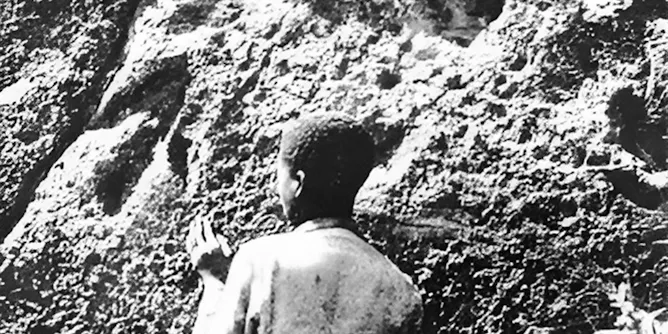
Long ago, people identified fossils in their environment and explained them within their own cultural framework. This was early citizen science.
Articles on Animal tracking
Displaying all articles
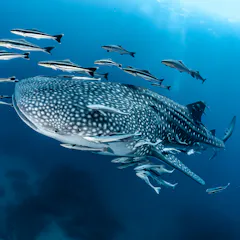
Almost 400 scientists from around the world came together to understand the movements of large marine mammals, using 30 years of satellite tracking data.
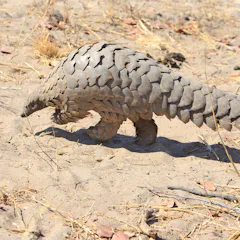
No fossilised pangolin tracks had been recorded anywhere in the world until a track was found in South Africa, dated to between 90,000 and 140,000 years ago.
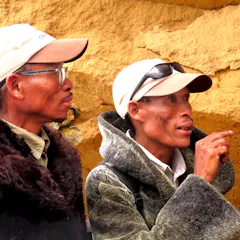
Animal trackers using traditional skills helped to find and identify fossil tracks on the coast of South Africa.
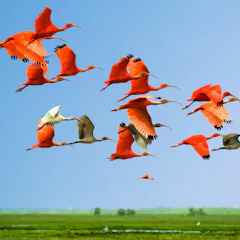
The story of a cutting edge science project, in which solar-powered trackers map the movements of creatures, brims with charming anecdotes, serial frustrations and ‘blue sky’ plans.

Already critically endangered, the southern bent-wing bat is still declining in a drying climate. If we don’t step in, it will likely be extinct within three generations of bat.
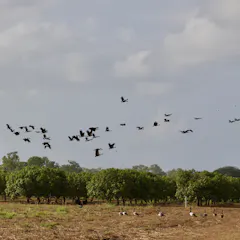
Weather radar archives hold decades of data about the movements of birds and other flying animals.

An animal’s poop may seem like something to avoid, but it’s full of information about the creature that left it there.
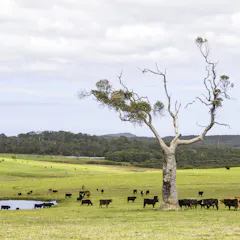
Since the feudal ages, fences have become a symbol of separation and ownership. Now, sensors and technology allow for a system of pooling resources which is not only sustainable but also productive.
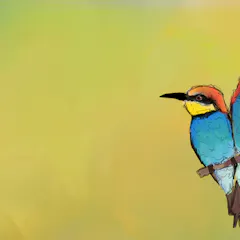
Even in the breeding grounds, we found that European bee-eaters preferred the company of some birds over others. These tended to be the individuals they migrated with.
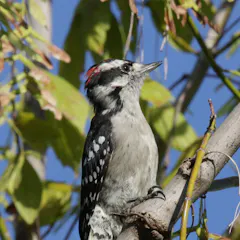
By looking closely at traits like wing feathers and spot patterns, a computer scientist trained an algorithm to recognize individual woodpeckers.
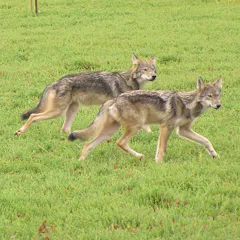
Tracking wild animals can provide lots of valuable data. New research suggests audio recordings of wild wolves can replace the typical radio collars, which can be expensive and intrusive.
Top contributors
-

Research Associate, African Centre for Coastal Palaeoscience, Nelson Mandela University
-
Clive Thompson is a Friend of The Conversation.
Research Associate, African Centre for Coastal Palaeoscience, Nelon Mandela University; Research Associate, Research Associate, Centre for Transformative Regulation of Work, University of the Western Cape
-
Professor in Geological Sciences, University of Cape Town
-
Associate professor in Vertebrate Palaeontology, University of the Witwatersrand
-
Principal Research Scientist, Arthur Rylah Institute for Environmental Research
-
Mammal Collections Manager, Florida Museum of Natural History, University of Florida
-
Professor, School of Veterinary Science, University of Sydney
-
Senior Lecturer, School of Biological Sciences, Adelaide University
-
Professor of Agriculture, CQUniversity Australia
-
PhD Candidate, Charles Darwin University
-
Lecturer in Ecology, La Trobe University
-
Associate Professor of Computer Science, University of Richmond
-
Honorary researcher, Evolutionary Studies Institute, University of the Witwatersrand
-
Assistant Professor of Biology, Carthage College
-
Associate Professor, Research School of Biology, Australian National University