
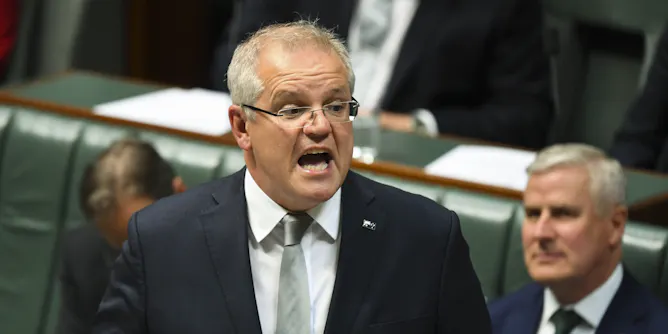
NSW police commissioner Mick Fuller, who knows Morrison personally, defended the PM, saying he ‘didn’t ask for anything that was inappropriate and I’m comfortable with the discussion that we had’.
Articles on Angus Taylor
Displaying 101 - 120 of 123 articles
In a statement to the house, Morrison said he had spoken to the NSW police commissioner about “the nature and substance” of the police inquiries.
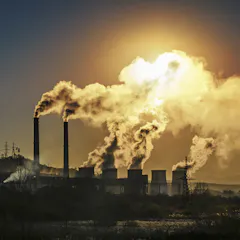
The climate policy has become an article of faith within Labor, and among many supporters. It’s also a policy that in the election split voters Labor needed, attracting some but driving away others.
Opposition resources spokesman Joel Fitzgibbon has had his proposal to bring Labor’s climate change target into line with the government’s immediately torpedoed by the party’s climate spokesman Mark Butler.

Climate deniers have joyously laboured to create a world potentially uninhabitable for our children. Our activism has failed, and rebellion may be the only answer.
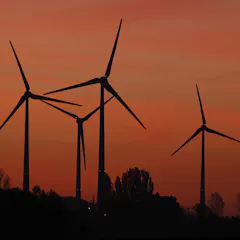
The federal government this week heralded Australia’s renewable energy performance. But the outlook leaves little cause for celebration.
Australia is one of the sunniest and windiest countries on the planet, but emissions are still rising. How do you justify that?
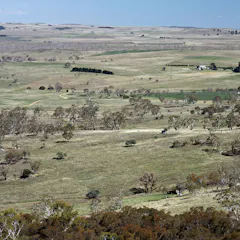
The Monaro grasslands are a tiny surviving fraction of the native grasslands that once grew across the Southern Tablelands.
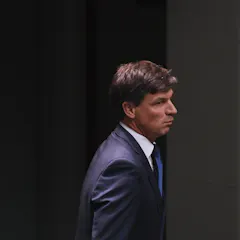
One Nation’s two senators have saved Energy Minister Angus Taylor from an inquiry into his intervention over endangered grasslands, with a Labor motion defeated 33-32 in the Senate.
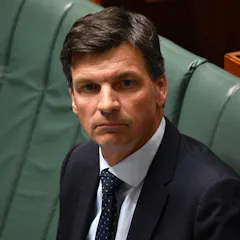
With Centre Alliance’s Rex Patrick having a change of heart, One Nation’s vote now becomes crucial for Labor’s motion to pass.
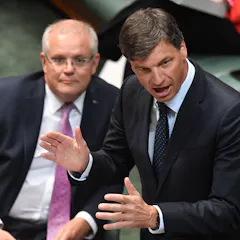
Morrison is keen to whip the backbench into line early, telling the backbench to be “mindful of what we took to the election and what we didn’t take”.
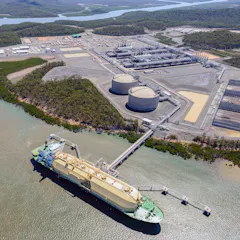
The federal government claims that Australia’s rising emissions are offset by savings around the globe when Australian gas exports replace other fossil fuels. But the numbers don’t stack up like that.
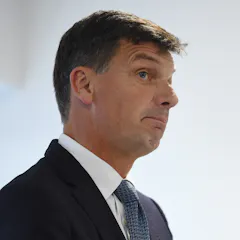
Australia’s new emissions data for the December 2018 quarter show a rise on the previous quarter, although the raw figures actually dropped. Here’s what that all means.

The latest Murray-Darling Basin scandal calls into question whether the government is using public money wisely.
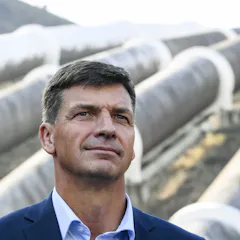
Twelve power projects are in the running for federal government dollars: six pumped hydro, five gas and one coal. It’s clear which one shouldn’t be on the list, for economic and environmental reasons.
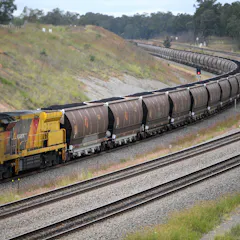
The federal government has floated the idea of underwriting new coal-fired electricity generation in a bid to keep power prices low. But doing so would be a defiance of economic and environmental reality.
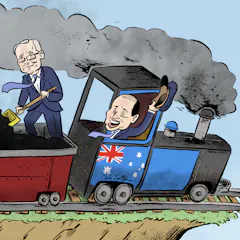
The federal government’s the stubborn commitment to coal is pulling the government’s economic policy towards the sort of state socialism it is supposed to abhor.
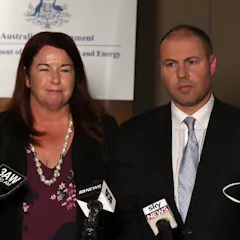
Splitting the energy and environment portfolios might sound like a backward step, but here’s why it could work.
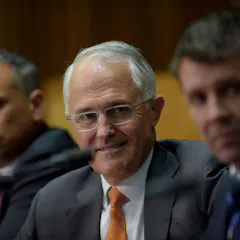
The Turnbull government’s cities policy is the latest incarnation of ‘the-Commonwealth-knows-best’ approach, with little regard for whether urban issues are best resolved at the metropolitan level.
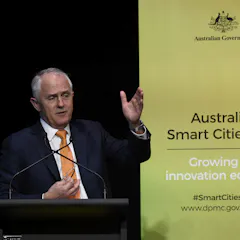
The discussion paper makes all the right noises, but the proof of the policy will be in the detail of partnership arrangements and implementation structures, and in how new money is used.
Top contributors
-

Professorial Fellow, University of Canberra
-
Professor of Law, Deakin University
-
Election Analyst (Psephologist) at The Conversation; and Honorary Associate, School of Mathematics and Statistics, The University of Melbourne
-
Professor of Urban Management & Planning, Griffith University
-
Professor Emeritus, Macquarie Business School, Macquarie University
-
Honorary Associate Professor, UNSW
-
Fellow - Melbourne Law School; Senior Researcher - Climate Council; Associate - Australian-German Climate and Energy College, The University of Melbourne
-
Professor, Crawford School of Public Policy and Director, Centre for Climate and Energy Policy, Australian National University
-
E-Mobility Research Fellow, The University of Queensland
-
Professor of Urban Planning, The University of Melbourne
-
Professor, Evolution and Ecology Research Centre, UNSW
-
Associate Professor of Leadership, Swinburne University of Technology
-
E-Mobility Doctoral Researcher, The University of Queensland
-
Reseach Chair, Water and Environmental Policy, Adelaide University
-
Professor of Public Policy, Crawford School of Public Policy, Australian National University