

The Portuguese colonisers were not the only ones who could use radio for control. A new book tells how popular radio broadcasts from Angola’s liberation fighters were used as weapons in the struggle.
Articles on Angola
Displaying 61 - 80 of 111 articles
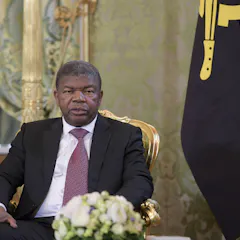
The euphoria that accompanied João Lourenço’s new presidency has ebbed away amid the stark realities of a profoundly dysfunctional political economy.

It’s imperative that we understand what creates and sustains the delta for the future management of the system.
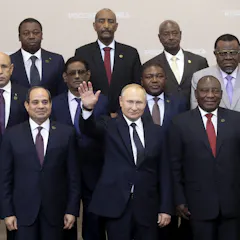
At the Sochi summit, African states embraced Russia’s newly established relations.

Developments in mitochondrial DNA sequencing are returning South Africa’s slavery heritage to view.

CITES’ decision seeks to increase levels of monitoring so that we can be more and better informed about the illegal trade of Mukula and over-harvesting.
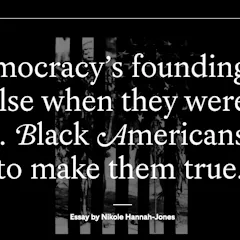
A historian says that critics get the past wrong.
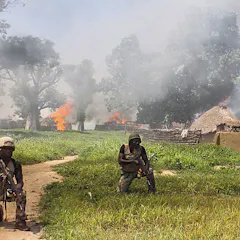
Private military and security companies are increasingly being contracted in Africa. But there are big gaps in understanding their impact.
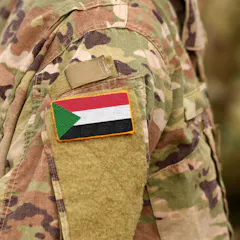
When the establishment retains some leverage over reformers change can be slow, superficial, and short-lived. Sudan appears to be a textbook case of this scenario.

The High Court’s ruling goes against the trend of greater liberalisation in a number of African countries.

Angola’s new President João Lourenço has shown some willingness to engage in more inclusive politics.
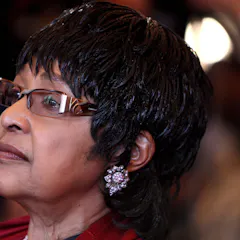
Controversy around Winnie Madikizela-Mandela continues in death as it did in life.

Pik Botha defended apartheid and South Africa’s occupation of Namibia, but in the end helped end both.
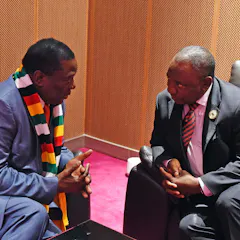
Southern Africa’s liberation movements have been losing popularity and confronting a crisis of legitimacy.

There are hundreds of variations on the basic ‘flavour’ of bird migration.
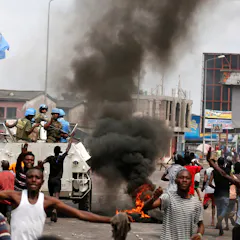
Too often developments in one country are seen in isolation. In southern Africa events in one affect others in the region.
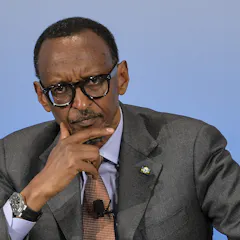
The Rwandan model can’t be replicated easily given that it depends heavily on political dominance and tight, centralised control of patronage networks.
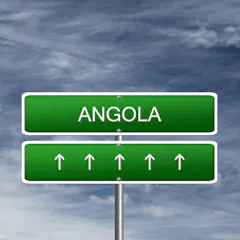
Migrants leave poor countries for a better life in richer ones. But the migration of Portuguese to Angola after Europe’s 2008 financial crisis shows how roles can be reversed.
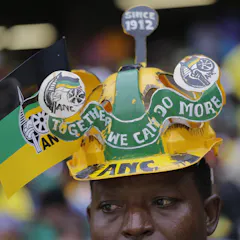
The ANC’s elective conference is important for the party and South Africa. This is because the person chosen to lead the governing party since 1994, has gone on to become president.
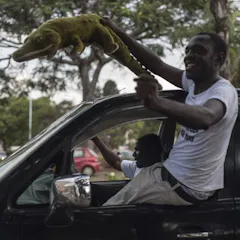
The political crisis in Zimbabwe reveals the shortcomings of African intergovernmental organisations and their (in)capacity to guarantee democratic functioning in the member states.
Top contributors
-

Senior Lecturer in Anthropology, University of Johannesburg
-
NRF/British Academy Postdoctoral Research Fellow under the SA-UK Bilateral Chair in Political Theory, University of the Witwatersrand
-
SNF Eccellenza Professor, University of Basel
-
Associate Professor of International Studies, University of Nottingham
-
Emeritus Professor, University of Cape Town
-
Professor of World Politics, SOAS, University of London
-
Extraordinary Professor, Department of Political Sciences, University of Pretoria
-
Resarch Associate in Human Geography, Saarland University
-
Political Scientist, University of the Western Cape
-
Professor, North-West University
-
Research Associate, Wits Centre for Diversity Studies
-
Professor of Democracy, University of Birmingham
-
Associate Professor of History, Indiana University
-
Professor of Military History, University of Calgary
-
Reader in Comparative Politics, Queen's University Belfast