
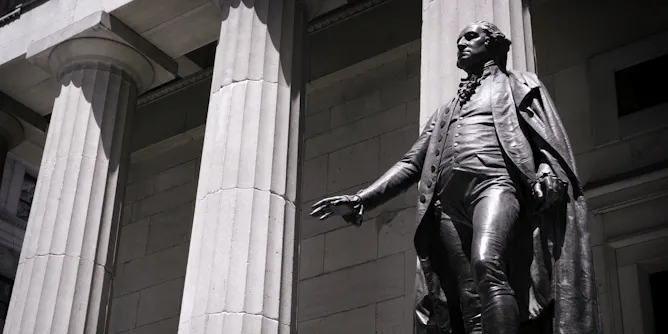
The term can be traced back to the Founding Fathers.
Articles on Alexander Hamilton
Displaying 21 - 40 of 46 articles
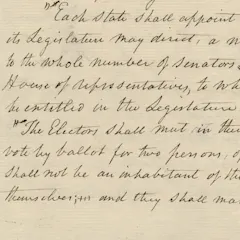
Three approaches were debated during the Constitutional Convention – election by Congress, selection by state legislatures and a popular election, though that was restricted to white landowning men.

Many Supreme Court nomination battles depended on whether the president’s party also had control of the US Senate.

Think American democracy is ending? You’re not alone, writes a historian. American leaders have often yielded to despair – as far back as the founding of the republic.
The framers of the Constitution never mentioned a right to vote. They didn’t forget. They intentionally left it out.
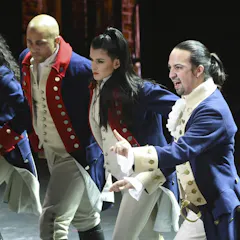
Alexander Hamilton’s commitment to a well-funded national army and his support for territorial expansion had grave repercussions for the Indigenous Nations west of the Appalachians.
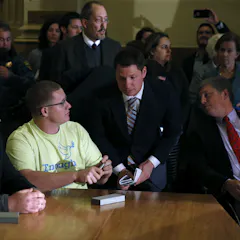
Electors may not vote their consciences, which means the Electoral College will continue to operate how most Americans think it does.
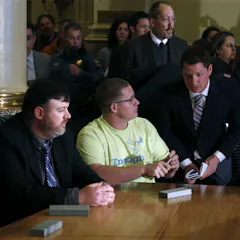
Many Americans are surprised to learn that Electoral College members do not necessarily have to pick the candidate their state’s voters favored. Or do they?
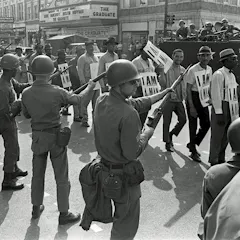
In dealing with mass protests of police killings of African Americans, U.S. President Donald Trump is invoking old phrases and laws — first from 1967 and then further back to 1807.
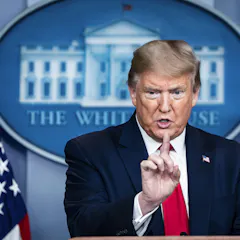
Throughout the coronavirus crisis, President Trump has made inconsistent statements about who is responsible for key aspects of the nation’s response to the pandemic. The Constitution has the answer.
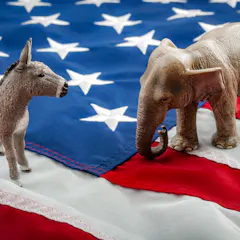
Despite the fact that only 38% of Americans say they think the Democratic and Republican parties are doing ‘an adequate job,’ they’re unlikely to disappear.
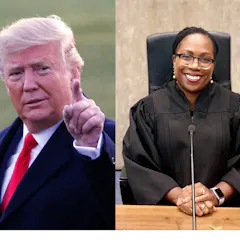
If President Trump’s attacks on the justice system are meant to intimidate, there’s one class of employees who are immune to that: federal judges who have lifetime tenure.
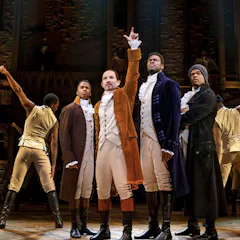
Lin-Manuel Miranda’s blockbuster portrayal of Alexander Hamilton, one of the most colourful founding fathers, opens this month in Toronto.
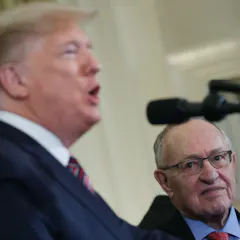
Trump’s backers say he is shielded from removal as no criminal offense took place. But this view may be at odds with the original intent of the impeachment clause.
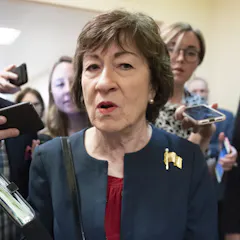
No written law or rule requires the senators to remain silent on the issues. But it’s probably a good idea, and a promising sign of fairness.
A little-known provision of the Constitution might allow Trump to be reelected president in 2020 even if he is removed from office through the impeachment process.
Politics have pervaded the debate about whether Congress should impeach President Trump. One legal scholar says that whether to impeach – or not – should not be viewed as a political question.
US law says the president can’t be indicted, an echo of ancient Roman law. The efforts Roman leader Julius Caesar made to maintain his immunity is a cautionary tale for America’s political system.

The next time you watch a duel on television or in a film, it might be worth recalling the history and meaning of this very serious rite of honour.
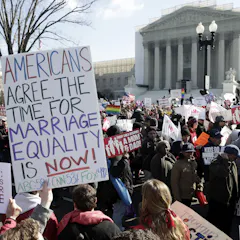
Americans have rediscovered the Supreme Court, as they do periodically when it’s at the center of controversy. With a president who attacks the legitimacy of courts, will their attention be benign?
Top contributors
-

Professor of American History, Università di Torino
-
Professor of American Civics, University of Tennessee
-
William Nelson Cromwell Professor of Jurisprudence and Political Science, Amherst College
-
Associate Professor of Political Science, Clarkson University
-
Professor of History, McGill University
-
Lecturer in Political Science, City College of New York
-
Global Fellow at the Woodrow Wilson International Center for Scholars and Broeklundian Professor of Political Science Emerita, City University of New York
-
Professor of History and Law Faculty, The Ohio State University
-
Professor of Philosophy, Acting Director of the Rock Ethics Institute, and Affiliate Professor in the School of International Affairs, Penn State
-
Associate Professor of Philosophy and Law, Wayne State University; Institute for Humane Studies
-
Assistant professor of politics and policy, Simmons University
-
Executive Director, Pat Brown Institute for Public Affairs, California State University, Los Angeles
-
Associate Professor of Political Science, Boise State University
-
Associate Professor of Law, Arizona State University
-
PhD Candidate in History, Monash University