
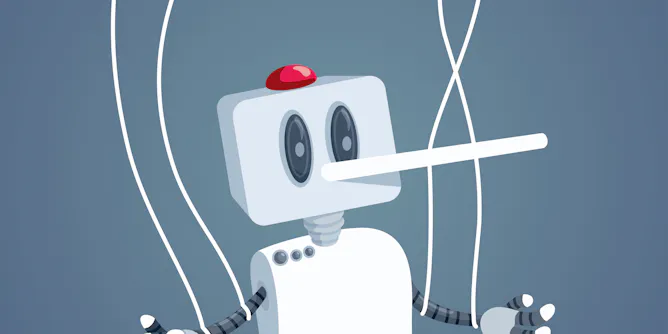
Large language models can uphold falsehoods they or human users state, despite being presented with evidence to the contrary.
Articles on AI hallucinations
Displaying all articles
The use of AI copies of the dead for medical training remains hypothetical, but the technology to make them exists, raising questions about what it means to be dead.
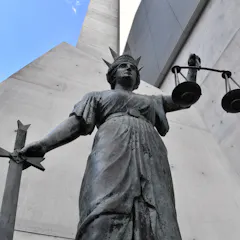
Researchers found more than 80 cases of generative AI use in Australian courts so far – mostly by people representing themselves. That comes with serious risks.

AI search summaries are reshaping the search engine ecosystem we’ve grown accustomed to over two decades.

When AI systems try to bridge gaps in their training data, the results can be wildly off the mark: fabrications and non sequiturs researchers call hallucinations.
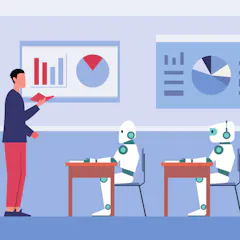
Having AI models say how confident they are in their answers could help minimize inaccurate responses. Just don’t be overconfident about their confidence scores.

The rubber met the road for language AIs in 2024. The hard realities led to new, smaller models and safety measures for the big ones. 2024’s R&D also set the stage for the next big thing: AI agents.

Artificial intelligence is energy hungry and has an ever-expanding carbon footprint. Embracing the technology will make it harder for New Zealand to meet its climate targets.
Top contributors
-

Associate Professor of Pediatrics, Harvard University
-
Senior Lecturer and Education Adviser, University of Otago
-
Associate Professor of Law, University of Waikato
-
Senior Lecturer in Law, University of Waikato
-
Associate Professor of Computer Science, Director of AMHR Lab, University of South Florida
-
Associate Professor of Computer Science and Engineering, University of Michigan
-
Ph.D. Student in Information Science, University of Washington
-
Ph.D. Candidate in Information Science, Cornell University
-
PhD Candidate, Digital Media Research Centre, ADM+S Centre, Queensland University of Technology
-
Postdoctoral Research Fellow, ARC Centre of Excellence for Automated Decision-Making and Society, Queensland University of Technology
-
Associate Professor of Visual Communication & Digital Media, RMIT University
-
Professor of Law, UNSW
-
Assistant Professor of Computing and Information Sciences, Rochester Institute of Technology