

EU digital ID wallets will make it easier for citizens and residents to prove their identity, and safely store, share and sign important digital documents within the EU. But digital applications aren’t totally risk-free.
Articles on Agence nationale de la recherche (ANR)
Displaying all articles
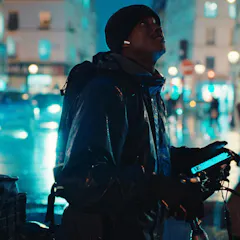
An unprecedented occupational health study on takeaway delivery workers in France reveals shocking working conditions amid Europe-wide debate on their entitlement to standard employee rights.
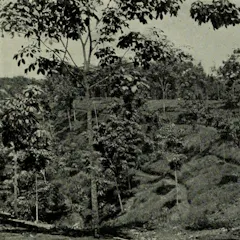
The world’s remaining great primary forests, including those in Borneo, the Amazon and the Congo basin, are still threatened by deforestation. This harmful practice often has colonial origins.
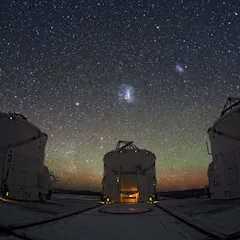
Scientists already knew how to study the chemical composition of the atmosphere of exoplanets. Now, they can also study details about their powerful winds.

Genetic analysis of two skull fragments dating back almost 40,000 years shows that our species colonised Europe from the east and interbred with our Neanderthal cousins.
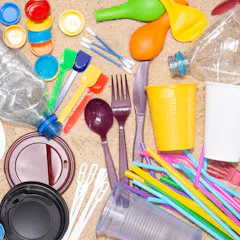
Alternative food containers, such as those made of bioplastics, are being promoted as a way to reduce our exposure to plastic in food. But there is still a lack of knowledge around their impacts.
Top contributors
-

Directeur de Recherche CNRS, co-responsable d'équipe de recherche, Institut Jacques Monod, Université Paris Cité
-
Directrice de recherche CNRS, co-responsable de l'équipe Épigénome et paléogénome de l'Institut Jacques Monod, Université Paris Cité
-
Professeur du MNHN, Muséum national d’histoire naturelle (MNHN)
-
Professeur de Toxicologie et de Biochimie, Université Paris Cité
-
Chercheur en Toxicologie, Inrae
-
Ingénieure de Recherche, Université Paris Cité
-
ESO Research Fellow - visiteuse long durée Lab Lagrange, Observatoire de la Côte d'Azur, Observatoire Européen Austral
-
Professeur junior spécialiste des atmosphères d'exoplanètes au laboratoire LAGRANGE, Observatoire de la Côte d’Azur, CNRS, Université Côte d’Azur
-
Maitresse de conférences, Université de Montpellier
-
Professeur des Universités, IAE La Rochelle
-
Doctorant à la Chaire Comptabilité Écologique, Université Paris Dauphine – PSL
-
Maitre de Conférences en Sciences de Gestion, Université Paris Dauphine – PSL
-
Professeur Directrice du département RST, Télécom SudParis – Institut Mines-Télécom
-
Professeur en droit à IMT Atlantique, titulaire des chaires 'Valeurs et Politiques des Informations Personnelles' et 'Économie des Communs de Données'., Institut Mines-Télécom (IMT)
-
Directrice de recherche, Institut de recherche pour le développement (IRD); Université Paris Dauphine – PSL