

As the government considers major aged-care reform, research points to how a new system could better support kaumātua and whānau.
Articles on Aged care funding
Displaying all articles

A new payment system requires wealthier people to contribute more for non-clinical services. Here’s what it means for Australians planning for in-home or residential aged care.

There is not enough money for New Zealand’s aged care sector – and the demand is only going to rise. The government needs to look at Australia for ways to ensure access for all.

After months of negotiations between the major parties, the government has announced its new plan for aged care. Here’s what it means for people in residential aged care and their families.

Rural and remote aged care facilities find it hard to attract and retain staff, and face high costs and ongoing losses. Yet levels of care and resident satisfaction exceed that of homes in cities.

Aged care providers can’t find staff and a crisis is brewing. If the problem isn’t fixed, there are serious risks to quality and access to services for older people who need support.

Many residents in Australia’s aged care homes are not receiving the level of care they need and are entitled to, a new analysis has found.

Rather than bold reforms that will safeguard Australians’ aged care services into the future, the taskforce largely recommends tidying up and keeping the status quo. And getting users to pay more.
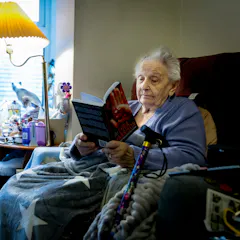
Australia’s aged care system is undergoing significant change, but is still governed by an act more than 25 years old. Can the government meet its mid-year deadline for the next round of reforms?

In future, Australia will spend much more on aged care. This increased spending needs to be well planned, so access is protected and all older people – regardless of income – get the care they need.

A social insurance model would use compulsory contributions from worker salaries to cover the cost of aged care services. But it’s not a silver bullet to fix our aged-care funding crisis.

One proposal to fund the rising costs of aged care is a Medicare-style levy. However, this seemingly neat solution isn’t the answer to our aged care funding problems. Here’s why.

Aged care is one of the government’s biggest ongoing funding challenges. But for a sustainable system, we need to ensure everyone is paying their fair share. Here’s how to make it more equitable.

This is an important and complex decision. It can affect your income, wealth, means-tested aged care fee, and bequests. Here are some things to consider before you decide.

The federal budget is a step in the right direction, particularly in improving pay rates for aged-care workers. But the medium- to long-term future remains bleak without further, significant reforms.

While demand for subsidised services is high and rising, many parts of the system need improvement. The federal budget can’t solve these problems by placing the entire burden on taxpayers.

In a new report, we outline four important steps the government must take to achieve real change in Australia’s aged-care system.

The federal government has announced A$850 million for 10,000 additional home-care packages, as part of $1 billion for aged care. Here’s why that’s not nearly enough.

Our new research shows Australians recognise the fundamental importance of additional investment in the aged care sector to boost the quality of care.

While the majority of aged care funding comes from government, residents also have to contribute. Here’s how the payment system works.
Top contributors
-

Professor of Health Economics, University of Technology Sydney
-
Associate Professor of Accounting, University of Technology Sydney
-
Emeritus Professor of Public Health, La Trobe University
-
Honorary Enterprise Professor, School of Population and Global Health, and Department of General Practice and Primary Care, The University of Melbourne
-
Senior Associate, Grattan Institute
-
Senior Research Fellow, Macquarie University Centre for the Health Economy, Macquarie University
-
Senior Lecturer in Māori Health, Co-Director Centre for Co-Created Ageing Research, University of Auckland, Waipapa Taumata Rau
-
Professor of Health Economics and Mathew Flinders Fellow, Caring Futures Institute, Flinders University
-
Senior Lecturer, Crawford School of Public Policy, Australian National University
-
Professor and Director, Macquarie University Centre for the Health Economy, Macquarie University
-
Senior Research Assistant Law Health Justice, University of Technology Sydney
-
Research Fellow, the Pensions and Intergenerational Equity (PIE) research hub, University of Auckland, Waipapa Taumata Rau