
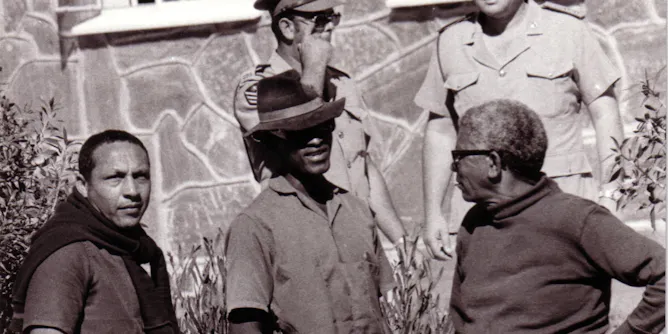
The activist and writer has been erased from South Africa’s history - but new academic work seeks to restore his voice.
Articles on African writers
Displaying 61 - 80 of 97 articles

Novelist Petina Gappah’s call for translators on Facebook has resulted in the publication of Chimurenga Chemhuka.
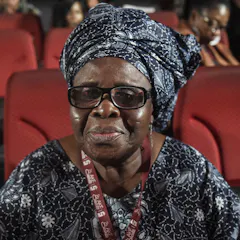
A commanding presence on the global literary stage, Ama Ata Aidoo was a powerful feminist voice with a prolific output.
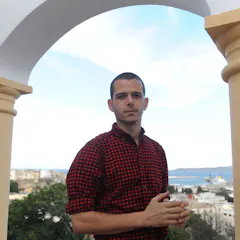
His books bring north Africa into conversation with sub-Saharan Africa about lived queer experiences.
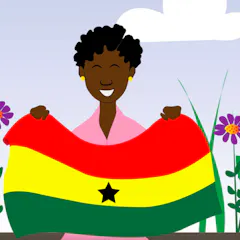
Women who shaped modern Ghana have been erased from history. A children’s book aims to restore them to their rightful place.

At independence, adults were reading decolonial classics - but children were reading Enid Blyton. A generation of unsung women writers changed that.
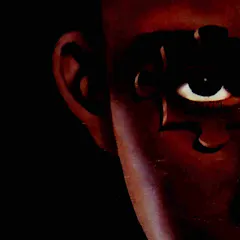
A psychologist and a literary scholar analyse Faceless, a powerful novel about homeless children - and their mothers.
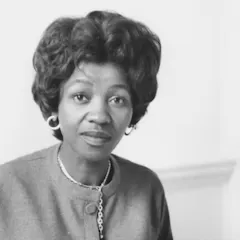
These columns demonstrate that Noni Jabavu’s concerns from 1970s are still relevant today.

These vibrant writers embrace the open road and claim spaces that were denied them during apartheid.
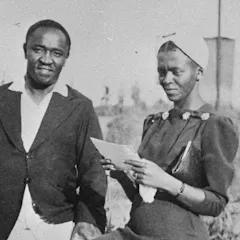
A powerful new book restores the writer and feminist politician to her rightful place in history.

Born 100 years ago this year, Africa’s most legendary filmmaker - and a prolific novelist -remains relevant through his beautifully crafted political works.

Challenging myths about heterosexual white South African men, Prinsloo published four books of short stories in 12 years.
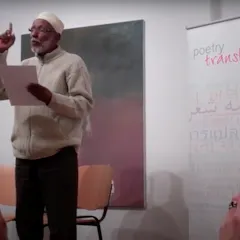
Poet, soldier and critic of postcolonial elites, Hadraawi was the greatest poet of his generation.
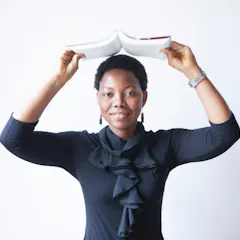
Playing out in an animal kingdom, Glory is a devastating political commentary on Zimbabwe today.
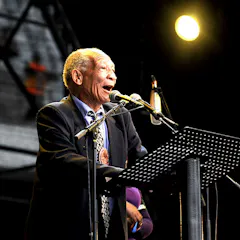
A true African poet, Don Mattera was at the centre of public life, an advocate for change and an enemy of elitism.
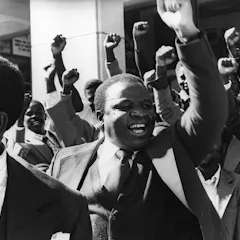
Despite being almost erased from history, Sithole’s ideas are still relevant today.

Buys, the award-winning novel by Willem Anker, uses lines without credit from the Irish writer - not the first such literary controversy it has raised.
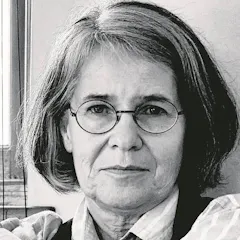
The famous writer turns 70 this year. She is driven by how South Africans see and hear one another.
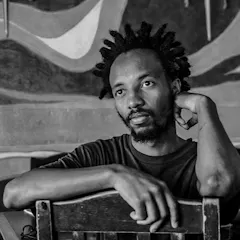
His major work The Quiet Violence of Dreams is about a young man undergoing a mental breakdown, something that the novelist also experienced.
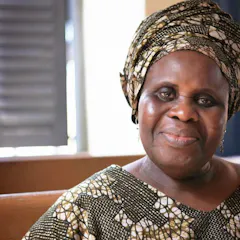
Ama Ata Aidoo recognises the differences between humans and the existence of a history in which some humans are dehumanised.
Top contributors
-

Assistant Professor, Harvard University
-
Senior Lecturer, Stellenbosch University
-
Associate professor, University of Johannesburg
-
Research Associate, University of Johannesburg
-
Research Associate, Humanities Research Centre (and African Literature Department, University of the Witwatersrand), University of York
-
Associate Professor, Department of Literary Studies in English, Rhodes University
-
Assistant Professor, American University of Paris (AUP)
-
Senior Lecturer in International Political Economy, University of Manchester
-
Senior research fellow, University of the Western Cape
-
Lecturer, School of Languages and Literatures, University of Cape Town
-
Fellow, King's College London
-
Professor of Religion and African Studies, University of Leeds
-
Adjunct Professor, Richmond American International University
-
Poet and lecturer in Creative Writing, University of the Witwatersrand
-
Chief Albert Luthuli Research Chair, University of South Africa