
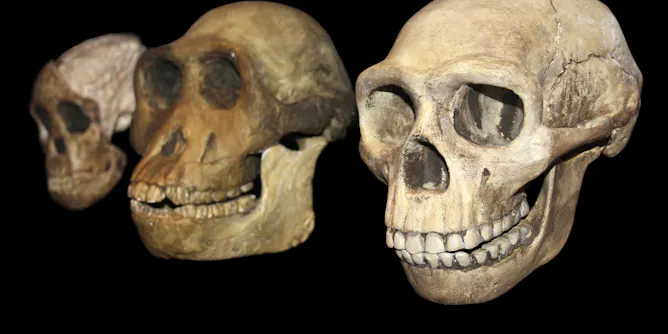
Our understanding of human ancestry has changed dramatically since the discovery of Lucy the ancient hominin 50 years ago. Here is the history of humanity as we know it today.
Articles on African science
Displaying 1 - 20 of 34 articles
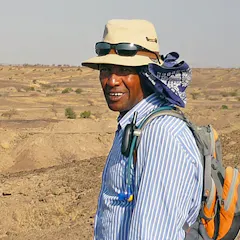
On the 50th anniversary of the discovery of ancient hominin Lucy, a leading Ethiopian scientist on why we need to ‘decolonise’ paleo research – and what it’s like to find the oldest human ancestor.
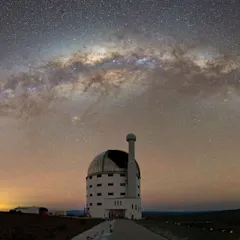
The astronomical community has thrived and world-class astronomical facilities have been established in South Africa.

Sagittarius A* lies in the southern sky, passing directly above South Africa.
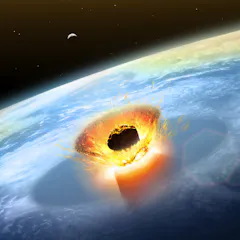
Impact craters are relatively shallow, so these bowl-shaped “dents” in Earth’s rocky crust can be easily buried or erased by erosion.
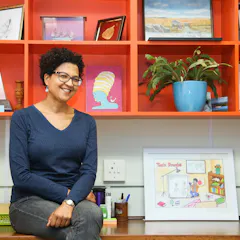
She believed and advocated that Africa needs to find solutions to its own problems and worked tirelessly to build biomedical engineering capacity across the continent.
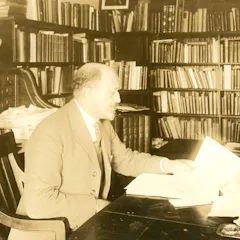
As editor of the magazine for 24 years, Du Bois featured articles about biology, evolution, archaeology in Africa and more to refute the rampant scientific racism of the early 20th century.
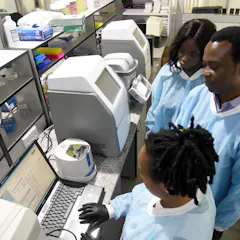
Thanks to major science infrastructure, human resource training and education investment in African nations, the continent is well placed to lead from the front.
Data science, led by Africa-based scientists, could play a key role in addressing all of the continent’s crucial needs.
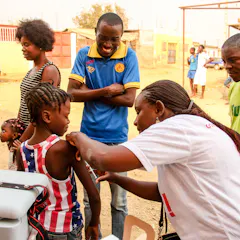
Science academies have a crucial role to play in developing ways for scientists to engage more effectively.
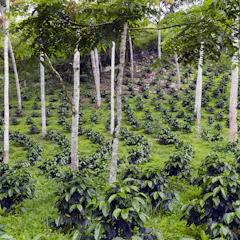
Because the interactions between trees, soils, crops and livestock can be positive or negative, their relationship must be balanced and understood.
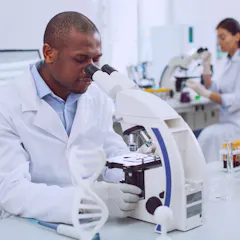
Genomics research is crucial to identify Africa-specific solutions to a range of diseases.
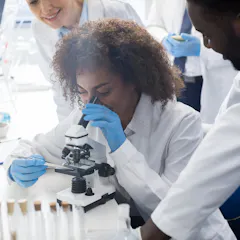
Science development in Africa is intimately linked to the quality of people who are able to lead change.

Senegal has made great strides in astronomy and planetary sciences in recent years.
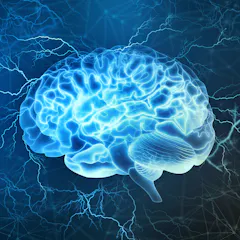
With the right investment, the next few years could be extremely exciting for Nigerian neuroscience.
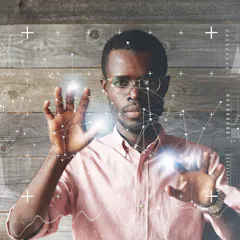
The Global State of Young Scientists Africa project investigates the challenges that shape the career trajectories of young African scientists.
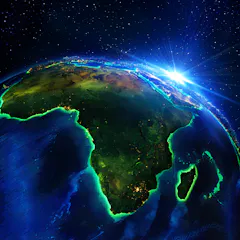
There are several projects and initiatives that offer hope amid all the bad news about African science.
Research institutes and “centres of excellence” exist around the world to draw talent and to share resources - all with the aim of solving important problems.
Calestous Juma believed that Africa needed an integrated science, technology and innovation framework. The continent can make this happen.
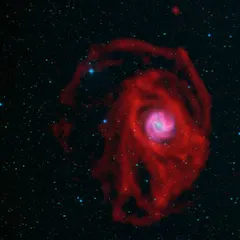
A precursor to the Square Kilometre Array- the MeerKAT telescope - is being built right now and remarkable progress has been made in the last 12 months.
Top contributors
-

Previous Vice President of the Academy of Science of South Africa and DSI-NRF SARChI chair in Fungal Genomics, Professor in Genetics, University of Pretoria, University of Pretoria
-
Director of programmes, African Academy of Sciences
-
Lecturer, Department of Zoology, University of Cambridge
-
Assistant professor, high energy physics, Shahid Beheshti University
-
Geologist, Institut de recherche pour le développement (IRD)
-
Post-doctoral researcher in Astrophysics, University of the Western Cape
-
Clinical Senior Research Associate, MRC Epidemiology Unit, University of Cambridge
-
Lecturer in Biology & Biochemistry; Developmental Biology Theme, University of Bath
-
Director South African National Bioinformatics Institute, University of the Western Cape
-
Lecturer in Anthropology, Catholic University of Malawi
-
Director and Niels Bohr Chair, Perimeter Institute for Theoretical Physics
-
Postdoctoral Fellow in Bioinformatics, University of the Western Cape
-
Lecturer, University of Lagos
-
Professor, Social Sciences, Université Mohammed V de Rabat
-
Postdoctoral fellow, Hebrew University of Jerusalem