
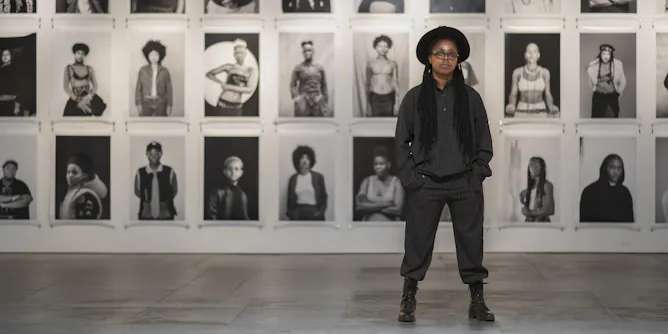
The Hasselblad is the world’s largest award for photography. It cements Muholi’s global influence.
Articles on African photography
Displaying all articles
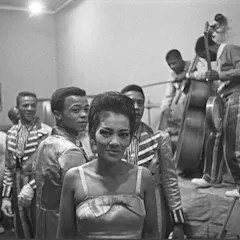
Former residents recall a community nurtured by a spirit of extended family and solidarity.
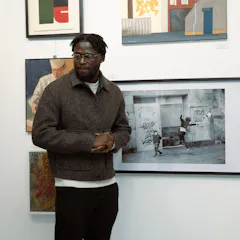
His photographs reveal what immigrants carry with them: resilience, creativity and cultural knowledge.
He understood that the struggle for freedom extended beyond the political realm into the cultural, where jazz music thrived.
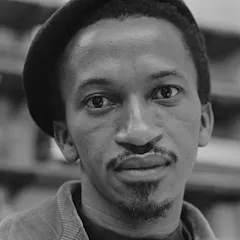
Ernest Cole: Lost and Found by Raoul Peck is a meditative film that draws on Cole’s own notebooks and letters in a bold attempt to have him tell his own story.
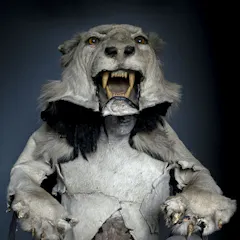
End of the Game sparks critical conversations on wildlife conservation and responsible tourism.
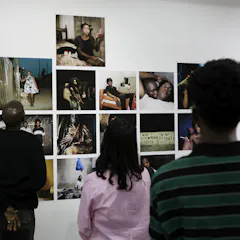
One of the first queer art exhibitions in Mozambique’s history, Manas has been restaged in Maputo, revealing a little-told history of transgender life.
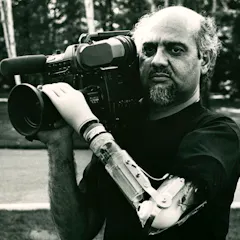
His photos and videos depicting postcolonialism and everyday life in Africa have been overlooked.
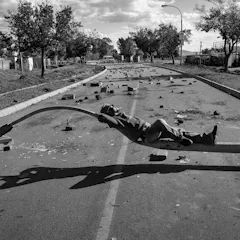
The winner of the prestigious Deutsche Börse photography prize documents everyday life in a powerful and creative way.
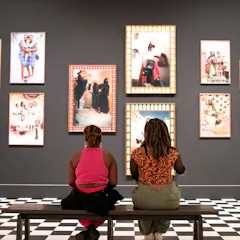
A World in Common is a European exhibition with African content, rather than a space that invites conversations and engagement that go beyond the images themselves.
In less than a year the newsletter has become important and influential, offering a new way of appreciating African photography.
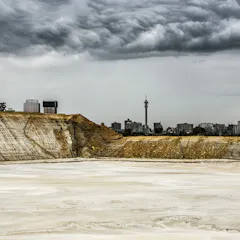
From butchers to hawkers, and shelters to miners, this book reveals the informal economy and texture of the city.
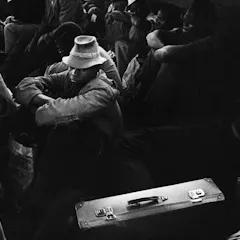
Cole was a master of portraying the violence of apartheid through scenes of everyday life.
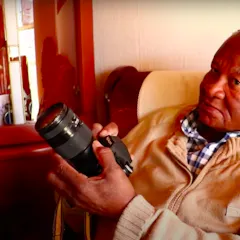
‘A camera is more powerful than an AK47,’ said the veteran photojournalist, who was also famous for his jazz photos.
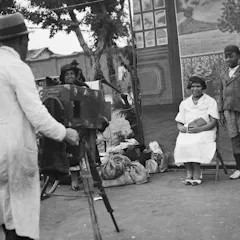
Two striking images - from the 1940s and the 1960s - help reveal the rich but still emerging history of street photography in the country.
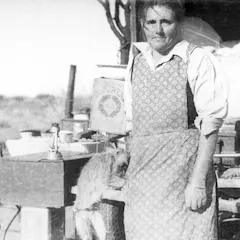
Images of white Namibian farmers and their workers and a collection of portraits by travelling black photographers form part of the early archive.

The gift of his images lies in their depiction of the social worlds that apartheid sought to destroy, but that live on through the photographs.
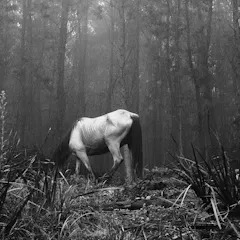
No South African photographer leaves a more substantial legacy than Santu Mofokeng. He was adept at mapping interior worlds through haunting images of black life and, above all, his landscapes.
Top contributors
-

Senior Lecturer (Radical Humanities Laboratory, University College Cork), University College Cork
-
Assistant Professor, Harvard University
-
Visiting senior lecturer, University of the Witwatersrand
-
Associate Professor of English, State University of New York Oswego
-
Associate of the Gordon Institute for Business Science, University of Pretoria
-
Senior Lecturer, Anglia Ruskin University
-
Senior lecturer, University of Basel
-
PhD Candidate in Journalism, Universidad Complutense de Madrid
-
Research Associate, Wits Centre for Diversity Studies
-
Professor of Interdisciplinary Studies and African Studies, University of Pretoria
-
Lecturer in the Arts of Africa, University of Edinburgh
-
Extraordinary Professor, Department of Political Sciences, University of Pretoria
-
DSI/NRF SARChI Chair in Visual History & Theory, University of the Western Cape
-
Lecturer at Journalism and Global Communication, Universidad Complutense de Madrid