

Rating agencies shape the policy space for pursuing development goals. Yet they remain private firms, operating under commercial incentives.
Articles on African economies
Displaying 1 - 20 of 22 articles

What happens when promises of increased tourism revenue and reduced environmental impact aren’t met?
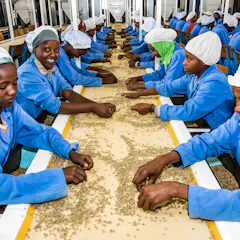
Asia’s much touted low-cost, export-oriented manufacturing model increases gender discrimination.

It’s still fashionable today to promote tech startups and tech hubs based on models from the global north. But new, alternative and more sustainable models might be emerging.
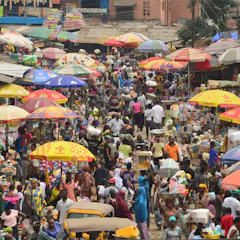
The African continent stands to lose the most from climate change - here’s what local governments can do to protect it.

Military expenditure is a relevant policy option in reducing the negative effect of terrorism on economic growth in Africa.

African governments need to spend more effort on maximising the impact of foreign direct investment on economic growth
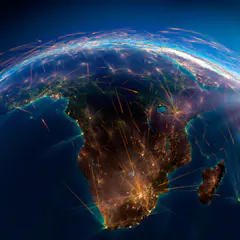
Now that African countries have signed up for the continental free trade agreement, they must complete the institutional loop by jumpstarting the creation of the African Monetary Fund.
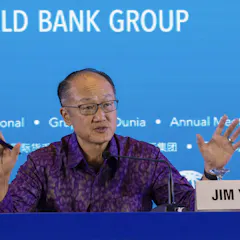
The power dynamics in the World Bank have changed dramatically.
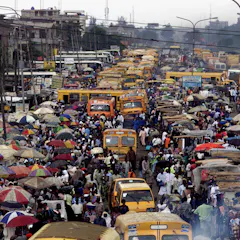
The global poverty plot is thicker than what the World Bank would have us believe.

Many scholars argue that attracting migrants is essential to economic competitiveness in a globalising world.
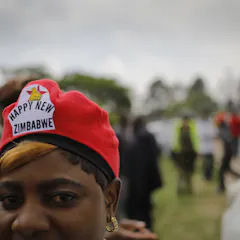
Zimbabwe has two lost decades to move on from. Fortunately, there are many ways out.
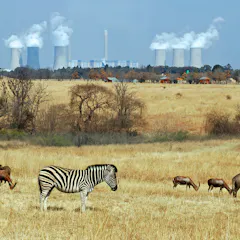
Investment is essential to African economies, but it can bring risks.
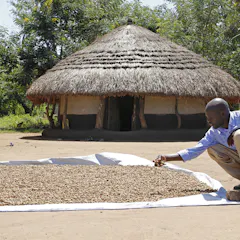
US farmers and agribusiness can help themselves by helping Africa to meet its rapidly growing food needs.

For a global audience, the movie ‘A United Kingdom’ provides a topical account of race relations. The love story is likely to revitalize the popular viewpoint of Botswana as a national success story.
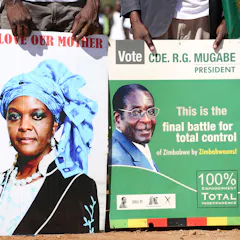
Robert Mugabe’s indigenisation laws demand that companies operating in Zimbabwe transfer most of their capital into local hands.
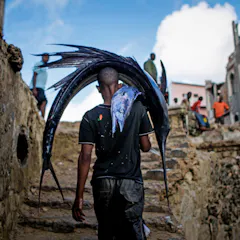
The blue economy is unknown, overlooked and underdeveloped in Africa. It could represent a major growth driver for the continent.
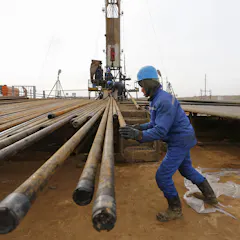
South Sudan is not the only oil-dependent country suffering from the fall in oil prices. Nigeria and Angola are also having difficulties. One solution is for them to diversify their economies.

The essence of Ubuntu can best be found in Africa’s informal economies. They are not dependent on western shareholders or donations, and certainly not subject to western management education.
African academics should be leading the pack when it comes to producing research and information about the continent. So what’s holding them back?
Top contributors
-

Research associate at African Centre for Cities, University of Cape Town
-
Professor, Harvard University
-
Research Professor and Executive Director of the World Peace Foundation at The Fletcher School, Tufts University
-
MSU Foundation Professor, Agricultural, Food and Resource Economics, Michigan State University
-
Research Associate, Southern Centre for Inequality Studies, University of the Witwatersrand, University of the Witwatersrand
-
Professor of World Politics, SOAS, University of London
-
Senior Lecturer, and Deputy Associate Dean PGR, Faculty of Humanities, University of Manchester
-
Associate Professor of Economics, Simon Fraser University
-
Honorary Research Fellow, La Trobe University
-
Assistant Professor, Metropolitan University Prague
-
Professor, ESCP Business School
-
Associate Professor of Development Studies, University of Agder
-
Professor of Cross-cultural Management, Middlesex University
-
Enseignant chercheur, Université de Rouen Normandie
-
PhD Candidate in Economics at the University of Nigeria, Nsukka, University of Nigeria