
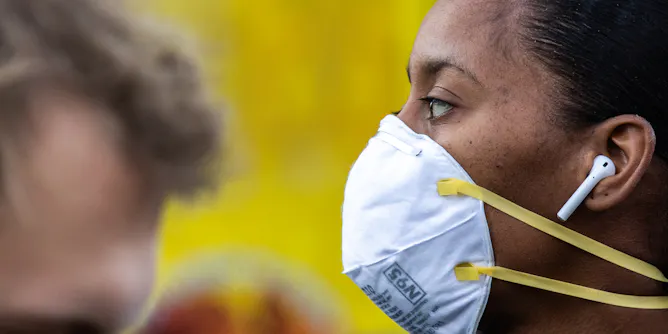
Social distancing can get tougher in the fall and winter. These simple steps can help keep you and your loved ones healthy.
Articles on Aerosols
Displaying 21 - 40 of 48 articles
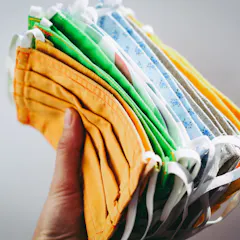
Epidemiologists reviewed 25 studies of cloth face masks. Here’s what they found out about how well they work, why they work, who they protect and why the mosquito and chain-link fence analogy is wrong.

The outdoors is less risky than an enclosed room, but it isn’t a COVID-19-free zone. Here’s what you need to know.

Experiments in college classrooms show how tiny respiratory droplets known as aerosols can spread, even with good ventilation. The risk isn’t the same in every seat.
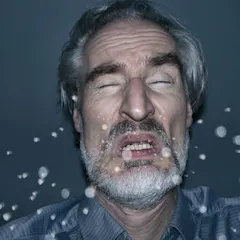
Scientists explain what you need to know about the COVID-19 risks in the air, from how aerosols form to how to keep kids safe on a school bus.

Our video shows aerosol emissions from singing a simple scale. No wonder singing in a choir can be risky.

Many people in Victoria are opting to wear face shields instead of face masks. It’s allowed – but are they as effective at preventing the spread of COVID-19?
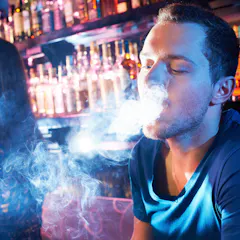
The 6-foot rule for social distancing doesn’t account for all risks, particularly indoors. Here’s what everyone needs to understand as cooler weather moves more activities inside.

UV disinfection is a proven means of killing pathogens like the SARS-CoV-2 virus, but it’s not risk-free.
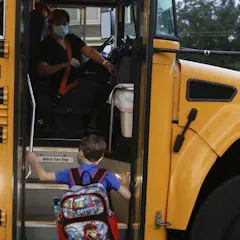
A researcher explains what it will take to make sure children are reasonably safe from catching the coronavirus aboard school buses.
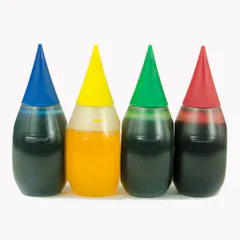
Aerosols of some FDA-approved food coloring could deactivate airborne viruses.

The more layers your mask has, the better, our new research confirms.
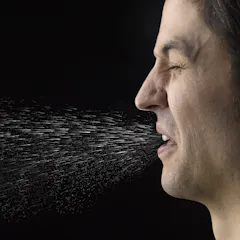
More than 200 scientists wrote to the World Health Organization, warning about aerosol transmission of the coronavirus.

SARS-CoV-2 can be spread through the air. But just how much of a factor that is has been hard to determine. Recent evidence suggests it is common, posing problems as public places begin to reopen.

Recommendations around mask usage are confusing. The science isn’t. Evidence shows that masks are extremely effective to slow the coronavirus and may be the best tool available right now to fight it.
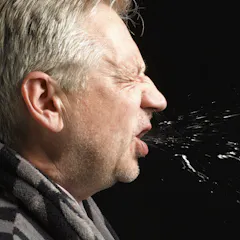
Aerosols are the tiny particles of liquid and material that float around in our environment. When they come from an infected person, they may be a significant source of coronavirus transmission.
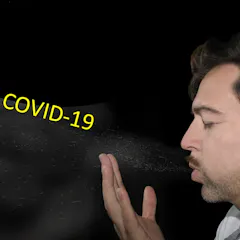
The CDC now recommends that everyone wear a face covering when they go into a public place. But there’s confusion about why and if this protects the wearer, people around them or both.

The CDC is reconsidering its policy about the widespread public’s use of masks, as is the World Health Organization. Here are the facts about when it’s appropriate to wear a mask – and what kind.
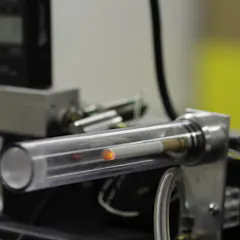
Vaping is under heavy scrutiny in the wake of six deaths and hundreds of illnesses. A product engineer who studies how people puff explains why the way users vape could be a clue.
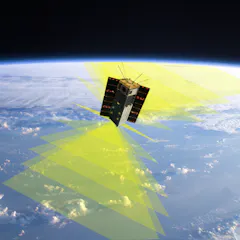
As technology advances, tiny satellites no bigger than a loaf of bread have advanced from just proving they work to being big contributors in answering science questions.
Top contributors
-

Associate Professor of Mechanical Engineering, Clarkson University
-
Bayard D. Clarkson Distinguished Professor of Mechanical and Aeronautical Engineering, Clarkson University
-
Professor of Medicine, Boston University
-
Professor, Director of Research, Nursing and Midwifery, Monash University
-
Professor, School of Mechanical and Manufacturing Engineering, UNSW
-
Professor of Nursing and Health Services Research, University of Newcastle
-
Lecturer, UNSW
-
Professor of Mechanical Engineering, Clarkson University
-
Research Associate, UNSW
-
Professor of Civil & Environmental Engineering, Clarkson University
-
UNSW
-
Professor and Chief, Infectious Disease, Jacobs School of Medicine and Biomedical Sciences, University at Buffalo
-
PhD Candidate, The Kirby Institute, UNSW
-
Senior Lecturer, Infectious Diseases Epidemiology and Control, UNSW
-
Professor of Global Biosecurity, NHMRC L3 Research Fellow, Head, Biosecurity Program, Kirby Institute, UNSW